Kallima inachus, also known as the dead leaf butterfly or orange oakleaf, is a species of butterfly that is native to Asia.

One of the most distinctive features of this butterfly is its ability to mimic a dead leaf when it is at rest.
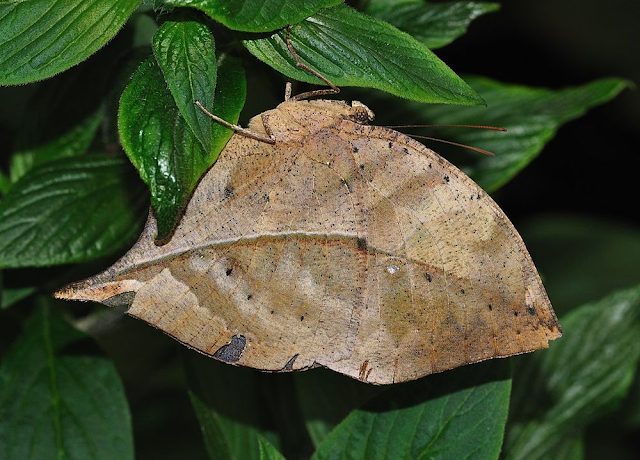 A Dead Leaf (Kallima inachus) in the butterfly house of Maximilianpark Hamm, Germany. Photo: Quartl/Wikimedia
The dead leaf butterfly has wings that are shaped and colored like a dry, dead leaf, complete with veins, and even a jagged edge. When the butterfly is at rest, it will close its wings and hunch over, making it almost impossible to distinguish it from an actual dead leaf.
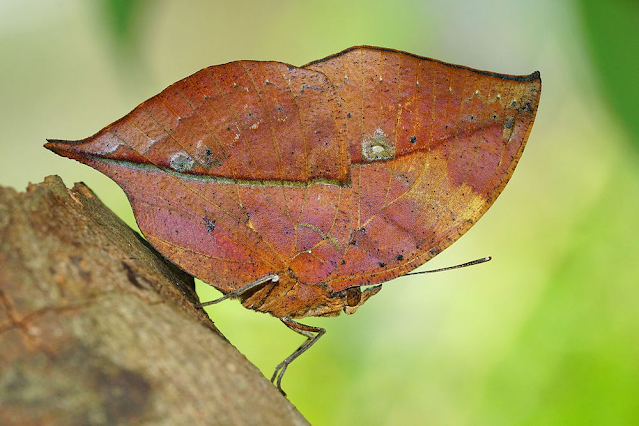 Photo: Peellden/Wikimedia
 Kallima inachus in Namdapha National Park, Arunachal Pradesh, India. Photo: Wikimedia
This incredible camouflage helps the butterfly to avoid predators such as birds and lizards that may mistake it for an inedible object. When the butterfly is threatened, it will suddenly open its wings, revealing a flash of bright colors and eyespots that may startle or confuse its predator, giving the butterfly time to escape.
The dead leaf butterfly is not the only species of butterfly that uses camouflage to protect itself from predators. Many other species have developed similar strategies, such as the owl butterfly, which has large eye spots on its wings that resemble the eyes of a predator, and the morpho butterfly, which uses iridescence to blend in with the surrounding foliage.
The Kallima inachus butterfly is a remarkable example of the amazing adaptations that have evolved in the natural world to help organisms survive and thrive in their environments.


.JPG)
_(31640717451).jpg)


.jpg)

