Creative Parents Make 52 Movie Posters Starring Their Son for the First 52 Weeks of His Life

Creative Parents Make 52 Movie Posters Starring Their Son for the First 52 Weeks of His LifeWeekly Baby Photo IdeasFirst 52 weeks of an infant’s life making him to stance for movie posters by Artistic Parents
Social media have grasped the attention for everyone to pose for good pictures. How can the parents be not in the queue to present their kids as “star”? We are living in the era where we spent most of our times in browsing and scrolling, we see the parents posting on Instagram every chronic moment of their newborn baby’s growth by using different backdrops and propositions.  That’s what designer Benson Chou and his wife did with their kid in a different way. They themselves have admitted that “they might have gone too far” in capturing their baby in a unique way. They starred their son Zoltan (aka Bonbon) in 52 movie posters within a year, starting from a superman’s poster to skateboard grinding. The couple used everyday props to compose every new poster.
Creative Parents Make 52 Movie Posters Starring Their Son for the First 52 Weeks of His LifeWeekly Baby Photo Ideas

Chou recalls that it all started with the new onesie gifted to Bonbon with the buzz lightyear.  As a symbol of gratitude, the parents decided to make a beautiful picture of their 2-month old Zoltan wearing the beautiful outfit. Then, they planned if they are going to shoot the picture why not to shoot it at different place rather than usual bed and floor. Of course, they did.  They used a unique backdrop in which the used scarf to show the planets, ear buds to show the stars, dragged a thermometer to show it as a dropping star, and photoshpopped the picture at the end to add some text on it.
Creative Parents Make 52 Movie Posters Starring Their Son for the First 52 Weeks of His LifeWeekly Baby Photo Ideas

After realizing the picture as an interesting project for themselves, they started to plan a picture of Zoltan every weekend till his first birthday. They themselves found this idea intimidating at first, but in order to keep themselves going on enjoying their kid’s every week, they started parameterizing the project. 
Creative Parents Make 52 Movie Posters Starring Their Son for the First 52 Weeks of His LifeInteresting Baby Photo Ideas

The first thing they prioritized to capture the baby, was not to tire themselves and feeling the task as burden at any time. Secondly, they set the rule to help making the shoots as creative as it could be. The third rule was to shoot the best picture in 30 minutes and not more than that. 
Creative Parents Make 52 Movie Posters Starring Their Son for the First 52 Weeks of His LifeInteresting Baby Photo Ideas

The mom and dad hardbound the photos in a book wrap to commemorate their hard work. However, Chou says, he would not be able to do this again as he is kind of lazy.
Creative Parents Make 52 Movie Posters Starring Their Son for the First 52 Weeks of His LifeBaby Picture IdeasBaby Picture IdeasCreative Baby Photo IdeasCreative Parents Make 52 Movie Posters Starring Their Son for the First 52 Weeks of His LifeCreative Baby Photo Ideas


A Mountain serving as Space Junk Litters

A Mountain serving as Space Junk Littersspace junk in altai mountains
 Photo credit: Jonas Bendiksen/Magnum
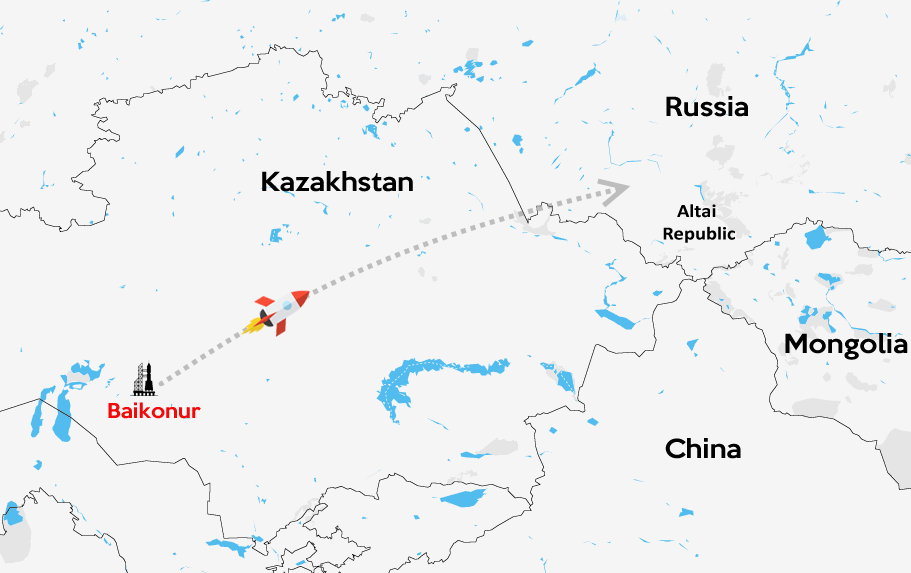
In Central Asia, an ornately splendid mountain range, named Altai Mountains, is embossed with high snow packed mounts, rich high forests and the valleys covered with beautiful glaciers and lakes. Various ethnic tribes are residing here leading a quiet and contented life shepherding buffaloes and sheep, growing grains, and raising bees. But this is also the place where the skyrockets shatter the rubble.A Mountain serving as Space Junk LittersFlight path of rockets launched from the Baikonur Cosmodrome
Flight path of rockets launched from the Baikonur Cosmodrome.
Kazakhstan, the Baikonur Cosmodrome is the busiest and the largest spaceport of the world. The Altai range of mountains lies under the flight path of the spaceport. Whenever the Cosmodrome launches any space rocket, the fuel tanks, booster rockets and other rubble is dumped into the hills that lead the junk to spook the residents, wrecks the houses and sometimes kill the livestock. Sometimes, in case of the huge loss, the Russian space agency must compensate the residents in form of money or other things.
A Mountain serving as Space Junk Littersspace junk in altai mountains
As per the estimates of the Russian media, since 1950 when the spaceport became operational, more than 2500 tons of rocket trash has been crashed down to earth. The officers of the Russian space agency warn the residents at least one day before the launch of each craft, so that they may use the necessary measures to escape from any accident. A specific belt to the area under the space path of the rockets has been selected where the trash may fall, but still the rubbles falling outside the belt is quite common.
A Mountain serving as Space Junk Littersspace junk in altai mountains
All through the era of Soviet Union, the trash of the booster rockets was being recovered, by hook or by crook. The agency was afraid of losing the secrets of the rockets and capabilities of agency. But when the Great Russia came into existence, no efforts are being made to collect the leftovers. Even the parts of the rockets now fall across thousand kilometers of the Altai mountains, and remains uncollected.
A Mountain serving as Space Junk Littersspace junk in altai mountains
 Photo credit: Jonas Bendiksen/Magnum
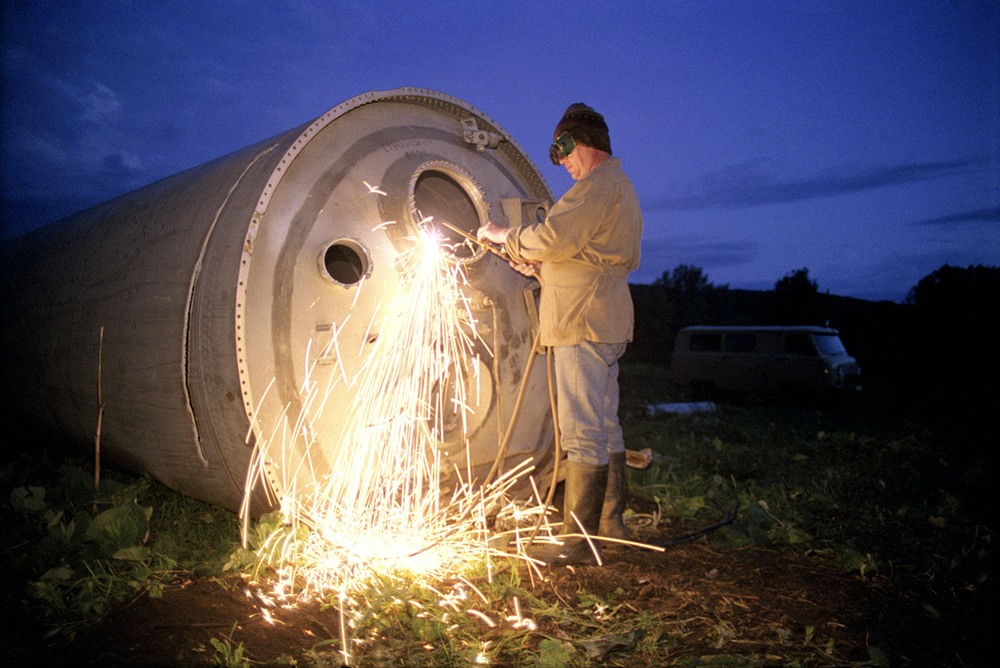
Kazakhstan emerged a new scrap economy on this elapsed space unwanted items after breaking up from the Soviet Union. The dealers of the scrap wait for the launch and trash afterwards. They even use the binoculars to see in the sky and then ride on their wagons with equipment like blowtorches to collect the whole scrap and use it for various purposes. They separate the alloys of aluminum, titanium and copper wires from the scrap and sell them. They leftovers are used to build roofs, toilets and shades.
A Mountain serving as Space Junk Littersspace junk in altai mountains
Photo credit: Jonas Bendiksen/Magnum 
However, the specialists and the medical researchers do not announce the material, specially the fuel left in the engines, safe for the health of the inhabitants. The cases of cancer and birth effects have been witnessed in the region, which may be the result of Hydrazine that leaks from the rocket engines when they crash on earth.
A Mountain serving as Space Junk Littersspace junk in altai mountains
Photo credit: Jonas Bendiksen/Magnum
The issue of discarding the fuel tanks from the space agency into the populated areas is not prevailing in Russia only. China also has their site to launch the rockets far away from the sea which causes the rockets to crash in populated areas, which clearly means, huge damage. The problem may be solved by launching the rockets near to sea, and dropping the junks into sea may cause comparatively very little damage.
The problem with discarded fuel tanks is not unique to Russia. Like Baikonur, China’s launch sites are also located far from the ocean and rocket parts containing unburnt fuel fall over populated areas. Launch sites near the ocean don’t have this problem because they can drop their boosters relatively harmlessly into the sea.

World's Deepest Metro Stations

World's Deepest Metro Stations
arsenalna-metro-3
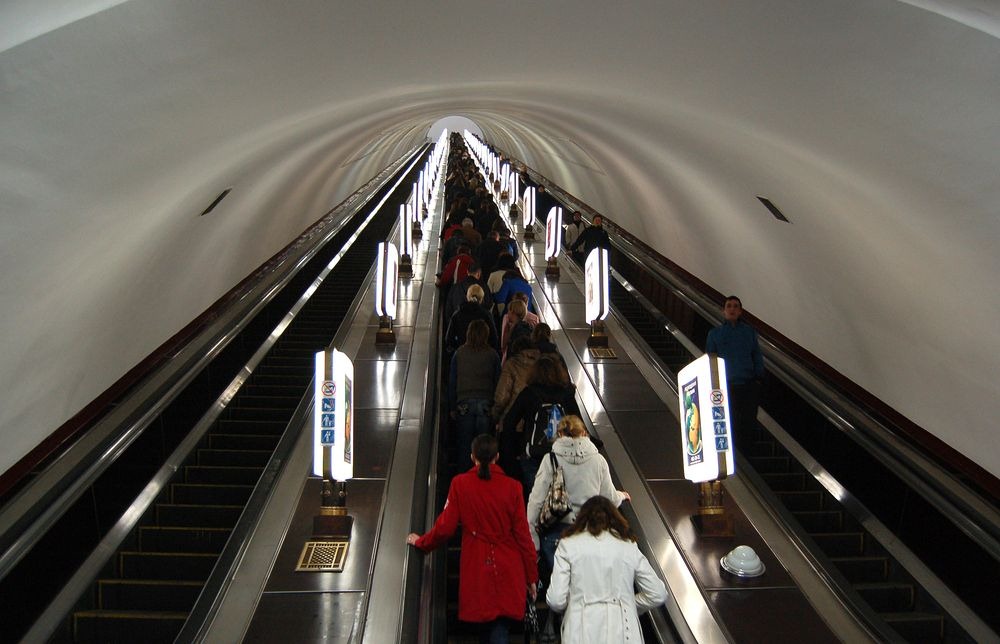
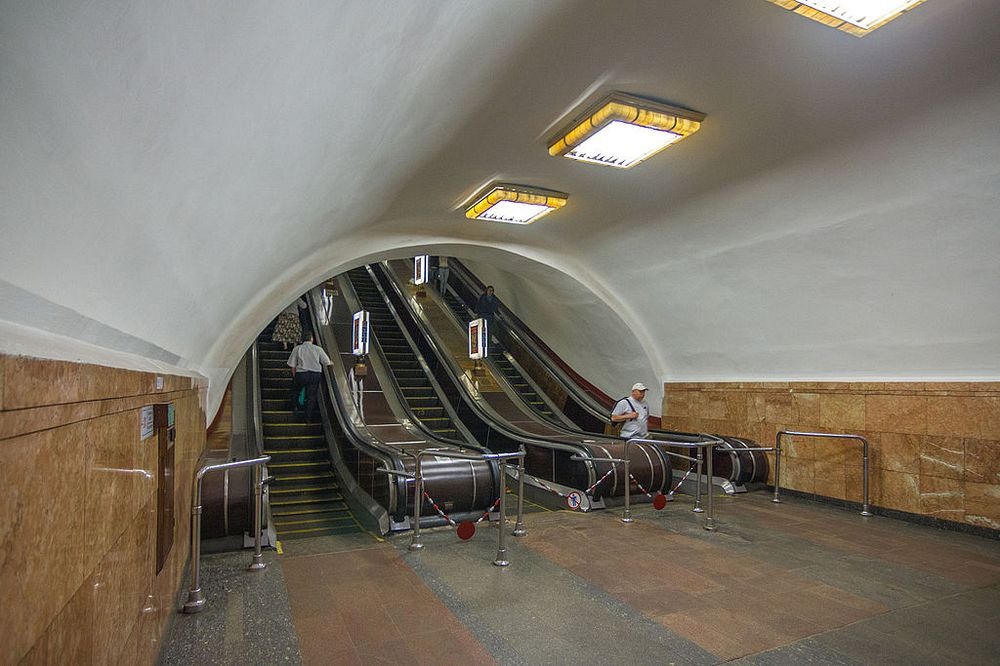
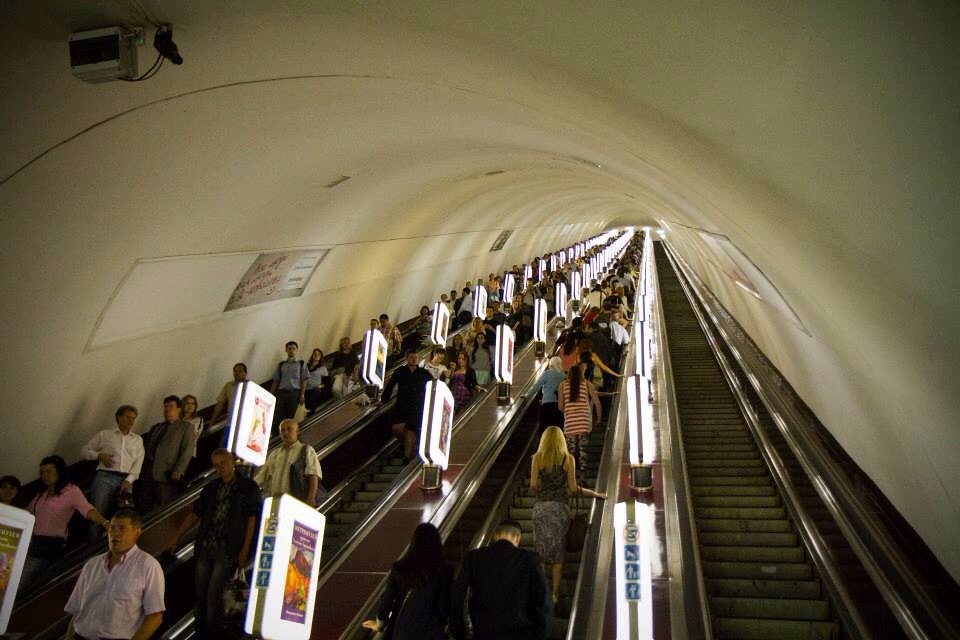
Many countries have facilitated their citizens with the metro trains for conveniently moving through public transport. The metro train owns different stations on shorter distances. The stations build for the trains may go underground or fly over the roads, rivers, mountains etc. It does not usually go underground beyond few stories. But the engineers have to go deep sometimes because of the geography of the particular region, such as the occurrence of swamps and rivers. One of the examples of such underground stations is Arsenalna, which is on the Sviatoshynsko-Brovarska Line of Kiev’s metro. This world’s deepest metro station is around 105.5 meters below the surface. The entire statue of liberty can be buried vertically in the shaft of such depth and still the 12 meters will be left to drop more things along with the statue. On this particular station, the passengers have to be in almost endless escalators for five minutes to reach the train passing underground. The escalator at Arsenalna metro station. Photo credit: AMY/Wikimedia
World's Deepest Metro Stationsarsenalna-metro-1
This uncommon depth of Arsenalna can be credited to the geography of the city of Kiev. The Dnieper river has the rises of its banks above the city, the station is next to this river. The entrance of the station is at the top of the vertical valley. Before the train line goes inside the high banks of the Dnieper’s, there is Dnipro station which is situated above the ground, near to the bank of river. Arsenalna had to built on the same level of Dnipro to evade the steep lineage which required the entrance to be almost hundred meters above the station.
World's Deepest Metro StationsKiev Arsenalna Metro station
Saint Petersburg metro deals with the world's deepest metro system and the second deepest metro station. Admiralteyskaya is the deepest station of the said system, situated 85 meters below the ground level of the area. The system has the longest escalators of the world which is even more than 130 meters.
World's Deepest Metro Stationsadmiralteyskaya-metro-2
The Soviet Union also has the deepest metro stations in the world. On the Moscow Metro, Park Pobedy is 84 meters deep into the ground and marks it to the third deepest station of the world. It is a stunningly decorated station like other stations in Russia.
World's Deepest Metro Stationspark-pobedy-1
There are some other deeper stations as well in the different regions of the world that are worth mentioning. In the Portland, US, the deepest station of North America is Washington Park which is 79 meters deep into the earth. The London underground network has Hampstead station which is 58.5 meters deep and the deepest one of the London. Namesti Meru is 53 meters below ground level located at Prague metro, Czech Republic.pyongyang-metro-4

History of The Moscow Cathedral

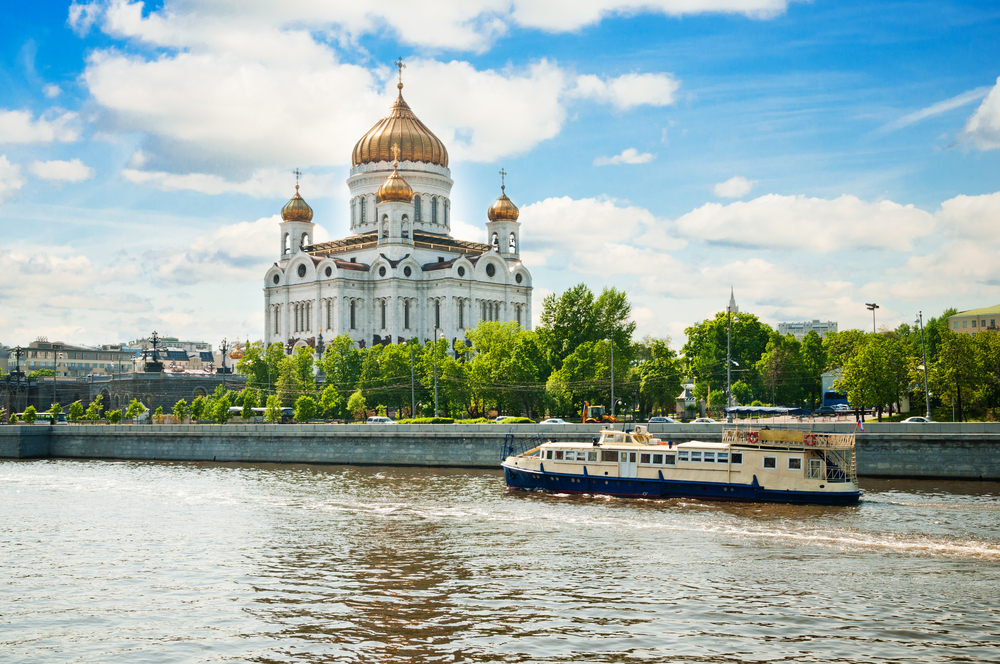
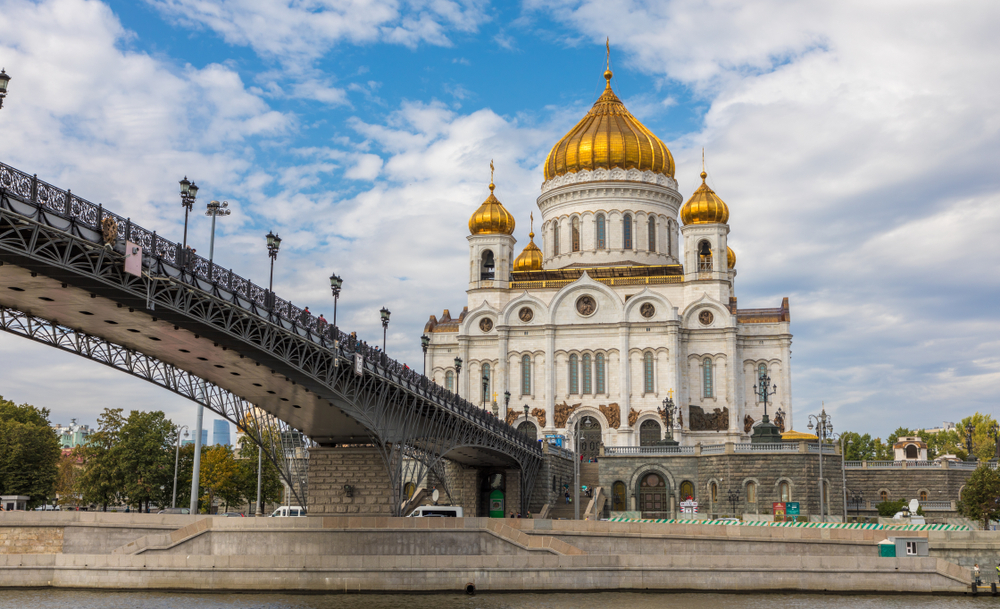
History of The Moscow Cathedral Cathedral of Christ the SaviourThe north bank of the Moskva river in Moscow hosts the Cathedral of Christ the Savior which is the world’s tallest Orthodox Christian church. A footbridge has been constructed for the pilgrims to reach the church from other side of the river. From most of the last 150 years, two churches were built successively.  The place was booked by a largest swimming pool of the Soviet Union in the superseding period.  Above Photo credit: Valeri Potapova/Shutterstock.com
The Old Cathedral Cathedral of Christ the Saviour
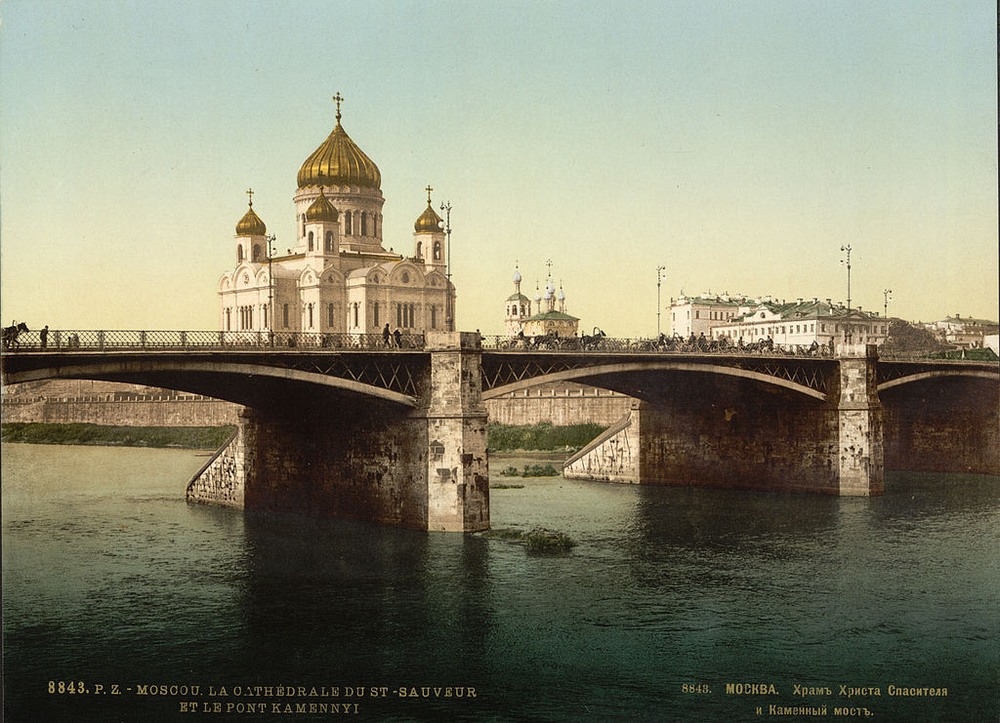
The Tsar Alexander I decided to build the Cathedral in the honor of Christ after Napoleon went back from the fatal defeat from Russia. The Alexandar thought that the Russia has won out of harm's way from the doom because of the wisdom of Lord’s divine.  An ostentatious neoclassical design occupied with Freemasonic representation was asked by the Tsar. Aleksandr Laverntyvich, an architect, delivered the extraordinary neoclassical design for the Cathedral efficaciously. But the successor of the Alexander I, Nicholas I, was extremely conventional and rejected the freemasonry and neoclassicism of the design. He changed both the site and design of the Church. New location was sited near to Moscow Kremlin and the previous site at Sparrow Hills was abandoned. The new design of Cathedral looked like the Constantinople’s Hagia Sophia. In 1839, Nicholas allowed to build the Cathedral Church after nearly 30 years of Alexander I.  Ground was broken in 1839, nearly three decades after Alexander I first expressed his desire to build the cathedral. It took 4 more decades to complete the structure and the old cathedral church finally completed as a holy place in 1883. Cathedral of Christ the Saviour
The best Russian painters were employed for the inner painting and the interior embellishment of the marvelous building of Cathedral of Christ the savior. The inner shrine of the church was covered by double-storey gallery which was beautifully decorated with rare granite, marble, and stones. One floor of the gallery was occupied by the victories of the Russian emperors and the other floor was reserved for the church choral groups. A thin layer of gold was used to cover the colossal dome of the Cathedral. The interior décor of the church took another 10 years to complete.
However, the beautification of the church was enjoyed for only 34 years. In 1917, the October Revolution started and the Soviet Union took place. The communists of the region did not like the religious behavior of the public and specially a state-owned church. So, the first thing they did was the harassment of believers and promoting atheism. The marvelous Cathedral survived 10 years of such cruelty and dynamited by Joseph Stalin in 1931 finally.
Palace of the Soviets
Cathedral of Christ the Saviour demolished
For the meantime, Soviet officials wanted to build 415 meters high, the largest building at the same place, naming it as the Palace of the Soviets. They wanted the building to use for the celebration of victory of communist and to conduct all important meeting at the great palace. The statue of Lenin was to be stood at the top of building which was 100 meters long. The construction also began in late 1930s, but the dream of standing such huge building for the celebration purpose never came true.
Only the lower levels of the palace were initiated by the steel frames when Hitler came to attack Russia. The construction that was once stopped at that time, never resumed. All efforts to resume the palace remained unused and the building was completely demolished in 1958.
The Pool of Moskva
Palace of the Soviets
In 1960, the circular foundation of the great Palace was filled with water and opened for the common public as the largest public swimming pool of the Soviet Union on the orders of First Secretary of Nikita Khrushchev. The pool was able to host more than 20000 people at a time since it had a diameter of 130 meters. Moscow Pool
Moscow Pool
Cathedral Returns
The religious politics began to evade after the end of Soviet Union. At time, Christian communities began to restore their churches and holy places. After the breaking of Soviet Union, the decision to rebuild the church at the same place where it was once the old Cathedral, was taken. The money for the Cathedral was collected from the Muscovites in forms of donation. The pool smashed in 1994, and once again the place became a holy place in 2000.Moscow Pool
History of The Moscow Cathedral
Cathedral of Christ the SaviourPhoto credit: Lids123 / Shutterstock.com

Incredible Jakarta’s Suburb Village on Rooftop

Jakarta’s Suburb Village on Rooftop Cosmo Park on top of Thamrin City Mall.
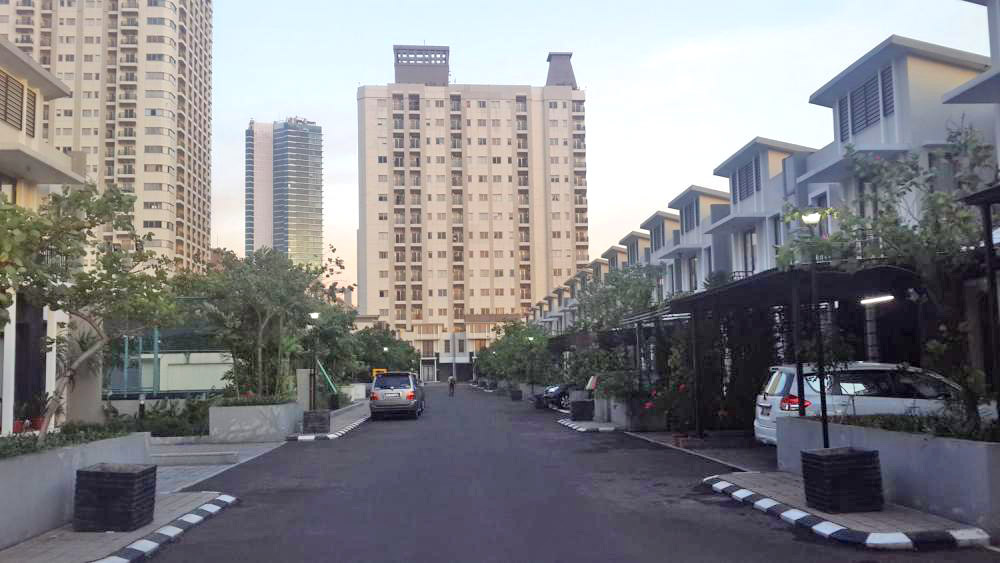
In the densely populated urban areas, the community developers and architects usually propose to utilize each and every space in the best suitable ways. Turning the rooftops into the splendid gardens is one of such propositions. In many regions such as Europe, America and Asia, there are very scarce outdoor spaces due to a large number of populations.  Therefore, the town planners and builders are making the variations in the rooftop designs and turning them into vegetable gardens and recreational places such as playgrounds with swimming pools. However, in Jakarta, Indonesia, the rooftop of a huge shopping mall has been converted into a lush village with small suburb sort of houses, tennis court, greenery and most importantly paved streets. The developer named this beautifully designed space as Cosmo Park.
Cosmo Park on top of Thamrin City Mall. Photo credit: Shahrir Bahar/instagram
Incredible Jakarta’s Suburb Village on Rooftop Cosmo Park on top of Thamrin City Mall.
The areal view of the Cosmo Park displays it as a real on ground suburb community whereas it has been placed on the tenth floor up from the ground on the rooftop of the Thamrin City Mall in Central Jakarta. There are 78 two storey houses managed in the 3-acre space where the elders and youngsters jog with their pets, the kids can ride on their bikes and even the residents can drive their cars. A metal parapet has been ensured as safety measure so that no one could fall or drive off.
Incredible Jakarta’s Suburb Village on Rooftop 
Cosmo Park on top of Thamrin City Mall.
The people residing in Cosmo park have shared their experience of the usual house at heights. They feel that its safer than regular communities, particularly its not as an apartment where the family can be isolated.  A resident shared his sentiments by naming the place as “lovely oasis" and saying that his family has more safety and privacy in Cosmo Park, their kids can play around, can ride their bikes and can play like in a park. Also, the residents may escape the situation of floods in Jakarta by moving to the spaces at such heights.
Incredible Jakarta’s Suburb Village on Rooftop 
Cosmo Park on top of Thamrin City Mall.
Street-level view of Cosmo Park. Photo credit: Agen properti
There is another such luxurious village constructed on the rooftop of the Mall of Indonesia in the sky of Jakarta. The 3 storey houses have been built in this village where the price of one house ranges from 3 to 5 millions of the local currency which means 200 to 350 thousands USD. The residents have to follow the same rules to stay there as in the usual town, same in fact, more strict traffic rules to ensure safety.
Incredible Jakarta’s Suburb Village on Rooftop 
Mall of Indonesia
Jakarta is one of the densest cities in the world with the population of over 10 million. To deal with such huge population with the affordable and reasonable houses, the city needs to grow vertically rather than the on-going pattern which is single-family house with low-rise. The developers, therefore, address the need of building such rooftop villages on the government owned buildings. Also, that Jakarta has very few green parks and garden i.e. less than 10 percent of the land area of city. By growing vertically, the city and governments may have win-win situation, that is the government may provide low cost apartments or houses on the roofs of existing buildings and the private houses may be demolished for more green spaces.
Incredible Jakarta’s Suburb Village on Rooftop Cosmo Park on top of Thamrin City Mall.
Incredible Jakarta’s Suburb Village on Rooftop 
Cosmo Park on top of Thamrin City Mall.

Transformation of Industrial Sites As Fascinating Parks


 Transformation of Industrial Sites As Fascinating ParksFerropolis.
In the early 1990s, an engineering and design firm Latz along with its partners transformed an industrial site located at Duisburg-Meiderich, Germany into an extraordinary stunning public recreation place which was later named as  Landschaftspark, or “landscape park. Most of the part of existing site was preserved. Shady groves and flourishing meadows were added in the place of extremely dirty sticky plants. Footpaths and bridges were constructed to add fascination. The contaminated water was supplanted by clean water. A huge festival place which can host the fifty thousand people at a time took place of boring industrial views.
Transformation of Industrial Sites As Fascinating Parks
Zollverein Coal Mine Complex Transformation of Industrial Sites As Fascinating ParksZollverein Coal Mine Complex

Transformation of Industrial Sites As Fascinating Parks

 This was not a new project which replaced the degenerated industrial place into the fresh aired hygienic site. One such project was built in the era of Napoleon III, in the late nineteenth century. In northeastern Paris, the Parc des Buttes-Chaumont was originally the place of gibbetting and hanging traitors and criminals. The place was turned into the junkyard and later was transformed in sewage depository and horse skeleton cutting after the revolution of 1789. Some part of the site was being used for the digging/mining purpose of limestone and gypsum. The architect JC Alphard then restructured the site entirely by varying the landscape and digging a lake. The idea was not to format the antique qualities but to refurnish them only. A bridge was also constructed to grasp the eye-catching view of the lake.  
Another such park was constructed in 1975 at Seattle. The site was covered for a gasification plant manufacturing coal gas, tar, sulfur and charcoal. In 1956, the 19-acre land was of no use after shutting down the plant. The city acquired the land and transformed it into the beautiful Gas Work Park. The same iron structure was transformed into the fascinating play areas. A complete picnic shelter having tables and fire grills was made from the little tear and care of boiler house, and an open-air play barn for the children was made from the exhauster-compressor. The boilers were covered with the greenery for adding more charm.
Transformation of Industrial Sites As Fascinating ParksParc des Buttes-Chaumont.

Parc des Buttes-Chaumont. Image credit: frlegros / Shutterstock.com

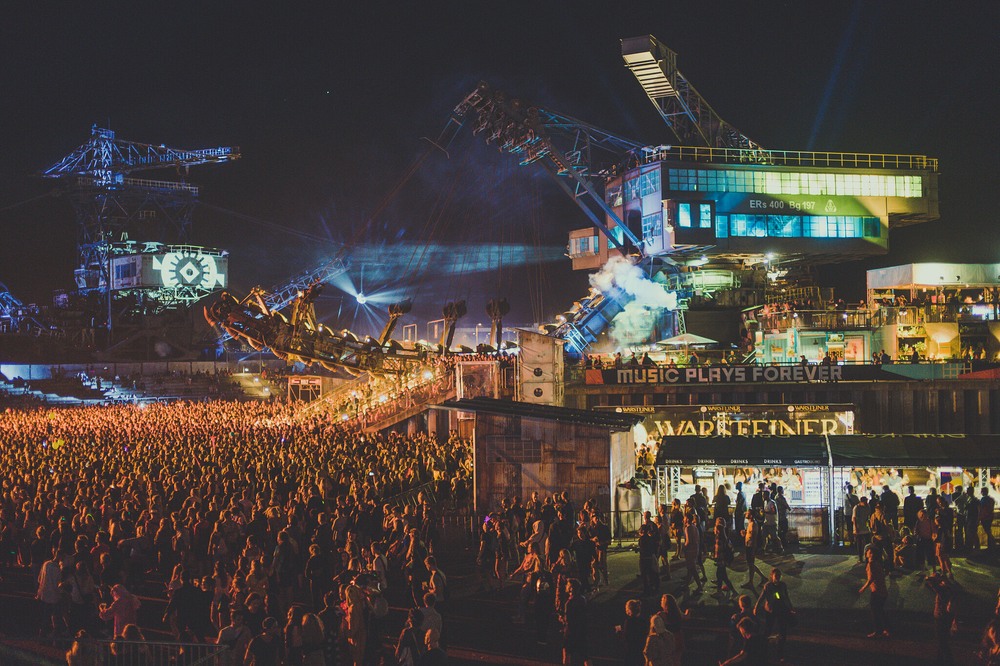
Ferropolis, a famous open-air museum in Germany, is also one of such projects. The site of Ferropolis located at the city of Gräfenhainichen , was basically an open-cast mine which was having the five giant industrial machines, each gauging up to 30 meters high and 130 meter long. The mine stopped working in 1990s, and the site was left for the open air museum surrounded by tremendous history of the industrial framework. The site is now a days a popular locations for music gala, opera and concerts. The lighting on the machinery creates a wow-factor in the fun functions
Europe is not the only region where examples of such projects can be seen, other regions have also transformed their industrial places into the great recreational places. In Oberhausen, a gasometer was transformed into the exhibition hall. In Vienna, the gasometers were turned into the apartments where people are residing. In London, a power station has been converted into the famous Tate Modern Art Gallery.
Landschaftspark Duisburg

The public park Landschaftspark in Duisburg-Meiderich, Germany. Image credit: mini_malist/Flickr


China’s Frozen Cave that Doesn’t Melt in Summer

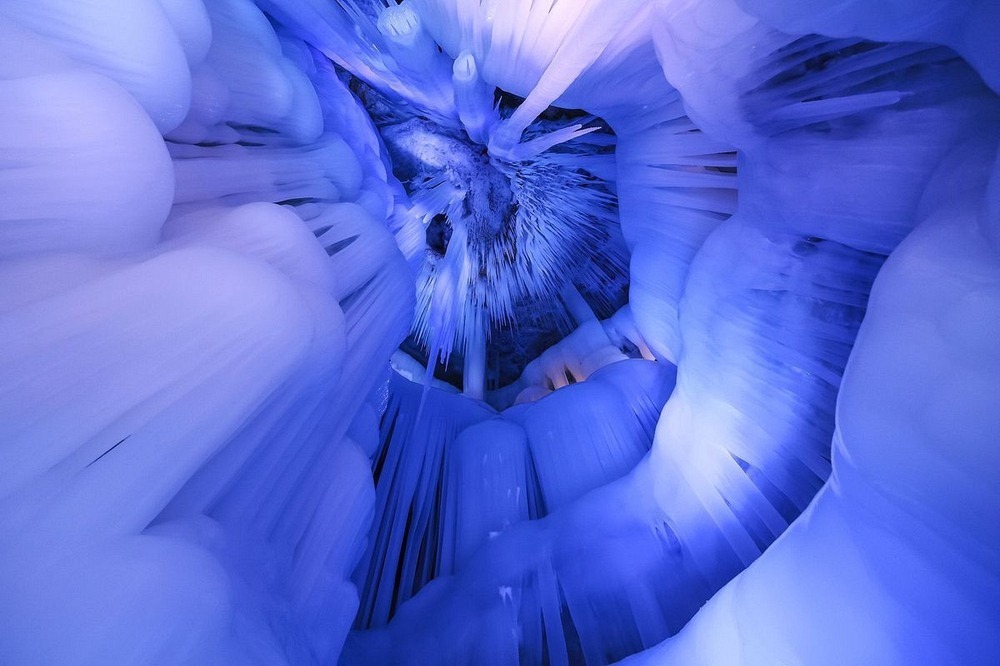
China’s Frozen Cave that Doesn’t Melt in Summerningwu-ice-cave-6China owns an 85-meter deep pin shaped frozen wonderland, named Ningwu cave, in the mountain range of the Shanxi province. Its structure is subterranean inside the mountain that never melts even in summer. The large stalactites and the spikes of the ice extend from the ceiling to floor. However the floor and walls are completely covered with the thick layers of ice. Ningwu’s unique and excellent ability of not thawing throughout the warm seasons increases its popularity and makes it a must visit place.   This always frozen cave can be seen in the high teen list due to the uniqueness of the phenomenon.
There are many such caves where the ice never melts throughout the year in other regions as well, such as Central Asia, continental Europe, and North America. But the reason of their non-melting nature is that they are located in the cooler places where the always low temperature keeps the cave stay at freezing points such as Iceland, Russi and Alaska. Eisriesenwelt, is the world’s largest cave situated at 40km south of Salzburg in  Werfen, Austria.  However, there are other cases too where the warm climates also deal with the ice caves well.
Such caves are also known as the “cold traps” as the funnels and exits inside the caves doesn’t allow the warm air to enter inside during summer and give the convenience to cold airs of winter to enter. The cold air is heavier which resolves into the cave and therefore, in summer, once cold air enters inside cannot exit as the place of warm air is lighter and cannot enter.
The inner environment of the cave stabilizes the temperature of ice inside the cave, indirectly playing the role of the buffer. Before the entered warm air could cause significant damage to the temperature inside and let the ice melt, its buffering system cools the warm air instantly. It does cause a little damage somehow, but doesn’t let the ambient temperature destroy.  However, it is also true that the very cold air in the winter causes some damage. When the very cold air flows, the water freezes which creates heat and stops the plummeting too low temperature.
The availability of necessary quantity of water over the right time has to be ensured for the formation of ice caves. The climate must be as warm as it may cause the mountains to be covered with the sufficient snow and reluctantly the summer should have as high temperature as it may cause the ice melt but not to the level that the ice turn into streams. That’s why a perfect atmospheric balance should have been maintained to form and balance the freezing and melting behavior of the ice.
In the American Midwest, there is a largest cave of US which contains ice named, Decorah Ice cave. It doesn’t have a constant nature of freezing. It freezes usually in the winter and remains ice less mostly in fall winter and throughout summer. In Pennsylvania, Coudersport Ice Mine is also one of the similar ice cave which is a small pit, where ice melts in winter and the ice cave forms in the summer months due to chilly winds throughout the season.
China’s Frozen Cave that Doesn’t Melt in Summereisriesenwelt-cave

China’s Frozen Cave that Doesn’t Melt in Summercoudersport-ice-mine-1
China’s Frozen Cave that Doesn’t Melt in Summer
booming-ice-chasm
China’s Frozen Cave that Doesn’t Melt in Summer
ningwu-ice-cave-1
China’s Frozen Cave that Doesn’t Melt in Summer
ningwu-ice-cave-2
China’s Frozen Cave that Doesn’t Melt in Summer
ningwu-ice-cave-3
China’s Frozen Cave that Doesn’t Melt in Summer
ningwu-ice-cave-4
China’s Frozen Cave that Doesn’t Melt in Summer
ningwu-ice-cave-5
China’s Frozen Cave that Doesn’t Melt in Summer
ningwu-ice-cave-7
China’s Frozen Cave that Doesn’t Melt in Summer