Capua's Ancient Amphitheater: A Roman Landmark of Historic Significance

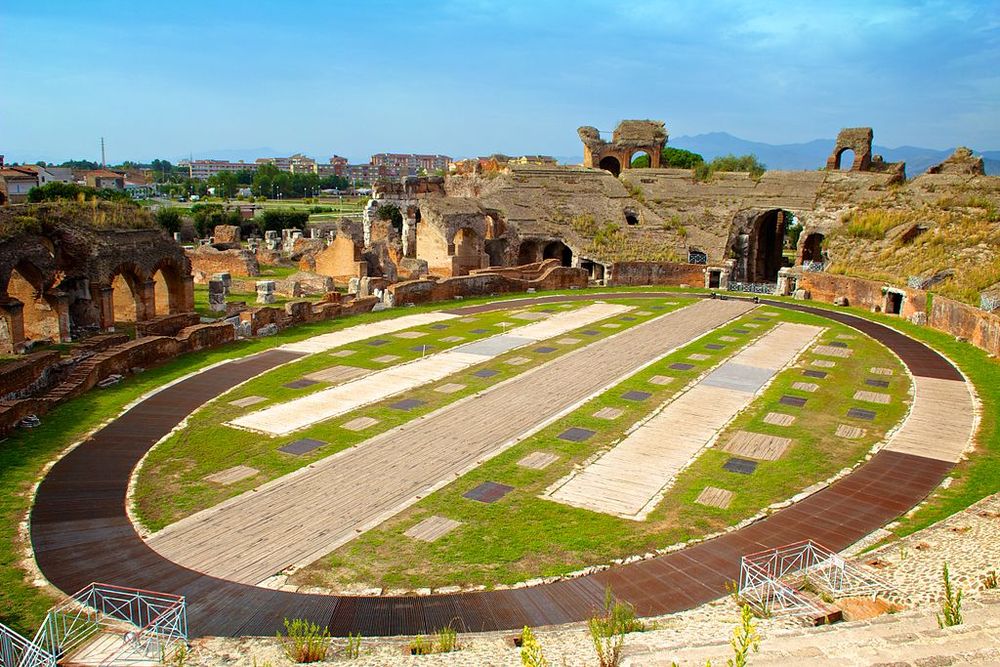
In the heart of southern Italy lies a monument that once echoed with the roars of thousands — a place where gladiators rose to fame and legends were born. The Amphitheater of Capua, often overshadowed by Rome’s Colosseum, is one of the most remarkable and underappreciated architectural feats of the Roman Empire. Standing in Santa Maria Capua Vetere, this grand structure predates the Colosseum itself and served as a prototype for Rome’s most famous arena. Yet, beyond its scale and splendor, Capua’s amphitheater holds the untold stories of courage, cruelty, and the cultural heartbeat of an empire obsessed with spectacle. Above Photo: Nicola D'Orta/Wikimedia
The Birth of a Roman Marvel
Capua’s history stretches deep into antiquity. Once one of the wealthiest and most influential cities of ancient Italy, Capua was a key ally — and occasionally a rival — of Rome. By the 1st century BCE, the city’s prosperity and strategic location made it an ideal candidate for monumental construction. Thus, the Amphitheater of Capua was born — an architectural statement of power, artistry, and civic pride.
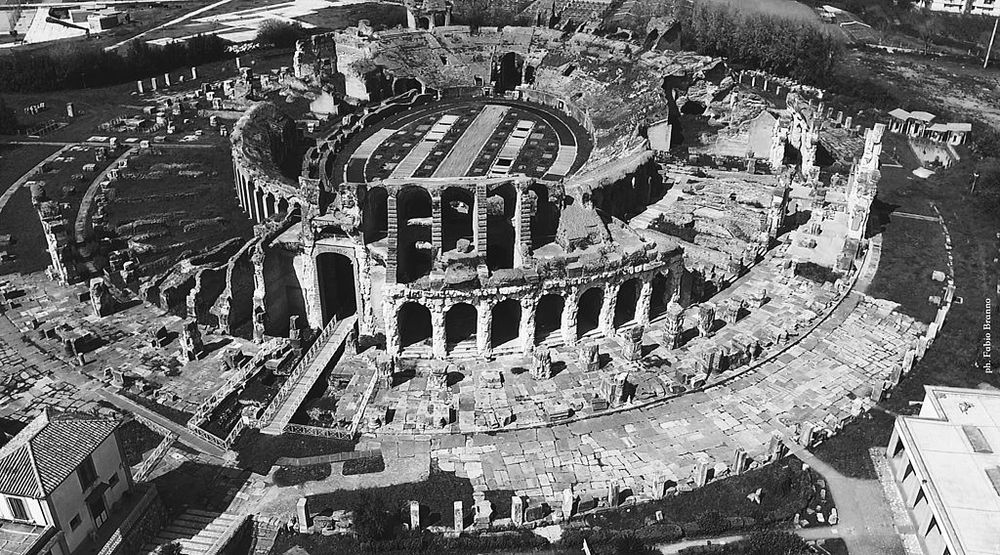
Built during the reign of Augustus and later reconstructed under Emperor Hadrian and Antoninus Pius, the amphitheater became one of the largest in the Roman world. Measuring approximately 170 meters long and 140 meters wide, it could hold over 60,000 spectators, nearly rivaling the Colosseum’s capacity. Crafted primarily from limestone and adorned with intricate marble statues, the arena stood as a centerpiece of Roman urban life in Campania.
Architectural Brilliance Beyond Its Time
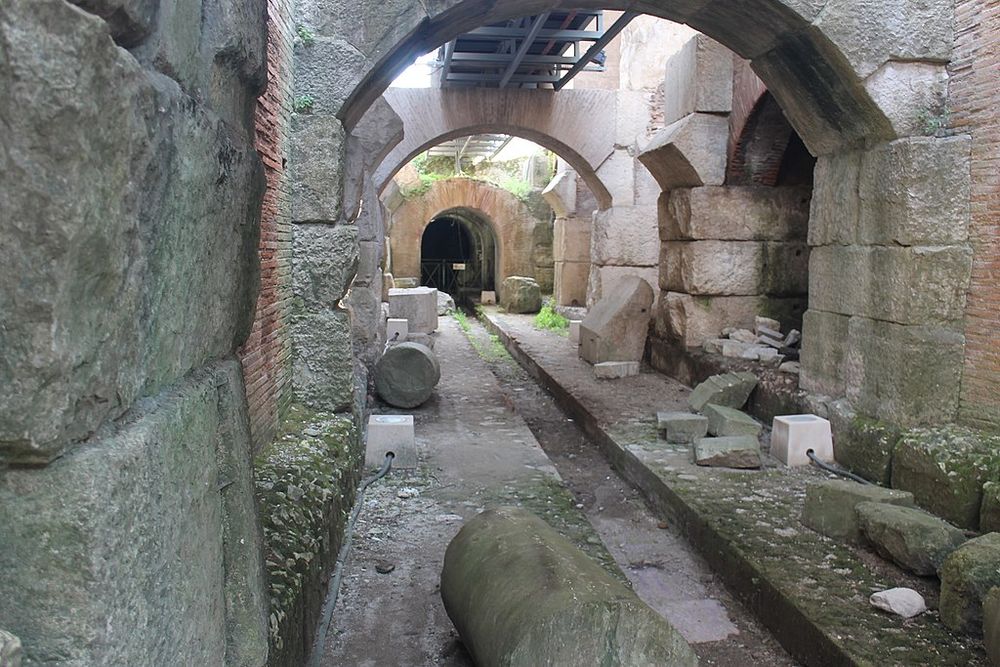
What sets the Amphitheater of Capua apart from its counterparts is its innovative design. Historians believe that many features of the Colosseum — including the underground hypogeum (a network of tunnels and cages used for animals and stage effects) — were first tested here. The structure’s complex system of ramps, lifts, and trapdoors made it a marvel of ancient engineering.
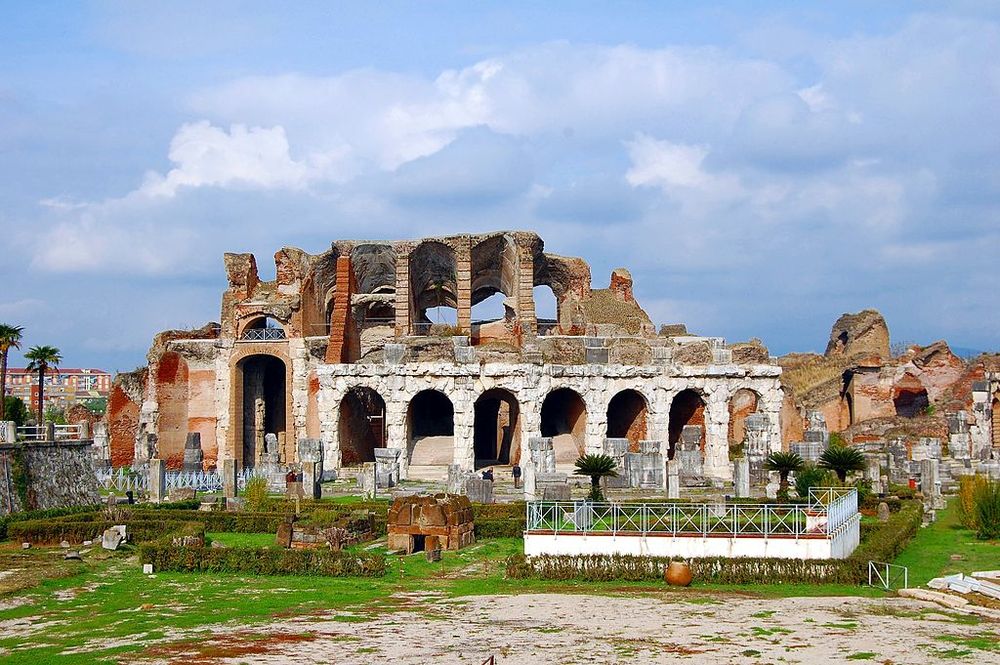
The outer façade once displayed 80 arches across four levels, decorated with Corinthian columns and statues of deities and heroes. Today, only fragments remain, but even in ruin, the amphitheater exudes grandeur. Walking through its arched corridors, one can almost hear the distant clash of swords and the cheers of a crowd intoxicated by the thrill of combat.
The Gladiators of Capua: Legends of Blood and Honor
Perhaps the most fascinating chapter of Capua’s story is its connection to gladiators. The city housed one of the largest and most prestigious gladiator schools (ludus) in the Roman Empire. It was here, around 73 BCE, that Spartacus, a Thracian slave and gladiator, led a rebellion that would shake Rome to its core.
The Spartacus Revolt, also known as the Third Servile War, began in Capua when Spartacus and roughly 70 of his fellow gladiators escaped their confinement, armed initially with kitchen knives. Their uprising grew into a massive revolt of slaves and disillusioned soldiers that challenged Roman authority for nearly two years. The echoes of that defiance still linger in the stones of Capua — a reminder that this arena was not just a place of entertainment, but also a crucible of freedom and resistance.
Life and Death in the Arena
In its prime, the amphitheater hosted a dizzying array of spectacles — from gladiatorial duels to wild beast hunts and public executions. These events weren’t merely for leisure; they were deeply political and symbolic. They reinforced Rome’s dominance, celebrated imperial victories, and demonstrated the empire’s ability to control both man and beast.
The games at Capua were often lavish affairs, funded by wealthy magistrates seeking public favor. Exotic animals were imported from Africa and the East — lions, leopards, and elephants — adding exoticism and danger to the performances. The crowds demanded blood, and the amphitheater delivered. Yet, amid the brutality, there was an undeniable artistry to the choreography of battle — a dark dance that mirrored the discipline and order of Roman life itself.

Capua’s Decline and Rediscovery
Like many Roman cities, Capua’s fortunes waned with the fall of the empire. Earthquakes, invasions, and neglect slowly reduced the once-mighty amphitheater to ruins. During the Middle Ages, its stones were repurposed to build churches and fortifications, leaving behind a hollow shell of its former self.
However, the amphitheater never vanished completely from memory. Renaissance scholars and antiquarians rediscovered its remains, recognizing its architectural importance. Excavations in the 18th and 19th centuries uncovered mosaics, inscriptions, and sculptures, shedding light on the lives of those who built and fought within its walls. Today, archaeologists continue to uncover artifacts that reveal the amphitheater’s role as both a cultural and spiritual hub of Roman Capua.
The Capuan Amphitheater vs. The Colosseum
While the Colosseum in Rome often steals the spotlight, the Capuan Amphitheater deserves equal admiration. In fact, it is believed that Emperor Vespasian’s architects studied Capua’s design before constructing the Colosseum. The amphitheater in Capua was not just a precursor — it was a blueprint that influenced the architectural evolution of Roman entertainment spaces.
Unlike the Colosseum, Capua’s arena is less commercialized and more intimate. Visitors can explore the underground passages, touch the ancient stones, and imagine the intensity of the spectacles that once unfolded there without the barriers of modern tourism. It offers a purer, more contemplative experience — one where history feels alive and immediate.
Preservation and Tourism Today
Today, the Anfiteatro Campano (as it is locally known) is a protected archaeological site managed by the Italian Ministry of Culture. Restoration projects have stabilized parts of the structure, and an on-site museum displays artifacts including gladiator helmets, weapons, pottery, and inscriptions.
Visitors can wander through the amphitheater’s vast tunnels and stands, feeling the weight of history under their feet. The site also hosts occasional cultural events — concerts, exhibitions, and guided tours — aimed at rekindling interest in Capua’s forgotten glory.
Despite its relative obscurity, Capua’s amphitheater is gaining recognition as travelers seek authentic, less-crowded destinations rich in history. It represents the soul of ancient Italy — powerful, dramatic, and profoundly human.
A Legacy Set in Stone
Capua’s Ancient Amphitheater is more than a ruin; it is a living reminder of human ambition and impermanence. It tells the story of a civilization that sought meaning in spectacle and power in architecture. From Spartacus’s defiance to the grand games of emperors, the arena’s stones bear witness to humanity’s endless pursuit of glory.
As sunlight filters through its crumbling arches, illuminating wildflowers that now bloom where gladiators once stood, Capua feels less like a relic and more like a reflection — of the rise and fall of empires, and of the eternal rhythm of history itself.
Capua’s history stretches deep into antiquity. Once one of the wealthiest and most influential cities of ancient Italy, Capua was a key ally — and occasionally a rival — of Rome. By the 1st century BCE, the city’s prosperity and strategic location made it an ideal candidate for monumental construction. Thus, the Amphitheater of Capua was born — an architectural statement of power, artistry, and civic pride.
Built during the reign of Augustus and later reconstructed under Emperor Hadrian and Antoninus Pius, the amphitheater became one of the largest in the Roman world. Measuring approximately 170 meters long and 140 meters wide, it could hold over 60,000 spectators, nearly rivaling the Colosseum’s capacity. Crafted primarily from limestone and adorned with intricate marble statues, the arena stood as a centerpiece of Roman urban life in Campania.
Architectural Brilliance Beyond Its Time
What sets the Amphitheater of Capua apart from its counterparts is its innovative design. Historians believe that many features of the Colosseum — including the underground hypogeum (a network of tunnels and cages used for animals and stage effects) — were first tested here. The structure’s complex system of ramps, lifts, and trapdoors made it a marvel of ancient engineering.
The outer façade once displayed 80 arches across four levels, decorated with Corinthian columns and statues of deities and heroes. Today, only fragments remain, but even in ruin, the amphitheater exudes grandeur. Walking through its arched corridors, one can almost hear the distant clash of swords and the cheers of a crowd intoxicated by the thrill of combat.
The Gladiators of Capua: Legends of Blood and Honor
Perhaps the most fascinating chapter of Capua’s story is its connection to gladiators. The city housed one of the largest and most prestigious gladiator schools (ludus) in the Roman Empire. It was here, around 73 BCE, that Spartacus, a Thracian slave and gladiator, led a rebellion that would shake Rome to its core.
The Spartacus Revolt, also known as the Third Servile War, began in Capua when Spartacus and roughly 70 of his fellow gladiators escaped their confinement, armed initially with kitchen knives. Their uprising grew into a massive revolt of slaves and disillusioned soldiers that challenged Roman authority for nearly two years. The echoes of that defiance still linger in the stones of Capua — a reminder that this arena was not just a place of entertainment, but also a crucible of freedom and resistance.
Life and Death in the Arena
In its prime, the amphitheater hosted a dizzying array of spectacles — from gladiatorial duels to wild beast hunts and public executions. These events weren’t merely for leisure; they were deeply political and symbolic. They reinforced Rome’s dominance, celebrated imperial victories, and demonstrated the empire’s ability to control both man and beast.
The games at Capua were often lavish affairs, funded by wealthy magistrates seeking public favor. Exotic animals were imported from Africa and the East — lions, leopards, and elephants — adding exoticism and danger to the performances. The crowds demanded blood, and the amphitheater delivered. Yet, amid the brutality, there was an undeniable artistry to the choreography of battle — a dark dance that mirrored the discipline and order of Roman life itself.

Capua’s Decline and Rediscovery
Like many Roman cities, Capua’s fortunes waned with the fall of the empire. Earthquakes, invasions, and neglect slowly reduced the once-mighty amphitheater to ruins. During the Middle Ages, its stones were repurposed to build churches and fortifications, leaving behind a hollow shell of its former self.
However, the amphitheater never vanished completely from memory. Renaissance scholars and antiquarians rediscovered its remains, recognizing its architectural importance. Excavations in the 18th and 19th centuries uncovered mosaics, inscriptions, and sculptures, shedding light on the lives of those who built and fought within its walls. Today, archaeologists continue to uncover artifacts that reveal the amphitheater’s role as both a cultural and spiritual hub of Roman Capua.
The Capuan Amphitheater vs. The Colosseum
While the Colosseum in Rome often steals the spotlight, the Capuan Amphitheater deserves equal admiration. In fact, it is believed that Emperor Vespasian’s architects studied Capua’s design before constructing the Colosseum. The amphitheater in Capua was not just a precursor — it was a blueprint that influenced the architectural evolution of Roman entertainment spaces.
Unlike the Colosseum, Capua’s arena is less commercialized and more intimate. Visitors can explore the underground passages, touch the ancient stones, and imagine the intensity of the spectacles that once unfolded there without the barriers of modern tourism. It offers a purer, more contemplative experience — one where history feels alive and immediate.
Preservation and Tourism Today
Today, the Anfiteatro Campano (as it is locally known) is a protected archaeological site managed by the Italian Ministry of Culture. Restoration projects have stabilized parts of the structure, and an on-site museum displays artifacts including gladiator helmets, weapons, pottery, and inscriptions.
Visitors can wander through the amphitheater’s vast tunnels and stands, feeling the weight of history under their feet. The site also hosts occasional cultural events — concerts, exhibitions, and guided tours — aimed at rekindling interest in Capua’s forgotten glory.
Despite its relative obscurity, Capua’s amphitheater is gaining recognition as travelers seek authentic, less-crowded destinations rich in history. It represents the soul of ancient Italy — powerful, dramatic, and profoundly human.
A Legacy Set in Stone
Capua’s Ancient Amphitheater is more than a ruin; it is a living reminder of human ambition and impermanence. It tells the story of a civilization that sought meaning in spectacle and power in architecture. From Spartacus’s defiance to the grand games of emperors, the arena’s stones bear witness to humanity’s endless pursuit of glory.
As sunlight filters through its crumbling arches, illuminating wildflowers that now bloom where gladiators once stood, Capua feels less like a relic and more like a reflection — of the rise and fall of empires, and of the eternal rhythm of history itself.
Capua's Ancient Amphitheater: A Roman Landmark of Historic Significance

Photo: jimmyweee/Wikimedia
Capua's Ancient Amphitheater: A Roman Landmark of Historic Significance
Capua's Ancient Amphitheater: A Roman Landmark of Historic Significance

Photo: Fabiobranno/Wikimedia
Capua's Ancient Amphitheater: A Roman Landmark of Historic Significance

Amphitheater undergrounds. Photo: Saverio.G/Wikimedia

.JPG)

.jpg)


_27.jpg)