Showing posts with label Desert. Show all posts

The Lost Kingdom of Khara-Khoto: A Tale of Prosperity and Tragedy in the Gobi Desert

The Lost Kingdom of Khara-Khoto: A Tale of Prosperity and Tragedy in the Gobi Desert

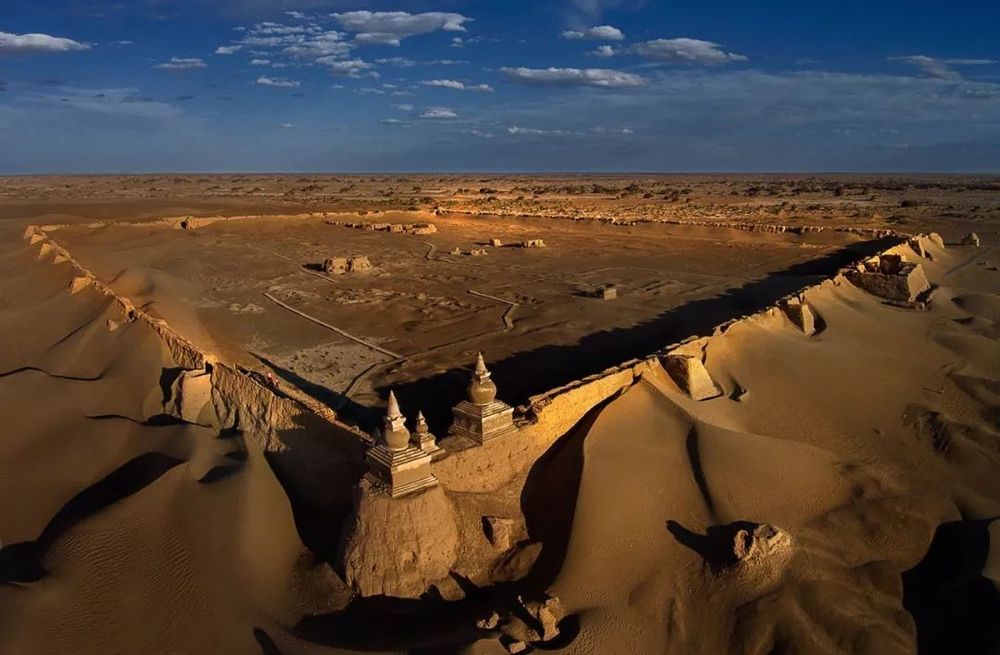
In the heart of Poland’s Baltic coast lies Gdańsk—a city where history, architecture, and the sea intertwine seamlessly. But amid the medieval facades and shipyard cranes stands a structure that captures a very different chapter of the city’s story: the Falowiec, or “wavy building.” With its undulating facade and massive scale, the Falowiec isn’t just an apartment block—it’s a symbol of post-war resilience, socialist urban design, and the human need to find home in even the most concrete landscapes.  Four of the five Yuan dynasty stupas sited on top of the northwest corner of the walls of Kharakhoto. Above Photo: Yeoh Thean Kheng/Flickr

A City Rebuilt from the Ashes

Gdańsk has always been a city of change. Once a thriving port known as Danzig, it was nearly destroyed during World War II. When the dust settled, the city faced a monumental challenge—how to rebuild housing for tens of thousands displaced by war and devastation.

Enter the era of socialist realism and the rise of prefabricated housing blocks, known in Polish as bloki. These concrete towers became the backbone of post-war urban planning across Eastern Europe. They were practical, fast to construct, and symbolized a new, collective vision of society. Yet among these utilitarian designs, the Falowiec stood out.

The Birth of the Falowiec

The word Falowiec comes from fala, meaning “wave,” an apt name for the building’s distinctive form. Designed in the 1960s and completed in the early 1970s, the Falowiec of Gdańsk was conceived as part of the Przymorze housing estate—a vast residential project meant to accommodate thousands of residents along the coast.

Stretching an incredible 860 meters (2,820 feet) in length and 11 stories high, the Falowiec remains one of the longest residential buildings in Europe. Its wavy design was not just aesthetic; it served practical purposes too. The curve helped break the monotony of traditional block layouts and softened the impact of harsh coastal winds sweeping in from the Baltic Sea.

Each wave of the building formed small courtyards and micro-communities, creating a sense of neighborhood within an otherwise massive structure. At its peak, the Falowiec housed over 6,000 residents, essentially functioning as a vertical town.


The Lost Kingdom of Khara-Khoto: A Tale of Prosperity and Tragedy in the Gobi Desert

The mosque at the southeast corner of Kharakhoto, circa 1914. Photo: Aurel Stein/Wikimedia

Socialist Dreams in Concrete

The Falowiec represented the height of socialist architectural ambition—a utopian dream rendered in steel and concrete. The goal was not merely to provide shelter but to engineer a way of life rooted in equality and community.

Apartments were small but functional, with standardized layouts. Balconies curved outward, offering views of the coast or the city skyline. Ground-level shops, kindergartens, and service centers were meant to make the Falowiec a self-contained ecosystem, a living model of socialist urban planning.

For architects and planners, it was a triumph—a symbol of a modern future. But for many residents, the reality was more complex. While the design offered efficiency and community spirit, it also brought issues of overcrowding, maintenance, and anonymity. Over time, the concrete walls began to crack—not just physically, but socially.

Life Within the Waves

Despite its imposing size, the Falowiec became home to generations of Gdańsk families. Children played in its courtyards, neighbors shared gossip across balconies, and markets buzzed in the spaces between the building’s curves. Each floor, each section of the building developed its own rhythm and personality.

For many residents, living in the Falowiec was a source of pride. It represented stability in uncertain times. In a Poland still under socialist rule, owning an apartment in such a modern complex was a privilege. The building became an urban icon—both loved and criticized, both ordinary and extraordinary.

The Falowiec also reflected the human adaptability that defines city life. People decorated their identical flats with personality—colorful curtains, patterned carpets, homemade furniture. Within the rigid uniformity of concrete, individuality still found room to grow.

The Lost Kingdom of Khara-Khoto: A Tale of Prosperity and Tragedy in the Gobi Desert

Stacks of mud bricks for repair work outside the south wall of Kharakhoto. Photo: BabelStone/Wikimedia

From Concrete to Culture

By the late 1980s and early 1990s, as Poland transitioned from communism to democracy, the Falowiec and buildings like it faced new challenges. Maintenance costs soared, and socialist-era construction often aged poorly. Yet rather than crumble into neglect, the Falowiec evolved.

Artists, photographers, and urban explorers began to see beauty where others saw blandness. Its rhythmic design, sheer scale, and visual repetition made it a fascinating subject for architectural study. The Falowiec started appearing in documentaries, photo exhibitions, and even travel blogs, symbolizing not decay—but endurance.

In many ways, the Falowiec became a cultural artifact, embodying Poland’s passage from socialism to modernity. For younger generations, it serves as a reminder of both the dreams and the limits of post-war urban planning.

The Falowiec Today

Today, the Falowiec still stands proudly on the coast of Gdańsk, home to thousands. Modern renovations, insulation updates, and colorful facades have helped revitalize its appearance. Some sections have even become trendy, as younger Poles embrace the nostalgia of retro architecture.

Walking through the building today feels like entering a time capsule. The long, echoing corridors and endless balconies tell stories of decades past—of laughter, struggle, and the everyday resilience of city life. For visitors, the Falowiec offers a glimpse into Poland’s living history—an architectural legacy that continues to shape Gdańsk’s skyline.

Local pride has also grown. What was once dismissed as a relic of socialist architecture is now being reappraised as a symbol of creativity under constraint. The Falowiec isn’t just concrete; it’s character.

Symbol of Resilience and Identity

The Falowiec embodies more than just a housing solution—it represents resilience, adaptation, and community. Despite political and social changes, it remains a functional home to thousands, a living monument to the city’s post-war rebirth.

Its design reminds us that architecture is not merely about aesthetics—it’s about people, identity, and endurance. While Gdańsk is known for its medieval Old Town and shipyard revolution, the Falowiec adds another layer to its identity—a modern icon that reflects the human capacity to rebuild, redefine, and reinvent.

The Lost Kingdom of Khara-Khoto: A Tale of Prosperity and Tragedy in the Gobi Desert

Waves of Memory and Meaning

The Falowiec of Gdańsk stands as both a product of its time and a timeless reminder of human ingenuity. From its origins in socialist ambition to its modern reinterpretation as a cultural symbol, the building has survived wars, ideologies, and decades of urban transformation.

It may not be as ornate as the city’s Gothic churches or as glamorous as its coastal promenades, but the Falowiec tells a story that belongs to the people—a story of endurance, community, and quiet beauty found in concrete waves.
So next time you find yourself in Gdańsk, take a walk by the Falowiec. Look up at its flowing silhouette against the Baltic sky, and you’ll see not just a building, but a legacy—one that continues to ripple through time, just like the waves it was named for.
Khara-Khoto: The Lost City of the Gobi Desert

 Khara-Khoto: The Lost City of the Gobi Desert

Khara-Khoto

Hidden deep within the vast Gobi Desert lies a haunting and mysterious sight—the ruins of Khara-Khoto. This ancient city, also known as "Black City," is a testament to the rise and fall of civilizations, standing as a silent witness to the passage of time. Located in present-day Mongolia, the ruins of Khara-Khoto beckon adventurers and history enthusiasts to unravel its enigmatic past.

Khara-Khoto was once a thriving and prosperous city during the height of the Western Xia Empire in the 11th century. It served as the capital of this long-lost civilization, nestled along the Silk Road, a vital trade route connecting East Asia with the rest of the world. The city thrived as a bustling hub of commerce, culture, and knowledge.

The name "Khara-Khoto" translates to "Black City" in the Mongolian language, derived from the dark color of the ruins. The origins of the city's abandonment and subsequent ruin remain shrouded in mystery. It is believed that Khara-Khoto fell victim to a combination of factors, including invasions, conflicts, and ecological changes in the region.

During the 13th century, the Mongol Empire under Genghis Khan began its rapid expansion, sweeping across vast territories. Khara-Khoto faced the wrath of Mongol forces, and its once-thriving civilization was subjected to destruction and desolation. The city's downfall accelerated with subsequent invasions, including those by the Yuan Dynasty and the Ming Dynasty.

The remote location of Khara-Khoto, surrounded by arid desert, contributed to its isolation and eventual abandonment. Over time, shifting sand dunes swallowed the structures, preserving them beneath the surface until their rediscovery in the early 20th century. Expeditions led by Russian archaeologist Pyotr Kozlov in 1908 uncovered the hidden ruins, unearthing a treasure trove of historical artifacts and insights into the ancient Western Xia Empire.

The ruins of Khara-Khoto offer a glimpse into a bygone era. Exploring the site reveals the remnants of a once-thriving city, with crumbling walls, broken pottery, and fragments of ancient sculptures scattered amidst the sandy landscape. The city's layout reflects its strategic importance, with remnants of defensive walls, gates, and watchtowers that once guarded its inhabitants.

One of the most remarkable discoveries at Khara-Khoto was a vast library of manuscripts. These invaluable texts shed light on the cultural and intellectual pursuits of the Western Xia Empire. The manuscripts, written in various languages, including Chinese, Tibetan, and Uighur, provide insights into the empire's religion, governance, literature, and daily life. They serve as a crucial link to understanding the history and culture of a civilization lost to time.

The ruins of Khara-Khoto continue to fascinate and captivate researchers, archaeologists, and history enthusiasts. Ongoing excavations and preservation efforts aim to unravel the secrets hidden within this forgotten city, offering a glimpse into the lives of its inhabitants and the interconnectedness of ancient civilizations along the Silk Road.

Visiting the ruins of Khara-Khoto is an extraordinary experience, taking travelers on a journey through time. Amidst the vast emptiness of the desert, the site's haunting beauty and historical significance leave a lasting impression. It serves as a poignant reminder of the transience of human existence and the impermanence of even the mightiest civilizations.

As the ruins of Khara-Khoto stand silently, bearing the weight of centuries, they invite us to contemplate the rise and fall of civilizations and the enduring legacy of those who came before us.

Above Photo: Twitter

 Khara-Khoto: The Lost City of the Gobi Desert

Khara-Khoto

Four of the five Yuan dynasty stupas sited on top of the northwest corner of the walls of Kharakhoto. Photo: Yeoh Thean Kheng/Flickr


 Khara-Khoto: The Lost City of the Gobi Desert

Khara-Khoto

The mosque at the southeast corner of Kharakhoto, circa 1914. Photo: Aurel Stein/Wikimedia

 Khara-Khoto: The Lost City of the Gobi Desert

Khara-Khoto

Stacks of mud bricks for repair work outside the south wall of Kharakhoto. Photo: BabelStone/Wikimedia

 Khara-Khoto: The Lost City of the Gobi Desert

Khara-Khoto

Photo: Fandorine1959/Wikimedia

The Guardians of Rome: Limes Arabicus - A Line of Fortresses Safeguarding Against Desert Tribes

The Guardians of Rome: Limes Arabicus - A Line of Fortresses Safeguarding Against Desert Tribes

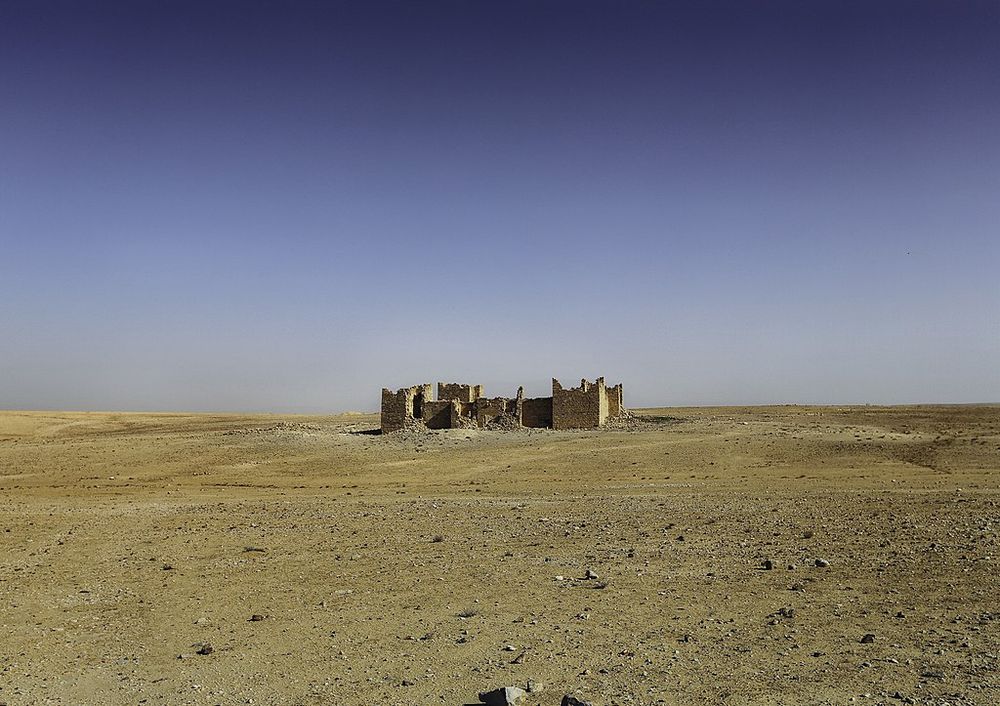
Ruins of the castellum of Qasr Bashir

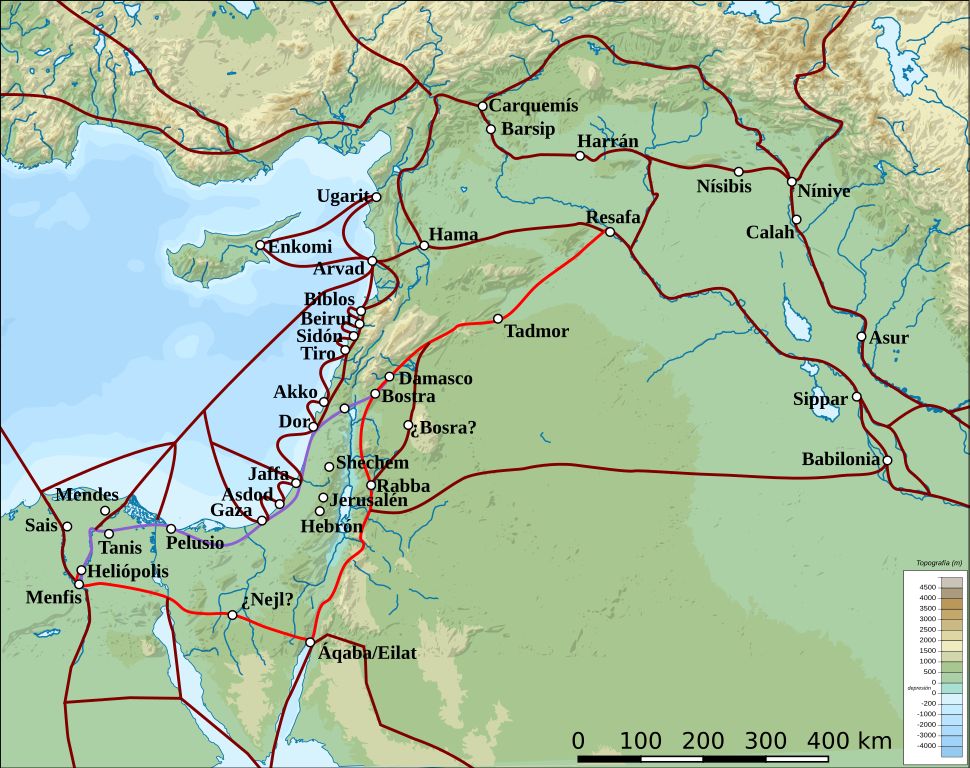
Ruins of the castellum of Qasr Bashir. Photo: Bashar Tabbah/Wikimedia The Roman Empire, known for its vast expanse and military might, faced numerous challenges in maintaining control over its territories. One of the most significant threats came from the desert tribes that inhabited the arid regions surrounding the empire. To safeguard their territories from these nomadic tribes, the Romans constructed a formidable line of fortifications known as Limes Arabicus. King's Highway (in red), and other ancient Levantine trade routes

King's Highway (in red), and other ancient Levantine trade routes, c. 1300 BCE. Image credit: Briangotts, rowanwindwhistler/Wikimedia

Limes Arabicus was a network of fortresses, walls, and watchtowers that stretched across the frontier of the Roman province of Arabia Petraea, which encompassed parts of modern-day Jordan, Saudi Arabia, and Israel. Built during the 2nd and 3rd centuries AD, this defensive system played a vital role in protecting the Roman territory from the raids and incursions of desert tribes.

The Fortress of Qasr Bshir

The Fortress of Qasr Bshir. Photo: Bashar Tabbah/Wikimedia

The primary purpose of Limes Arabicus was to act as a physical barrier, preventing unauthorized entry into the Roman province. It served as a deterrent, demonstrating the power and determination of the Roman Empire to maintain control over its territories. Moreover, it established a clear boundary that demarcated the Roman sphere of influence from the tribal territories beyond.

The construction of Limes Arabicus was an engineering marvel of its time. The fortifications varied in design and structure depending on the terrain and the strategic importance of the location. In some areas, massive stone walls were erected, reinforced with towers and bastions, while in others, natural features such as cliffs and ravines were utilized to create natural barriers. The fortresses along the line were strategically positioned to provide maximum visibility and defense, enabling efficient communication and coordination between the garrisons.

The fortresses themselves were equipped with all the necessary facilities to sustain the Roman soldiers stationed there. They had barracks, granaries, storage facilities, stables, and even water supply systems. These fortifications served as military bases from which Roman troops could launch counterattacks, conduct reconnaissance, and maintain a constant presence in the region.

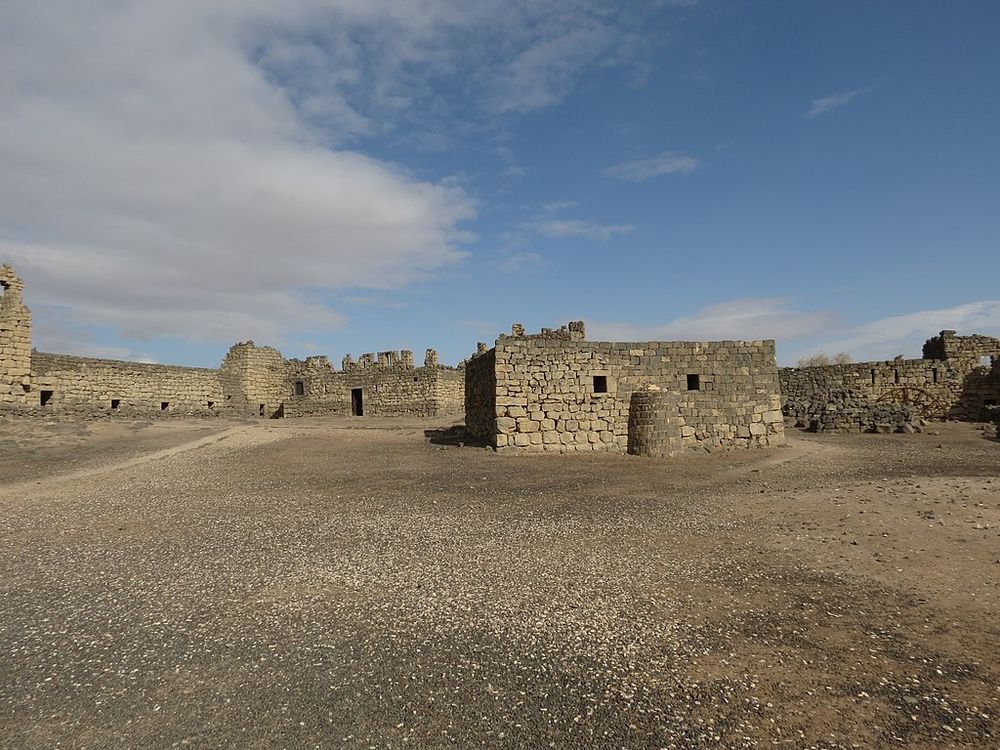
Roman fortress of Qasr Azraq

Roman fortress of Qasr Azraq. Photo: xorge/Wikimedia

Limes Arabicus not only protected the Roman territories but also facilitated trade and communication between the empire and the tribal regions beyond. Along the defensive line, the Romans established roads and checkpoints that allowed authorized traders and messengers to pass through safely. This not only enhanced economic activities but also fostered cultural exchanges between the Romans and the desert tribes, leading to the assimilation of certain tribal elements into the Roman society.

The existence of Limes Arabicus had a profound impact on the stability and longevity of the Roman Empire in the region. The fortifications acted as a psychological barrier, dissuading potential invaders and ensuring the security of the Roman province. This allowed the empire to focus its resources on other regions and conflicts, confident in the knowledge that its frontier was well-guarded.


The Fortress of Qasr Bshir. Photo: Mike Bishop/Wikimedia

However, Limes Arabicus was not invincible. The desert tribes were resourceful and persistent in their attempts to breach the defenses. The Roman soldiers stationed along the line faced constant threats and had to remain vigilant. Nevertheless, the fortifications provided a significant advantage to the Romans, making any hostile incursions difficult and costly for the desert tribes.

Over time, the importance of Limes Arabicus diminished as the political and military landscape of the region changed. The decline of the Roman Empire and the rise of new powers eventually led to the abandonment of the fortifications. Today, remnants of Limes Arabicus stand as a testament to the ingenuity and military prowess of the Romans.


Picture Of the Day: Beautiful Namib Desert with Amazing Sky

Picture Of the Day: Beautiful Namib Desert with Amazing Sky This Jaw Dropping Timelapse of the Night Sky Has It All
Tour guide Brendom Cremer shot this breathtaking timelapse over the course of six hours in the Namib Desert. Amazing stars, clouds and a rare lightning storm in an area that only receives 100 mm of rain a year.

Amazing Ennedi Desert in Chad, Africa

Ennedi Desert in Chad, Africa
 This desert is located at the north-eastern area of Chad in one of the most inaccessible region in the middle of the Sahara.Here a few number of turrets come because of this place is consider as the dangers area or  lake of facilities.This place is also known as the name Ennedi plateau or the Ennedi desert here the height of the mountains can be reach 120 meters from the ground.
ennedi-desert-8
Ennedi Desert in Chad, Africa
ennedi-desert-1
Ennedi Desert in Chad, Africa
ennedi-desert-0
Ennedi Desert in Chad, Africa
ennedi-desert-2
Ennedi Desert in Chad, Africa
ennedi-desert-6
Ennedi Desert in Chad, Africa
ennedi-desert-7
Ennedi Desert in Chad, Africa
ennedi-desert-9
Ennedi Desert in Chad, Africa
ennedi-desert-10
Ennedi Desert in Chad, Africa
ennedi-desert-13
Ennedi Desert in Chad, Africa
ennedi-desert-14
Ennedi Desert in Chad, Africa
ennedi-desert-12
Ennedi Desert in Chad, Africa
ennedi-desert-15
Ennedi Desert in Chad, Africa
ennedi-desert-16
Sources: 1, 2, 3,4