Showing posts with label wonder of world. Show all posts

Victor Lustig: The Master Conman Who Sold the Eiffel Tower

Victor Lustig: The Master Conman Who Sold the Eiffel Tower
In the grand history of deception, few names shine as brilliantly—or as cunningly—as Victor Lustig. A man of extraordinary charm, intelligence, and audacity, Lustig is remembered as the con artist who sold the Eiffel Tower… twice. His story reads like a Hollywood thriller—complete with forged documents, elaborate disguises, and breathtaking manipulation. But beyond his scams, Lustig remains a fascinating study in human psychology, ambition, and the art of persuasion.
Above Photo by Flickr: Source

A Charming Beginning: The Birth of a Conman

Victor Lustig was born in Hostinné, Austria-Hungary (modern-day Czech Republic) in 1890. From an early age, he displayed a remarkable intellect and a gift for languages—skills that would later make him one of the most successful con artists of the 20th century. While studying in Paris, he became fascinated by the lavish lifestyles of the European elite. But rather than working his way up through business or politics, Lustig chose a different path: deception. 

Photo Source: Commons.Wikimedia

In his youth, he started small—running clever card tricks and minor scams aboard transatlantic ocean liners. These ships were floating worlds of luxury and opportunity, filled with wealthy businessmen eager to brag about their fortunes. Lustig mastered the art of appearing trustworthy, refined, and intelligent. By the time the ship reached New York, he had often left behind a trail of wealthy victims—each convinced they had met a brilliant investor rather than a swindler.

The Confidence Game Perfected

What made Lustig different from other conmen was his sophistication. He wasn’t a petty thief; he was a psychological manipulator, crafting personas so convincing that even seasoned professionals believed him. He dressed impeccably, spoke eloquently, and carried himself like an aristocrat.

Lustig developed what he called the “Ten Commandments for Con Men,” a list of rules emphasizing patience, observation, and charm. Among them:

  1. Be a good listener.
  2. Never look bored.
  3. Wait for the other person to reveal their weaknesses.
  4. Let the victim feel superior.
  5. Never get drunk.

These rules guided him through countless successful scams, but his most daring scheme was still to come—the sale of one of the world’s most recognizable landmarks.

The Eiffel Tower Scam: Paris, 1925

In 1925, Paris was buzzing with post-war optimism. The Eiffel Tower, built in 1889, was showing signs of wear and rust, and some citizens even saw it as an eyesore. Reading an article about the government’s costly struggle to maintain it, Lustig conceived an idea so outrageous that it almost seemed impossible.

Posing as a Deputy Director of the French Ministry of Posts and Telegraphs, Lustig had official-looking stationery printed and summoned several of the city’s top scrap metal dealers to a secret meeting at the luxurious Hotel de Crillon. There, he explained that the French government had decided to sell the Eiffel Tower for scrap—but due to public controversy, the deal had to remain confidential.

The businessmen, believing they were being offered a once-in-a-lifetime opportunity, eagerly listened. Lustig, playing his role perfectly, selected one target in particular: André Poisson, a somewhat insecure but ambitious dealer who was desperate to prove himself among Paris’s elite.

Lustig dangled the opportunity like bait, hinting that a small “bribe” might secure Poisson’s winning bid. Poisson took it—hook, line, and sinker. Lustig accepted the payment and promptly fled to Austria, where he read in the newspapers that Poisson, too humiliated to go to the police, had chosen to remain silent.

The con was a complete success.

The Second Sale and the Escape

Amazingly, Lustig returned to Paris just months later and attempted the same scam again. This time, however, his intended victims grew suspicious and alerted authorities. Realizing the jig was up, Lustig escaped to the United States, where he continued his life of deception under various aliases.

The Infamous Money Box Scam

In America, Lustig became famous for another elaborate con—the “money box.” He claimed to own a small device that could duplicate currency using “radium reactions.” Demonstrating the trick, he would insert a genuine $100 bill into the box, and after a few hours, produce another identical one. In reality, the box contained a secret compartment with preloaded bills.

Wealthy investors paid thousands for the device, only to discover its worthlessness once Lustig was long gone. His charisma, accent, and calculated confidence made his victims believe in the impossible—proof of his near-supernatural persuasive power.

Crossing Paths with Al Capone

Lustig’s exploits eventually drew the attention of none other than Al Capone, the notorious American gangster. Lustig cleverly ran a con on Capone by asking for $50,000 to invest in a “business deal.” Instead of spending it, he kept it safe for two months, then returned it, claiming the deal had failed. Capone, impressed by Lustig’s “honesty,” rewarded him with $5,000—a profit for simply doing nothing. It was perhaps his most elegant con of all.

The Fall of the Master Conman

Despite his genius, Lustig’s luck couldn’t last forever. In 1935, the U.S. Secret Service finally caught up with him after he was linked to a counterfeiting ring. He was arrested in New York and imprisoned at Alcatraz, where he remained until his death in 1947.

Even behind bars, he never lost his charm. Fellow inmates and guards alike respected his intelligence and charisma. To the end, Victor Lustig remained a man of mystery—polite, cultured, and utterly unreadable.

Legacy: The Gentleman Swindler

Victor Lustig wasn’t just a thief; he was a master of human psychology. He understood that people’s desires—greed, pride, fear, and trust—were the most powerful currencies of all. His scams worked not because his victims were foolish, but because they wanted to believe.

In an age of con artists and digital deception, Lustig’s story remains a timeless reminder that confidence, not crime, is the true art of the con. His exploits inspired countless books, movies, and studies in criminal psychology. Even today, his name surfaces whenever someone pulls off an audacious scam.

The Man Who Sold a Dream

The tale of Victor Lustig continues to fascinate because it blurs the line between genius and deceit. He sold not just metal or machines, but dreams—convincing people that they could possess something extraordinary. In doing so, he revealed a simple truth about human nature: we often see what we want to believe.

The Eiffel Tower still stands tall in Paris, but somewhere in history’s shadows, Victor Lustig’s grin endures—a lasting symbol of charm, audacity, and the strange power of persuasion.
References:

Guardians of the Caucasus: The Towering Legacy of Ingushetia

Guardians of the Caucasus: The Towering Legacy of Ingushetia
Tucked within the dramatic highlands of the North Caucasus, the Republic of Ingushetia stands as one of the most mysterious and least-explored regions of Russia. Often overshadowed by its neighbors, Chechnya and North Ossetia, this small yet breathtaking land holds an architectural and cultural secret that few outsiders know — its ancient stone towers. Rising proudly against the rugged mountain skyline, these towers are more than ruins; they are silent guardians of Ingushetia’s past, testaments to the resilience, artistry, and warrior spirit of its people. Above Photo credit: Wikimedia Commons

The Towering Symbols of Strength
The medieval tower complexes scattered throughout Ingushetia’s mountains are some of the most remarkable architectural structures in the Caucasus. Built between the 12th and 17th centuries, these towers served a dual purpose — defense and dwelling. Entire villages once relied on these strongholds during invasions, blood feuds, or clan disputes. Each tower, known locally as a “vov”, was typically constructed by extended families or clans to assert independence and protect their kin.

What makes these towers so mesmerizing is their perfect blend of engineering precision and cultural symbolism. Made entirely of stone without mortar, they could rise as high as 25 meters (80 feet). Narrow arrow slits, steep stairways, and strategically placed openings made them nearly impregnable. But beyond their practical function, they also embodied honor, lineage, and pride — every stone carrying the spirit of the ancestors who built them.

Guardians of the Caucasus: The Towering Legacy of Ingushetia
Photo credit: Wikimedia Commons

Vovnushki: The Jewel of Ingushetia

Among all the ancient towers, none capture the imagination quite like Vovnushki, a UNESCO World Heritage candidate and arguably Ingushetia’s most iconic landmark. Perched dramatically on two narrow rocky peaks overlooking the Guloi River, Vovnushki’s towers look as if they were carved by giants. The name itself means “defensive towers,” and they stand as a stunning example of medieval mountain architecture.

From afar, the towers seem almost unreachable — and that was precisely the point. Built in a position of natural defense, they allowed their inhabitants to observe approaching enemies long before they arrived. Today, travelers and photographers from around the world trek through Ingushetia’s lush valleys to witness Vovnushki’s surreal beauty, often describing it as a “fortress in the clouds.”

Architecture Born of the Mountains
Ingushetian towers were built using locally sourced stone, perfectly fitted together without cement — a testament to the builders’ skill. The towers’ tapered shape, with thicker bases and narrower tops, allowed them to withstand earthquakes and strong winds. Wooden floors divided the interior into several levels: lower floors for livestock and storage, upper levels for living quarters, and the top for defense and signaling.

The roofs often featured triangular stone “crowns”, giving the towers a distinctive silhouette visible from miles away. Each architectural detail had meaning — not just functionality. Decorative carvings, petroglyphs, and symbols of the sun, stars, and eagles hinted at the Ingush people’s deep spiritual connection to nature and the cosmos.

Guardians of the Caucasus: The Towering Legacy of Ingushetia
Photo credit: Wikimedia Commons

The Spirit of the Clans
Ingushetian society historically revolved around teips, or clans. Each clan had its own tower complex, serving as a residence, fortress, and symbol of status. The higher and stronger the tower, the greater the prestige of its builders. It was not uncommon for rival clans to compete in tower construction — a silent but powerful contest of skill and honor.

Some towers were built to commemorate great warriors or protect sacred family relics. Others served as watchtowers forming part of a vast defensive network stretching across mountain ridges. When one tower spotted danger, its signal fire would alert the next, creating a chain of flames that could warn entire valleys within minutes — an ancient form of communication that bound communities together.

A Civilization of Stone and Spirit
To outsiders, Ingushetia may seem remote, but to those who call it home, it is a place where the past breathes through every rock and ridge. The towers reflect a civilization that thrived in isolation yet maintained an unbreakable sense of unity. Despite centuries of invasions, conflicts, and Soviet-era suppression, the Ingush people have preserved their traditions, songs, and legends tied to these monumental towers.

According to local folklore, the towers were built not only by men but by giants or ancient ancestors with supernatural strength. Some tales say that the towers were created to bridge heaven and earth, connecting mortals with their gods. This mystical layer adds a poetic dimension to the already awe-inspiring landscape.


Guardians of the Caucasus: The Towering Legacy of Ingushetia

Destruction, Survival, and Restoration

Tragically, many of Ingushetia’s towers were damaged or abandoned over the centuries. Wars, natural decay, and forced relocations during Stalin’s regime in the 1940s left countless structures in ruin. Yet, despite these losses, several complexes have survived in remarkable condition — a tribute to the craftsmanship of their builders. Photo credit: Wikimedia Commons

In recent years, both local and international preservationists have launched efforts to restore and document these architectural treasures. The government of Ingushetia, together with UNESCO and cultural foundations, aims to protect these sites for future generations. Restoration work focuses on not just rebuilding stones, but reviving the cultural identity that the towers represent.

Modern Ingushetia: Guardians of Heritage
Today, Ingushetia is slowly opening up to cultural tourism. Visitors who make the journey find themselves in a land untouched by mass commercialization — where mountain air carries the scent of wild herbs, and ancient towers cast shadows over green valleys. Villages like Dzheyrakh, Egikal, and Erzi still host some of the best-preserved tower complexes, offering glimpses into a way of life that once defined the Caucasus.

For locals, these towers are more than tourist attractions — they are sacred reminders of resilience and honor. The Ingush people continue to call themselves “the guardians of the mountains”, a title that reflects both their proud history and their commitment to preserving it.


Guardians of the Caucasus: The Towering Legacy of Ingushetia
Photo credit: Wikimedia Commons

Cultural and Global Significance
The legacy of Ingushetia’s towers transcends borders. They represent one of the oldest examples of mountain architecture in the world, blending art, engineering, and symbolism. Historians often compare them to the Scottish brochs or the watchtowers of Yemen, yet their unique character remains distinctly Caucasian — rugged, elegant, and deeply spiritual.

As global awareness grows, Ingushetia’s towers are beginning to gain recognition as a cultural treasure of humanity. They stand as living witnesses to an era when strength, craftsmanship, and community were the pillars of survival.

Guardians of the Caucasus: The Towering Legacy of Ingushetia
Photo credit: Wikimedia Commons

Conclusion: The Eternal Watchers of the Caucasus
The stone towers of Ingushetia rise like ancient sentinels above the clouds — unyielding, proud, and timeless. They are more than ruins; they are the soul of a nation carved in stone. In their silent watch, they remind us of humanity’s enduring need to build, protect, and remember.

To visit Ingushetia is to step into a living museum of mountain civilization, where every tower tells a story of love, loyalty, and legacy. These are not just remnants of history — they are guardians of identity, standing watch over the land and people of the Caucasus for centuries past, and centuries yet to come.

Lost Legends: The Haunting Mystery of Kuldhara Village, Rajasthan

Lost Legends: The Haunting Mystery of Kuldhara Village, Rajasthan
In the eerie stillness of the Thar Desert, about 18 kilometres west of Jaisalmer, lies the abandoned village of Kuldhara. Once a bustling settlement of the Paliwal Brahmins, it is now frozen in time, its weather-worn homes and narrow lanes cast in the golden desert light. But beneath the quiet façade lies a story steeped in mystery, legend and the echoes of sudden departure. Kuldhara is more than a ghost village — it’s a monument to dignity, defiance and a disappearance that has baffled historians and intrigued visitors for generations. Above Photo: Pierre Doyen/Flickr

A Prosperous Past

According to the heritage records of Rajasthan Tourism Department, Kuldhara was founded around 1291 CE by the Paliwal Brahmins, a skilled and prosperous community adept at desert agriculture and trade. Rajasthan Tourism+2Rajasthan Bhumi Tours+2 Nestled behind Jaisalmer’s sandstone fortifications, the village boasted a thriving social fabric, with temples, wells and a sophisticated khadin water-harvesting system designed to sustain crops in harsh arid terrain. Moneycontrol+1

For centuries, the Paliwals operated with relative autonomy under the Bhati raj of Jaisalmer. Their houses–constructed from yellow sandstone, many with intricate carvings–lined deliberately planned streets. Kuldhara became a symbol of desert survival and local ingenuity.


Lost Legends: The Haunting Mystery of Kuldhara Village, Rajasthan

The Overnight Departure

The turning point in Kuldhara’s story arrives in the early 19th century. One popular legend holds that in 1825, the then-Diwan of Jaisalmer, Salim Singh, demanded to marry the daughter of the village headman. Faced with oppression and unwanted marriage, the Paliwals chose a dramatic alternative. They abandoned their homes in one night, leaving behind family, belongings and property. Before leaving, it is said they placed a curse on the land that “no one will ever occupy this village again.” www.ndtv.com+1

While this tale holds emotional power, historians note that other plausible explanations exist: severe drought, declining water supplies, heavy taxation, or socio-political pressure may have driven the exodus. Moneycontrol+1

The Architecture of Silence

Today, the ruins of Kuldhara stand silent and intact—roofs collapsed or removed, walls still carved with doorways and arched windows. The layout reflects the advanced planning of its time: broad lanes, stone wells and houses built to stay cool in blistering summers. Rajasthan Bhumi Tours+1

Walk past the remains of the temple, the communal spaces and the deserted homes, and you’ll feel an odd sense of suspended life—frozen mid-moment. The wind whips unseen across the bare rooms; the sun glints off carved lintels that once bore the weight of family life. It is this juxtaposition of vitality and stillness that gives Kuldhara its haunting aura.

Lost Legends: The Haunting Mystery of Kuldhara Village, Rajasthan

The Curse and the Hauntings

Over the years, Kuldhara has earned its reputation as one of India’s most haunted places. Locals and tourists report hearing voices in the wind, feeling abrupt chills and sensing an oppressive atmosphere after dusk. Many speak of the villagers’ curse echoing through the sand dunes. The Times of India+1

While some dismiss these stories as embellishments aimed at tourism, the folklore has become part of the village’s identity. More than thrill-seeking, the haunted label acknowledges something deeper—a place abandoned with dignity, leaving only memory and myth behind.

Preservation Amid Mystery

Tragically, despite its fame, Kuldhara remains a fragile heritage site. The Archaeological Survey of India (ASI) and state authorities have declared it a protected monument, yet visitor infrastructure is modest. Tourism has grown, but you’ll still arrive to quiet ruins, scattered stones and an other-worldly silence at sunset. Rajasthan Tourism+1

The preservation challenge is two-fold: protect the physical remains from the harsh desert climate and maintain the intangible aura that draws visitors—without turning Kuldhara into a purely commercial site. Some local guides caution that overnight stays are discouraged, invoking the legend of the curse as much as safety. rajasthanstudio.com

Why It Still Matters

What makes Kuldhara more than a tourist curiosity is how it speaks to larger themes: justice, agency and the impermanence of human endeavour. It challenges us to ask: what price do communities pay for exposing injustice? How does refusal—sudden, coordinated and collective—become legend? And what happens when the walls outlast the people?

For the Paliwals, abandoning their village was not defeat—it was a statement of honour. Their departure, real or symbolic, resonates as an act of collective dignity. The desert doesn’t forget; it preserves. Kuldhara stands not as triumph, but as a quiet monument to choice.

Visiting Kuldhara Today

When you visit, go during the day and leave with sunlight. Arrive via Jaisalmer—about 17–20 km away—and you’ll pass dunes, silence and shifting sands. Bring water, shaded headgear and a respectful curiosity. Walk the narrow lanes, peer into homes whose gates are still etched with age. Look around at the sand-scourged walls and soak in the moment when life ceased and mystery began.

Respect the place. Don’t treat it like a theme-park haunted house. It’s a real village with real story. Take your time, breathe deeply—and imagine what that night must have felt like, when the last doors were shut, torches extinguished and carts rolled across the desert to carry entire families into the unknown.

Conclusion: Echoes in the Sand

Kuldhara is more than a ghost village—it’s a story etched in stone and wind. Its legacy is not about spirits or curses alone; it’s about agency, identity and the quiet power of collective choice. The walls do not scream. They whisper. And in that whisper, you hear an entire people choosing dignity over subjugation.

So the next time you explore the sands of Rajasthan, pause at the ruins of Kuldhara. Walk the silent streets, listen for an echo, and remember: some legacies are spoken not in voices, but in the absence of them.

Labels: Kuldhara village, abandoned Rajasthan, ghost town India, Paliwal Brahmins, Jaisalmer history, haunted places India, Thar desert heritage, Rajasthan tourism, cursed village Kuldhara, desert ruins India

References:


The Great Wall Hoax: A Tale of Journalism, Deception, and Consequence

The Great Wall Hoax: A Tale of Journalism, Deception, and Consequence

The Great Wall of China has stood for centuries as one of humanity’s most iconic landmarks, a symbol of endurance and ingenuity. Yet, in the early 20th century, this monumental structure became the center of one of journalism’s most notorious scandals—the Great Wall Hoax. It’s a story not about bricks or emperors, but about ambition, misinformation, and how far one man was willing to go to make his mark in the world of news.Above Photo Credit: commons.wikimedia

Setting the Stage: A Time of Exploration and Competition

The early 1900s was a period when journalism was as much about adventure as truth. Newspapers were in fierce competition to outdo one another with sensational headlines. With limited means of verifying stories across continents, many reporters relied on creativity—or fabrication—to attract readers.

It was within this climate that the Great Wall Hoax was born, a deception that would test the boundaries between journalism and fiction.

The Birth of the Hoax

In 1930, an English newspaper, eager to publish something extraordinary, received a series of reports claiming that a group of explorers had discovered a “new section” of the Great Wall of China—one supposedly so vast and ancient that it redefined historical understanding of Chinese civilization. The correspondent behind these claims, it turned out, was not an explorer at all, but a journalist named William Edgar Geil, who had earlier written exaggerated travel accounts about his experiences in Asia.

As his tales spread across international news outlets, they captivated readers. Headlines spoke of “lost fortresses” and “forgotten towers” hidden beneath the sands of Inner Mongolia. The public was fascinated. But the truth was far less romantic—the so-called “discovery” was fabricated, based on altered photographs, false coordinates, and entirely fictional field notes.

Why the Hoax Worked

The hoax thrived in a world that craved exotic stories. For Western audiences, China was mysterious and largely inaccessible. The image of an “unknown Great Wall” fed into both colonial curiosity and the growing appetite for grand archaeological revelations.

Journalists, pressed for time and lacking verification mechanisms, repeated the story without question. The supposed explorers were celebrated as heroes. It wasn’t until scholars and local Chinese historians began to challenge the claims that cracks began to show in the narrative.

The Great Wall Hoax: A Tale of Journalism, Deception, and Consequence

Photo credit: Flickr

The Unraveling of the Lie

It took several months before the truth came to light. Historians compared the supposed photographs of the “lost wall” with existing landmarks near Gansu province and found that the images had been doctored. Chinese officials denied any discovery of new wall sections, labeling the reports “fictional.”

The exposure was swift and humiliating. Newspapers issued retractions, and the journalist responsible was discredited. What had started as a bid for fame became one of the most embarrassing moments in early 20th-century media.

Impact on Journalism

The Great Wall Hoax became a cautionary tale about the dangers of unchecked storytelling. It highlighted the lack of accountability in international reporting during an era without modern fact-checking or global communication tools. The scandal led to more rigorous editorial standards in several major newspapers, marking a turning point in the history of journalism ethics.

It also showed how narratives could shape perceptions of foreign cultures. For years, the false reports distorted Western understanding of China’s history and geography—proof that misinformation, once released, can have lasting effects even after being debunked.

Deception and the Human Element

What drove the journalist to lie? Scholars suggest a mix of ego, ambition, and the pressures of the news industry. The public’s hunger for adventure tales created an environment where truth was often secondary to drama. The hoaxer’s intent wasn’t just to deceive—it was to entertain, to gain recognition, and perhaps to feel like part of the heroic explorers of his time.

In many ways, the Great Wall Hoax mirrors the same motivations that drive misinformation today. Whether in old newspapers or on social media, the temptation to exaggerate for attention remains a timeless human flaw.

The Broader Consequences

The incident had ripple effects beyond journalism. Archaeologists and historians in China faced increased skepticism from the global academic community, making it harder to secure funding or recognition for legitimate discoveries. It also exposed the cultural biases of Western media, which often preferred sensationalized tales of “discovery” over collaboration with local experts.

In retrospect, the hoax served as both a mirror and a warning—a reflection of how curiosity, when corrupted by ambition, can distort truth.

Modern Parallels: From the Great Wall to the Digital Age

Fast forward nearly a century, and the lessons of the Great Wall Hoax feel eerily relevant. Today, with the internet and artificial intelligence, misinformation spreads faster than ever. Deepfakes, altered photos, and fake news can travel around the world in seconds—echoing the same dynamic that allowed one man’s lie to mislead millions decades ago.

Just as the Great Wall Hoax forced editors to rethink their verification processes, our digital era demands new tools and ethics to protect truth. The parallels are striking: technology may change, but the human thirst for sensationalism remains constant.

A Reflection on Accountability

Ultimately, the Great Wall Hoax isn’t just about deceit—it’s about responsibility. Journalism, at its core, is built on trust. When that trust is broken, the consequences can outlast the story itself. The scandal of the 1930s left a scar on media credibility, reminding future generations that truth, though less glamorous than fiction, is infinitely more powerful.

Conclusion: The Wall That Lies Built

Ironically, while the Great Wall of China was built to protect against invaders, it couldn’t guard against the invasion of falsehoods. The Great Wall Hoax endures as a fascinating intersection of history, media, and morality. It’s a story about human fallibility and the delicate balance between ambition and integrity.

In the end, the lesson is timeless: no matter how strong the walls we build—literal or metaphorical—the truth will always find a way to stand taller.

References:

  1. https://en.wikipedia.org/wiki/Great_Wall_of_China
  2. https://www.britannica.com/topic/history-of-journalism
  3. https://www.chinadaily.com.cn/a/202104/07/WS606c6e72a31024ad0bab3f64.html

A wonderful Pillar at the Center of the Circular City of Gor

 A wonderful Pillar at the Center of the Circular City of Gor

This minar was like a tower which is built in the middle of the Sasanian City of Gor, named Milo Sassanid Ancient Tower. That is very famous among travelers and orientalists. This structure is first found by Pascal Coste and Eugène Flandin. It was a unique tower in Iranian Architecture and is called the legend of Iranian history. That was Alexander, the part of the Persian Territory, defeating its regions and its cities, ending in the capture of the Persepolis in the year of 330 BC.

He constructed a dam in a close-by gorge, keeping the water of the river connected to the plain, where the city is located. That is fully flooding it and making a lake that stayed until the end of the 3rd century AD. After that, king Sassanid Persian tunneled to drain it and destroyed it.

 A wonderful Pillar at the Center of the Circular City of GorThe site of the ancient city of Gor with the pillar at its center. Photo: Amin malekzadeh/Wikimedia

He founded the new capital at the same place, that is called Khor Ardshir or Gor. He made it famous on a circular plan (many centuries before the well-known circular city of Baghdad) with an amazing measurement that the famous Persian writer named Ibn Bakhi wrote that it was designed with a compass.

The diameter was 1,950 meters and was covered by a protective moat 35 meters wide, which could only be avoided using four bridges that provide access to its four gates, and a wall of clay, and each part has cardinal points. The city was distributed into 20 parts by an accurate geometric system of several concentric ones and twenty radical streets.

There is another walled circle inside it, its radius was 450 meters, in which the palaces and the royal buildings were built. The current area that is landscape shows the old setup of the city. The length of the largest tower is 45 meters and its structure remains the same.

 A wonderful Pillar at the Center of the Circular City of GorPhoto: Carole Raddato/Wikimedia


It is called Terbal by Arabs, but according to Persians, they said it as Minaret or Minar like a pillar. The design of this pillar had unique in Persia and an external spiral staircase and it is not the same purpose of it, there are many hypotheses about it. If we calculated its width, it would be around 20 meters adding the destroyed stairs and the outside wall.

The Takht-e-Neshin called the fire Temple and the Minar were the only two designs in the city that are made of granite masonry. The first time a two-person explained the uniqueness of its structure in Persian architecture was a Westerner named Eugene Flandin and Pascal Coste, but another person who explained the systematic study was Ernst Herzfeld. According to him, it is like a stair tower. Before the study of Herzfeld, it is known as Takht-e-Neshin itself, for the prevention of dust contamination, there was a temple with a blessed fire placed on the top.

The opinion of some authors is that it explains the ideology of Ardacher’s state with the symbolized the divine and centralist kingship, and the use of it is very practical, then it showed its visual contact with defenses find the main access road to the plain, in the gorge of Tang-an. The tower is also used as an observation tower, while its work for the plan predicted by Ardacher for the new city and plain was achieved. The whole scheme is centered on the Minar, and the radial pattern and concentric of the city were 10 kilometers away, where traces of roads, canals, and walls have been found.

 A wonderful Pillar at the Center of the Circular City of Gor
Artistic representation of the Minar as a fire temple, drawing by Zenaide A. Ragozin (1889).


A study explained that it may have been a water tower, getting water from nearby sources flowing through the hollow core and the pipes of the minar to its dome, and going to other points in the city.

 A wonderful Pillar at the Center of the Circular City of GorPhoto: akhodadadi/Wikimedia

source  La Brújula Verde


Wonder Of World


Wonders of World
Wonderful Swords in The Rock, Norwaysverd-i-fjell-2
On a small hill on the edge of Hafrsfjord, about 6 km from the city center of Stavanger, Norway, stands three enormous bronze swords as monument to the battle of Hafrsfjord that took place here more than 1,100 years ago.
Amazing Restaurant along with the Mountain in Yichang, Chinafangweng-restaurant-9
Walking into the restaurant and down the steps, one will come to a natural “cave lobby”. Rightward, a 30-meter-long plank road has been built along the cliffside. It leads to another natural cave, which has been transformed into a dining hall. Warm lighting from the ceiling lends a golden yellow glow throughout. 

Giant Sculptures at the Enchanted Highway, North Dakota

Giant Sculptures at the Enchanted Highway, North Dakota
enchanted-highway-pheasants-01The Enchanted Highway is a 32-mile stretch of highway starting at Exit 72 on Interstate 94, about 20 miles east of Dickinson, in the southwestern part of the U.S. state of North Dakota. The paved county highway, which begins near the town of Gladstone and terminates at Regent, features a collection of large scrap metal sculptures depicting geese, deer, pheasants, grasshoppers, Teddy Roosevelt, and even a complete Tin Family.

Mont Saint-Michel Castle in Normandy, France

Mont Saint-Michel Castle in Normandy, France
Mont Saint-Michel Castle is situated at the approximately one kilometre (just over half a mile) off the country's north coast, at the mouth of the Couesnon River near Avranches.This place is a rocky tidal island and a commune.Take a look on its photographs.

Most Beautiful River-The Alatna River

Most Beautiful River-The Alatna River
alatna-river-2
 The Alatna River is also known as the most beautiful in the United States situated at the boundaries of Gates of the Arctic National Park, Alaska.The river is very popular for float trips due to its calm flow and wonderful scenery.Take a look..

ICEHOTEL in Jukkasjärvi, Sweden

ICEHOTEL in Jukkasjärvi, Sweden
ICEHOTEL designed by leading artists from all over the world. A lifetime experience!Arne Bergh, artistic director at ICEHOTEL tells the story about the art at ICEHOTEL located in Jukkasjärvi, Sweden.In Above Top image: Dragon Nest by Bayarsaikhah Bazarsad.

Norway Beautiful Photographs

Norway Beautiful Photographs

Norwegian Book Town – Fjærland, Norway

These photographs are capture by the very talented Photographer Zbigniew Wantuch.He recently shared his experience in the Norway beautiful places with with the Sifte.If you are more interested to see his more photographs in the tour of Norway so you can check it out from here zbigniewwantuch.
Above Photograph by Zbigniew Wantuch

Wonder World’s Longest Tree Top Walk in Bavaria

Wonder World’s Longest Tree Top Walk in Bavaria
 This Wonder World’s Longest Tree Top Walk is located at the Neuschonau, Bavaria, in Germany 25 meters above the tree tops and 1300 meters longest walkway from the ground which make this place world longest walk way over the trees.
 bavaria-treetop-walk-3
Wonder World’s Longest Tree Top Walk in Bavaria
bavaria-treetop-walk-3
Wonder World’s Longest Tree Top Walk in Bavaria
bavaria-treetop-walk-1
Wonder World’s Longest Tree Top Walk in Bavariabavaria-treetop-walk-2
Wonder World’s Longest Tree Top Walk in Bavariabavaria-treetop-walk-4
Wonder World’s Longest Tree Top Walk in Bavariabavaria-treetop-walk-5
Wonder World’s Longest Tree Top Walk in Bavariabavaria-treetop-walk-6
Wonder World’s Longest Tree Top Walk in Bavariabavaria-treetop-walk-7
Wonder World’s Longest Tree Top Walk in Bavariabavaria-treetop-walk-8
[via]

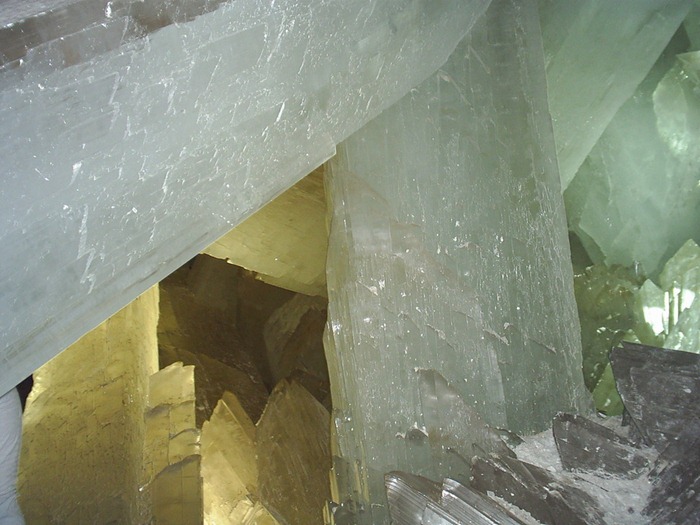
World Largest Crystal Cave in the Mexican Desert

World Largest Crystal Cave in the Mexican Desert
This World Largest Crystal Cave is located at the Chihuahua Desert in Mexico,Which is discover by the drilling in the Naica lead and silver mine its crystals 37 feet (11 meter) in length and now open for the turrets or local visitors for this wonderful experience on earth.Here are some of its photographs.
 crystal-cave (1)
World Largest Crystal Cave in the Mexican Desertcrystal-cave (2)
World Largest Crystal Cave in the Mexican Desertcrystal-cave (3)
World Largest Crystal Cave in the Mexican Desertcrystal-cave (4)
World Largest Crystal Cave in the Mexican Desert
crystal-cave (5)
World Largest Crystal Cave in the Mexican Desertcrystal-cave (6)
World Largest Crystal Cave in the Mexican Desertcrystal-cave (7)
World Largest Crystal Cave in the Mexican DesertOLYMPUS DIGITAL CAMERA
World Largest Crystal Cave in the Mexican Desertcrystal-cave (9)
World Largest Crystal Cave in the Mexican Desert29_Img7281.jpg
World Largest Crystal Cave in the Mexican Desert27_Img7190.jpg
World Largest Crystal Cave in the Mexican Desertcrystal-cave (12)
World Largest Crystal Cave in the Mexican Desert32_Naica_146.JPG
World Largest Crystal Cave in the Mexican Desertcrystal-cave (15)
World Largest Crystal Cave in the Mexican Desert
crystal-cave (16) 

Related to this post: