Showing posts with label wonder. Show all posts

The Mysterious Pyramids of Anlong County: China’s Stunning Natural Wonder


Introduction

Nestled in Anlong County, Guizhou Province, southwest China, a spectacular natural phenomenon has recently emerged as a viral sensation and a flourishing tourist attraction: the pyramidal mountains, affectionately dubbed the “Pyramids of Anlong County.” These unusual geological formations, resembling miniature versions of the Egyptian pyramids, have drawn in curious travelers, geologists, and social media enthusiasts alike.

What Are the Anlong “Pyramids”?

These pyramid-like hills are natural conical peaks, part of a classic karst landscape—formed by soluble rock erosion over millions of years. Despite captivating speculation, they are not man-made tombs or extraterrestrial constructs, but rather Earth’s own artistry in stone.Amusing PlanetGlobal TimesSouth China Morning Post

Geological Formation: Natural or Human-Made?

Expert Insight—According to Professor Zhou Qiuwen of Guizhou Normal University, these formations are purely geological, not constructed or burial sites.Global TimesAmusing Planetchinaurl.com

How the Pyramid Shape Occurred

Internet Buzz, Tourist Magnet

When videos and photos began circulating—especially one scenic drone clip posted on Douyin—the formation quickly gained online traction.People's Daily Online

During the May Day holiday, over 61,000 visitors flocked to the area, some traveling from distant areas like Beijing and Shanghai. In response, local authorities constructed viewing platforms, parking facilities, and service centers to accommodate the surge in tourists.People's Daily OnlineXinhua News

World travelers have also commented on the breathtaking views. One Serbian visitor, Nemanja Bauk, praised both the scenery and local hospitality, expressing a desire to return.People's Daily Online

Debunking Myths and Speculation

The extraordinary visuals spurred a wave of imaginative theories—from alien-built relics to secret burial sites of Ming dynasty royals.chinaurl.comOddity CentralSouth China Morning Post
Even speculation about ancient royal tombs linked to Ming’s Yongli Court proved unlikely. As Professor Zhou and geological findings confirm, these are natural karst formations, not human constructions.chinaurl.comGlobal TimesOddity Central


Where Exactly Are They?

These formations are located roughly 2 to 3 kilometers from Anlong’s county seat, near Poyun Village, within Anlong County’s picturesque karst terrain.People's Daily Onlinechinaurl.com

Geological Significance of Guizhou Karst

Guizhou’s landscape is renowned for its karst topography, characterized by steep peaks, deep valleys, sinkholes, and caves—formed by soluble limestone and dolomite undergoing erosion.South China Morning Postchinaurl.comPeople's Daily Online
The Anlong pyramidal hills are a perfect embodiment of this quintessential Chinese karst terrain.

SEO Boost: Related Comparisons and Context

While the pyramidal shapes echo the form of Egyptian pyramids, China’s best-known “pyramids” are actually ancient mausoleum mounds—such as the Qin Shi Huang Mausoleum and the Chinese pyramids near Xi’an, dating back to Han and Qin dynasties.Wikipedia+1
Unlike those human-made mounds, Anlong’s peaks are the result of purely natural geological processes, showcasing Earth’s creative power rather than human ambition.


Tourism & Preservation: What Lies Ahead

The growing tourism interest highlights both opportunity and responsibility. To sustainably manage growth, local authorities have been proactive, installing infrastructure, guiding visitors, and protecting the landscape from degradation.People's Daily OnlineXinhua News

Tips for Visiting Anlong’s Pyramids

  • Best time to visit: During pleasant weather, such as spring or autumn, for optimal visibility and comfort.

  • Bring a camera—the formations offer ideal backdrops at sunrise, sunset, and even during night lighting.

  • Expect central viewing platforms, nearby amenities, and signage—reflecting recent upgrades.People's Daily Online

  • While walkable, some vantage points may require short hikes—proper footwear recommended.

a) Summary of Key Highlights

  • Natural Wonders: Pyramid-like hills in Anlong County, formed by ancient karst processes.

  • Geological Roots: Over 200 million years old, shaped by water erosion of dolomite and limestone.

  • Tourism Buzz: Dramatic visuals inspired viral videos, drawing tens of thousands of visitors.

  • Scientific Consensus: Experts affirm the formations are natural—not paranormal or historical artifacts.

  • Future Prospects: With infrastructure in place, Anlong is emerging as a sustainable tourism hotspot.

Victor Lustig: The Master Conman Who Sold the Eiffel Tower

Victor Lustig: The Master Conman Who Sold the Eiffel Tower
In the grand history of deception, few names shine as brilliantly—or as cunningly—as Victor Lustig. A man of extraordinary charm, intelligence, and audacity, Lustig is remembered as the con artist who sold the Eiffel Tower… twice. His story reads like a Hollywood thriller—complete with forged documents, elaborate disguises, and breathtaking manipulation. But beyond his scams, Lustig remains a fascinating study in human psychology, ambition, and the art of persuasion.
Above Photo by Flickr: Source

A Charming Beginning: The Birth of a Conman

Victor Lustig was born in Hostinné, Austria-Hungary (modern-day Czech Republic) in 1890. From an early age, he displayed a remarkable intellect and a gift for languages—skills that would later make him one of the most successful con artists of the 20th century. While studying in Paris, he became fascinated by the lavish lifestyles of the European elite. But rather than working his way up through business or politics, Lustig chose a different path: deception. 

Photo Source: Commons.Wikimedia

In his youth, he started small—running clever card tricks and minor scams aboard transatlantic ocean liners. These ships were floating worlds of luxury and opportunity, filled with wealthy businessmen eager to brag about their fortunes. Lustig mastered the art of appearing trustworthy, refined, and intelligent. By the time the ship reached New York, he had often left behind a trail of wealthy victims—each convinced they had met a brilliant investor rather than a swindler.

The Confidence Game Perfected

What made Lustig different from other conmen was his sophistication. He wasn’t a petty thief; he was a psychological manipulator, crafting personas so convincing that even seasoned professionals believed him. He dressed impeccably, spoke eloquently, and carried himself like an aristocrat.

Lustig developed what he called the “Ten Commandments for Con Men,” a list of rules emphasizing patience, observation, and charm. Among them:

  1. Be a good listener.
  2. Never look bored.
  3. Wait for the other person to reveal their weaknesses.
  4. Let the victim feel superior.
  5. Never get drunk.

These rules guided him through countless successful scams, but his most daring scheme was still to come—the sale of one of the world’s most recognizable landmarks.

The Eiffel Tower Scam: Paris, 1925

In 1925, Paris was buzzing with post-war optimism. The Eiffel Tower, built in 1889, was showing signs of wear and rust, and some citizens even saw it as an eyesore. Reading an article about the government’s costly struggle to maintain it, Lustig conceived an idea so outrageous that it almost seemed impossible.

Posing as a Deputy Director of the French Ministry of Posts and Telegraphs, Lustig had official-looking stationery printed and summoned several of the city’s top scrap metal dealers to a secret meeting at the luxurious Hotel de Crillon. There, he explained that the French government had decided to sell the Eiffel Tower for scrap—but due to public controversy, the deal had to remain confidential.

The businessmen, believing they were being offered a once-in-a-lifetime opportunity, eagerly listened. Lustig, playing his role perfectly, selected one target in particular: André Poisson, a somewhat insecure but ambitious dealer who was desperate to prove himself among Paris’s elite.

Lustig dangled the opportunity like bait, hinting that a small “bribe” might secure Poisson’s winning bid. Poisson took it—hook, line, and sinker. Lustig accepted the payment and promptly fled to Austria, where he read in the newspapers that Poisson, too humiliated to go to the police, had chosen to remain silent.

The con was a complete success.

The Second Sale and the Escape

Amazingly, Lustig returned to Paris just months later and attempted the same scam again. This time, however, his intended victims grew suspicious and alerted authorities. Realizing the jig was up, Lustig escaped to the United States, where he continued his life of deception under various aliases.

The Infamous Money Box Scam

In America, Lustig became famous for another elaborate con—the “money box.” He claimed to own a small device that could duplicate currency using “radium reactions.” Demonstrating the trick, he would insert a genuine $100 bill into the box, and after a few hours, produce another identical one. In reality, the box contained a secret compartment with preloaded bills.

Wealthy investors paid thousands for the device, only to discover its worthlessness once Lustig was long gone. His charisma, accent, and calculated confidence made his victims believe in the impossible—proof of his near-supernatural persuasive power.

Crossing Paths with Al Capone

Lustig’s exploits eventually drew the attention of none other than Al Capone, the notorious American gangster. Lustig cleverly ran a con on Capone by asking for $50,000 to invest in a “business deal.” Instead of spending it, he kept it safe for two months, then returned it, claiming the deal had failed. Capone, impressed by Lustig’s “honesty,” rewarded him with $5,000—a profit for simply doing nothing. It was perhaps his most elegant con of all.

The Fall of the Master Conman

Despite his genius, Lustig’s luck couldn’t last forever. In 1935, the U.S. Secret Service finally caught up with him after he was linked to a counterfeiting ring. He was arrested in New York and imprisoned at Alcatraz, where he remained until his death in 1947.

Even behind bars, he never lost his charm. Fellow inmates and guards alike respected his intelligence and charisma. To the end, Victor Lustig remained a man of mystery—polite, cultured, and utterly unreadable.

Legacy: The Gentleman Swindler

Victor Lustig wasn’t just a thief; he was a master of human psychology. He understood that people’s desires—greed, pride, fear, and trust—were the most powerful currencies of all. His scams worked not because his victims were foolish, but because they wanted to believe.

In an age of con artists and digital deception, Lustig’s story remains a timeless reminder that confidence, not crime, is the true art of the con. His exploits inspired countless books, movies, and studies in criminal psychology. Even today, his name surfaces whenever someone pulls off an audacious scam.

The Man Who Sold a Dream

The tale of Victor Lustig continues to fascinate because it blurs the line between genius and deceit. He sold not just metal or machines, but dreams—convincing people that they could possess something extraordinary. In doing so, he revealed a simple truth about human nature: we often see what we want to believe.

The Eiffel Tower still stands tall in Paris, but somewhere in history’s shadows, Victor Lustig’s grin endures—a lasting symbol of charm, audacity, and the strange power of persuasion.
References:

The Great Wall Hoax: A Tale of Journalism, Deception, and Consequence

The Great Wall Hoax: A Tale of Journalism, Deception, and Consequence

The Great Wall of China has stood for centuries as one of humanity’s most iconic landmarks, a symbol of endurance and ingenuity. Yet, in the early 20th century, this monumental structure became the center of one of journalism’s most notorious scandals—the Great Wall Hoax. It’s a story not about bricks or emperors, but about ambition, misinformation, and how far one man was willing to go to make his mark in the world of news.Above Photo Credit: commons.wikimedia

Setting the Stage: A Time of Exploration and Competition

The early 1900s was a period when journalism was as much about adventure as truth. Newspapers were in fierce competition to outdo one another with sensational headlines. With limited means of verifying stories across continents, many reporters relied on creativity—or fabrication—to attract readers.

It was within this climate that the Great Wall Hoax was born, a deception that would test the boundaries between journalism and fiction.

The Birth of the Hoax

In 1930, an English newspaper, eager to publish something extraordinary, received a series of reports claiming that a group of explorers had discovered a “new section” of the Great Wall of China—one supposedly so vast and ancient that it redefined historical understanding of Chinese civilization. The correspondent behind these claims, it turned out, was not an explorer at all, but a journalist named William Edgar Geil, who had earlier written exaggerated travel accounts about his experiences in Asia.

As his tales spread across international news outlets, they captivated readers. Headlines spoke of “lost fortresses” and “forgotten towers” hidden beneath the sands of Inner Mongolia. The public was fascinated. But the truth was far less romantic—the so-called “discovery” was fabricated, based on altered photographs, false coordinates, and entirely fictional field notes.

Why the Hoax Worked

The hoax thrived in a world that craved exotic stories. For Western audiences, China was mysterious and largely inaccessible. The image of an “unknown Great Wall” fed into both colonial curiosity and the growing appetite for grand archaeological revelations.

Journalists, pressed for time and lacking verification mechanisms, repeated the story without question. The supposed explorers were celebrated as heroes. It wasn’t until scholars and local Chinese historians began to challenge the claims that cracks began to show in the narrative.

The Great Wall Hoax: A Tale of Journalism, Deception, and Consequence

Photo credit: Flickr

The Unraveling of the Lie

It took several months before the truth came to light. Historians compared the supposed photographs of the “lost wall” with existing landmarks near Gansu province and found that the images had been doctored. Chinese officials denied any discovery of new wall sections, labeling the reports “fictional.”

The exposure was swift and humiliating. Newspapers issued retractions, and the journalist responsible was discredited. What had started as a bid for fame became one of the most embarrassing moments in early 20th-century media.

Impact on Journalism

The Great Wall Hoax became a cautionary tale about the dangers of unchecked storytelling. It highlighted the lack of accountability in international reporting during an era without modern fact-checking or global communication tools. The scandal led to more rigorous editorial standards in several major newspapers, marking a turning point in the history of journalism ethics.

It also showed how narratives could shape perceptions of foreign cultures. For years, the false reports distorted Western understanding of China’s history and geography—proof that misinformation, once released, can have lasting effects even after being debunked.

Deception and the Human Element

What drove the journalist to lie? Scholars suggest a mix of ego, ambition, and the pressures of the news industry. The public’s hunger for adventure tales created an environment where truth was often secondary to drama. The hoaxer’s intent wasn’t just to deceive—it was to entertain, to gain recognition, and perhaps to feel like part of the heroic explorers of his time.

In many ways, the Great Wall Hoax mirrors the same motivations that drive misinformation today. Whether in old newspapers or on social media, the temptation to exaggerate for attention remains a timeless human flaw.

The Broader Consequences

The incident had ripple effects beyond journalism. Archaeologists and historians in China faced increased skepticism from the global academic community, making it harder to secure funding or recognition for legitimate discoveries. It also exposed the cultural biases of Western media, which often preferred sensationalized tales of “discovery” over collaboration with local experts.

In retrospect, the hoax served as both a mirror and a warning—a reflection of how curiosity, when corrupted by ambition, can distort truth.

Modern Parallels: From the Great Wall to the Digital Age

Fast forward nearly a century, and the lessons of the Great Wall Hoax feel eerily relevant. Today, with the internet and artificial intelligence, misinformation spreads faster than ever. Deepfakes, altered photos, and fake news can travel around the world in seconds—echoing the same dynamic that allowed one man’s lie to mislead millions decades ago.

Just as the Great Wall Hoax forced editors to rethink their verification processes, our digital era demands new tools and ethics to protect truth. The parallels are striking: technology may change, but the human thirst for sensationalism remains constant.

A Reflection on Accountability

Ultimately, the Great Wall Hoax isn’t just about deceit—it’s about responsibility. Journalism, at its core, is built on trust. When that trust is broken, the consequences can outlast the story itself. The scandal of the 1930s left a scar on media credibility, reminding future generations that truth, though less glamorous than fiction, is infinitely more powerful.

Conclusion: The Wall That Lies Built

Ironically, while the Great Wall of China was built to protect against invaders, it couldn’t guard against the invasion of falsehoods. The Great Wall Hoax endures as a fascinating intersection of history, media, and morality. It’s a story about human fallibility and the delicate balance between ambition and integrity.

In the end, the lesson is timeless: no matter how strong the walls we build—literal or metaphorical—the truth will always find a way to stand taller.

References:

  1. https://en.wikipedia.org/wiki/Great_Wall_of_China
  2. https://www.britannica.com/topic/history-of-journalism
  3. https://www.chinadaily.com.cn/a/202104/07/WS606c6e72a31024ad0bab3f64.html

Trajan's Bridge: Engineering Marvel of Ancient Rome

Trajan's Bridge: Engineering Marvel of Ancient RomeTrajan’s Bridge

In the annals of human history, few structures have captivated the imagination quite like Trajan's Bridge. Constructed during the height of the Roman Empire, this engineering marvel stands as a testament to the ingenuity and skill of ancient Roman architects and engineers. Spanning the mighty Danube River, Trajan's Bridge served as a symbol of Roman power and an essential lifeline connecting the empire's eastern territories. Let us embark on a journey to explore the awe-inspiring story of Trajan's Bridge.

Built between 103 and 105 AD under the rule of Emperor Trajan, the bridge was an ambitious undertaking that aimed to facilitate trade, communication, and military movements across the Danube. It stretched over 1,000 meters (3,280 feet) in length, making it the longest arch bridge of its time. The sheer scale and technical complexity of the project are a testament to the Romans' advanced engineering capabilities.

The bridge was constructed using a combination of stone piers and wooden arches. The stone piers, founded on massive underwater caissons filled with concrete, provided a solid foundation for the structure. The wooden arches, made of oak and other sturdy timbers, were carefully constructed and fitted to span the gaps between the piers. This ingenious design allowed for the seamless flow of traffic and ensured the bridge's stability and durability.

One of the remarkable aspects of Trajan's Bridge was its innovative use of temporary wooden pylons and barges during construction. These structures served as support systems, enabling the builders to work on the piers and arches while keeping the river flowing. This ingenious approach showcased the Romans' ability to adapt and devise creative solutions to overcome engineering challenges.

The completion of Trajan's Bridge marked a milestone in Roman engineering achievements. It not only facilitated trade and transportation but also played a vital role in military campaigns. The bridge allowed Roman legions to cross the Danube swiftly, providing them with a strategic advantage in expanding and defending the empire's eastern frontiers.

The legacy of Trajan's Bridge extended far beyond its functional purpose. Its grandeur and engineering prowess served as a visual representation of Roman dominance and authority. The bridge's construction was not just a feat of engineering but also a political statement, emphasizing the power and influence of the Roman Empire.

Sadly, the original bridge no longer exists today. The ravages of time and various historical events led to its eventual collapse and disappearance. However, its impact and significance endure in historical records, artistic depictions, and the admiration of scholars and history enthusiasts.

The legacy of Trajan's Bridge has inspired subsequent generations of engineers and architects. Its influence can be seen in later bridge designs, serving as a testament to the enduring impact of Roman engineering innovations. The spirit of this ancient marvel lives on in the minds of those who marvel at the triumphs of human ingenuity.

As we contemplate the story of Trajan's Bridge, we are reminded of the remarkable achievements of the ancient Romans. This awe-inspiring structure stands as a testament to the indomitable human spirit, the pursuit of knowledge, and the relentless pursuit of monumental endeavors. Trajan's Bridge continues to inspire us, reminding us that the bridges we build, both literally and metaphorically, have the power to connect people, cultures, and history across the vast rivers of time.
Modern day replica of the Trajan’s Bridge. Photo: 
Carole Raddato/Wikimedia

Trajan's Bridge: Engineering Marvel of Ancient RomeTrajan’s Bridge


Trajan's Bridge: Engineering Marvel of Ancient RomeTrajan’s Bridge

Remains of Trajan’s Bridge. Photo: PANJAVISION/Wikimedia

Trajan's Bridge: Engineering Marvel of Ancient RomeTrajan’s Bridge

Remains of Trajan’s Bridge. Photo: DjordjeMarkovic/Wikimedia

Gol Gumbaz: A Taj Mahal-Inspired Wonder in South India

Gol Gumbaz: A Taj Mahal-Inspired Wonder in South IndiaGol Gumbaz

When it comes to architectural marvels, India never fails to impress. While the Taj Mahal stands tall as an iconic symbol of love and beauty in Northern India, the Gol Gumbaz takes its place as a magnificent masterpiece in the south. Located in the city of Bijapur in the state of Karnataka, Gol Gumbaz is often referred to as the Taj Mahal of South India, and for good reason.

Gol Gumbaz, meaning "round dome" in Persian, is an awe-inspiring mausoleum that was built in the 17th century during the reign of the Adil Shahi dynasty. It was commissioned by Mohammed Adil Shah as his own tomb and serves as the final resting place for him, his wives, and other members of the royal family. This grand structure is a testament to the architectural genius of that era.

As you approach Gol Gumbaz, its sheer size and magnificence immediately capture your attention. The monument stands tall and proud, boasting the second-largest dome in the world, surpassed only by the iconic St. Peter's Basilica in Vatican City. The dome of Gol Gumbaz spans an impressive 44 meters in diameter and rises to a height of 51 meters. Its colossal presence dominates the surrounding landscape, leaving visitors in awe of its grandeur.

The architecture of Gol Gumbaz is a blend of Persian, Indian, and Deccan influences. The monument is constructed entirely of dark basalt stone, which lends it a sense of timeless elegance. The exterior is adorned with intricate geometric patterns and delicate calligraphy, showcasing the craftsmanship of the artisans of that era. The four minarets that flank the corners of the building add to its majestic appearance, reaching up towards the sky.

Stepping inside Gol Gumbaz is a surreal experience. The interior boasts a massive central chamber, also known as the whispering gallery. The unique acoustics of this chamber allow even the softest whisper to be heard at the opposite side of the dome, almost 37 meters away. This acoustic phenomenon has fascinated visitors for centuries, and people often indulge in whispering conversations, marveling at the intricate design that allows sound to travel across such great distances.

The central chamber houses the cenotaph of Mohammed Adil Shah, elegantly decorated with intricate lattice work and Quranic inscriptions. Surrounding the central tomb are the tombs of his wives and other members of the royal family. The simplicity and serenity of the interior add to the ethereal aura of the place, creating a tranquil atmosphere that encourages reflection and contemplation.

Beyond its architectural brilliance, Gol Gumbaz holds a special place in the hearts of the locals. It has become an emblem of pride for the people of Bijapur and a significant tourist attraction. The monument stands as a testament to the rich history and cultural heritage of the region, serving as a reminder of the glorious past of the Adil Shahi dynasty.

Visiting Gol Gumbaz is not just a journey to admire stunning architecture; it is an opportunity to delve into the history and legacy of the Adil Shahi dynasty. Exploring the surrounding complex, which includes other notable structures such as the Ibrahim Rauza and Malik-e-Maidan, provides a deeper understanding of the historical significance of this region.

Above Photo: Mukul Banerjee/Wikimedia

Gol Gumbaz: A Taj Mahal-Inspired Wonder in South IndiaGol Gumbaz

Photo: Mukul Banerjee/Wikimedia

Gol Gumbaz: A Taj Mahal-Inspired Wonder in South IndiaGol Gumbaz

The whispering gallery. Photo: Ashwin Kumar/Flickr

Gol Gumbaz: A Taj Mahal-Inspired Wonder in South IndiaGol Gumbaz

Photo: Ashwin Kumar/Flickr

Gol Gumbaz: A Taj Mahal-Inspired Wonder in South IndiaGol Gumbaz

Photo: Nicolas Mirguet/Flickr
In conclusion, Gol Gumbaz rightfully earns its title as the Taj Mahal of South India. Its majestic dome, intricate design, and cultural significance make it a must-visit destination for architecture enthusiasts, history buffs, and travelers seeking a glimpse into the rich heritage of the Deccan region.

Gol Gumbaz: A Taj Mahal-Inspired Wonder in South IndiaGol Gumbaz

Photo: Omkar A Kamale/Wikimedia

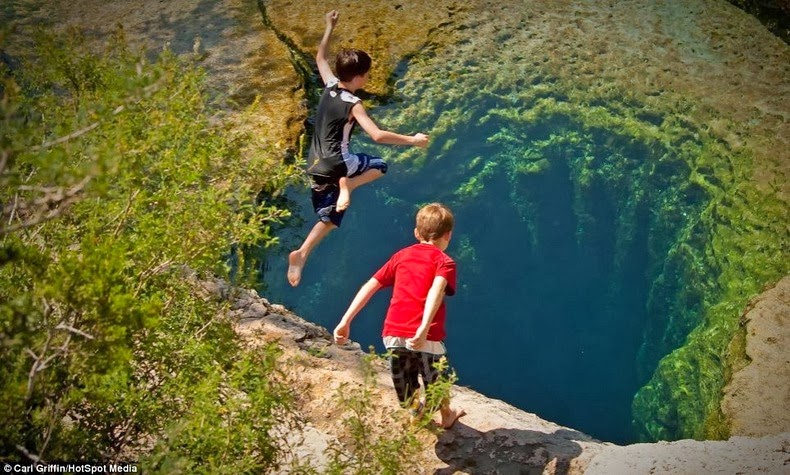
Jacob’s Well, Texas’ World's Dangerous Diving Spot

Jacob’s Well, Texas’ World's Dangerous Diving Spot jacobs-well-1
Photo credit: Carl Griffin
Jacob's Well is one of the longest submerged collapses Texas. From the opening in the stream bed, the surrender slides vertically for around ten meters, at that point proceeds descending at an edge through a progression of silted loads isolated by limit limitations, at long last achieving a profundity of forty meters.

National Geographic Wonder Photos of the Year Contest 2017

National Geographic Wonder Photos of the Year Contest 2017

NYC Light II


prod yourshot 1520638 10315932 017 10 Amazing Cityscapes from the 2017 Nat Geo Travel Photographer of the Year ContestHere is the collection of some photos from the national geographic travel photo contest 2017 which is accepting the until June 30th, 2017. In this post you will find out some photos of cities landscapes weather and people etc from this travel contest. The wining price for the First place $2,500; Second place $750; Third place $500.