Showing posts with label Bridge. Show all posts

Bridging Controversy: The Hong Kong-Zhuhai-Macau Connection

Bridging Controversy: The Hong Kong-Zhuhai-Macau Connection
Photo Source: commons.wikimedia

The Hong Kong–Zhuhai–Macau Bridge (HZMB) stands as one of the most ambitious infrastructure projects ever completed — a 55-kilometer sea-crossing linking Hong Kong, Zhuhai, and Macau. It’s not just a bridge; it’s a symbol of engineering brilliance, economic integration, and political complexity. Behind its gleaming structure lies a story of innovation, environmental concern, financial controversy, and strategic ambition.

The bridge was envisioned as part of China’s Greater Bay Area initiative, aimed at uniting key cities into a powerful economic region. The HZMB includes multiple bridges, artificial islands, and a subsea tunnel, making it a marvel of modern engineering. The project drastically shortened travel times — reducing journeys that once took hours to mere minutes. Yet, this technological feat has sparked heated debates about cost, environmental damage, and its deeper political implications.

Bridging Controversy: The Hong Kong-Zhuhai-Macau Connection
Photo Source: commons.wikimedia

Economic and Engineering Triumph
From a purely functional standpoint, the bridge represents an extraordinary leap in regional connectivity. It facilitates smoother logistics between the three hubs, boosting trade, tourism, and business collaboration. For China, it showcases national capability — a message to the world that its engineering prowess can conquer nature itself. The subsea tunnel and man-made islands were once thought impossible, yet they became reality through years of precision planning and execution.

The Shadow Side — Delays, Costs, and Scandals
Despite its grandeur, the HZMB project faced major setbacks. Construction was repeatedly delayed, costs ballooned far beyond initial estimates, and questions arose over safety and quality control. In 2018, authorities arrested 21 individuals for falsifying concrete test results — an incident that shook public confidence. Many critics dubbed the bridge a “white elephant,” arguing that its utilization rate remains far below expectations due to complex permit systems and strict driving requirements.

Bridging Controversy: The Hong Kong-Zhuhai-Macau Connection
Photo Source: commons.wikimedia

Environmental Concerns
Environmentalists have long criticized the project for damaging marine ecosystems, especially the habitat of the Chinese white dolphin, whose numbers have sharply declined in the region. Marine biologists claim that the massive reclamation and dredging work disrupted delicate underwater ecosystems. While the bridge serves economic interests, it also represents the environmental cost of rapid development — a cost that may take decades to repair.

Political Symbolism
Beyond its practical function, the bridge is seen as a political instrument. For Beijing, it’s not just about transportation but integration — physically and symbolically tying Hong Kong and Macau closer to mainland China. Many analysts interpret the HZMB as part of China’s long-term strategy to strengthen national unity and demonstrate the benefits of the “One Country, Two Systems” framework. However, for some in Hong Kong, the bridge represents growing central oversight rather than mutual cooperation.

Public Perception and Utilization
While the bridge was expected to handle massive traffic flow, reality has been mixed. Complicated licensing procedures and cross-border driving restrictions deter many potential users. Critics argue that without policy reform, the full potential of the bridge will remain untapped. Nonetheless, since opening, it has facilitated millions of vehicle crossings, showing a slow but steady rise in usage.

Bridging Controversy: The Hong Kong-Zhuhai-Macau Connection

Social and Economic Implications

Economically, the bridge is a crucial piece of the Greater Bay Area puzzle. It enhances logistics efficiency, boosts cross-border trade, and supports tourism between the three regions. However, socially, it raises questions about who truly benefits. Local communities continue to debate whether the HZMB primarily serves regional elites and industries or provides tangible advantages to ordinary residents.

A Bridge Between Worlds
The HZMB connects more than just landmasses — it connects different legal systems, currencies, and political realities. For some, it symbolizes progress and cooperation. For others, it embodies control and inequality. The bridge’s dual identity — part triumph, part tension — mirrors the very dynamics that define modern China’s relationship with Hong Kong and Macau.

Looking Ahead
Five years after its grand opening, the bridge’s story is still unfolding. Authorities report that over 10 million vehicles have crossed, yet debates over its cost-effectiveness and environmental legacy continue. Future success will depend on policy flexibility, sustainable environmental management, and efforts to make the bridge accessible to more users. If properly managed, it could become a model of transregional cooperation; if not, it risks being remembered as an expensive symbol of ambition outpacing necessity.

Bridging Controversy: The Hong Kong-Zhuhai-Macau Connection


Trajan's Bridge: Engineering Marvel of Ancient Rome

Trajan's Bridge: Engineering Marvel of Ancient RomeTrajan’s Bridge

In the annals of human history, few structures have captivated the imagination quite like Trajan's Bridge. Constructed during the height of the Roman Empire, this engineering marvel stands as a testament to the ingenuity and skill of ancient Roman architects and engineers. Spanning the mighty Danube River, Trajan's Bridge served as a symbol of Roman power and an essential lifeline connecting the empire's eastern territories. Let us embark on a journey to explore the awe-inspiring story of Trajan's Bridge.

Built between 103 and 105 AD under the rule of Emperor Trajan, the bridge was an ambitious undertaking that aimed to facilitate trade, communication, and military movements across the Danube. It stretched over 1,000 meters (3,280 feet) in length, making it the longest arch bridge of its time. The sheer scale and technical complexity of the project are a testament to the Romans' advanced engineering capabilities.

The bridge was constructed using a combination of stone piers and wooden arches. The stone piers, founded on massive underwater caissons filled with concrete, provided a solid foundation for the structure. The wooden arches, made of oak and other sturdy timbers, were carefully constructed and fitted to span the gaps between the piers. This ingenious design allowed for the seamless flow of traffic and ensured the bridge's stability and durability.

One of the remarkable aspects of Trajan's Bridge was its innovative use of temporary wooden pylons and barges during construction. These structures served as support systems, enabling the builders to work on the piers and arches while keeping the river flowing. This ingenious approach showcased the Romans' ability to adapt and devise creative solutions to overcome engineering challenges.

The completion of Trajan's Bridge marked a milestone in Roman engineering achievements. It not only facilitated trade and transportation but also played a vital role in military campaigns. The bridge allowed Roman legions to cross the Danube swiftly, providing them with a strategic advantage in expanding and defending the empire's eastern frontiers.

The legacy of Trajan's Bridge extended far beyond its functional purpose. Its grandeur and engineering prowess served as a visual representation of Roman dominance and authority. The bridge's construction was not just a feat of engineering but also a political statement, emphasizing the power and influence of the Roman Empire.

Sadly, the original bridge no longer exists today. The ravages of time and various historical events led to its eventual collapse and disappearance. However, its impact and significance endure in historical records, artistic depictions, and the admiration of scholars and history enthusiasts.

The legacy of Trajan's Bridge has inspired subsequent generations of engineers and architects. Its influence can be seen in later bridge designs, serving as a testament to the enduring impact of Roman engineering innovations. The spirit of this ancient marvel lives on in the minds of those who marvel at the triumphs of human ingenuity.

As we contemplate the story of Trajan's Bridge, we are reminded of the remarkable achievements of the ancient Romans. This awe-inspiring structure stands as a testament to the indomitable human spirit, the pursuit of knowledge, and the relentless pursuit of monumental endeavors. Trajan's Bridge continues to inspire us, reminding us that the bridges we build, both literally and metaphorically, have the power to connect people, cultures, and history across the vast rivers of time.
Modern day replica of the Trajan’s Bridge. Photo: 
Carole Raddato/Wikimedia

Trajan's Bridge: Engineering Marvel of Ancient RomeTrajan’s Bridge


Trajan's Bridge: Engineering Marvel of Ancient RomeTrajan’s Bridge

Remains of Trajan’s Bridge. Photo: PANJAVISION/Wikimedia

Trajan's Bridge: Engineering Marvel of Ancient RomeTrajan’s Bridge

Remains of Trajan’s Bridge. Photo: DjordjeMarkovic/Wikimedia

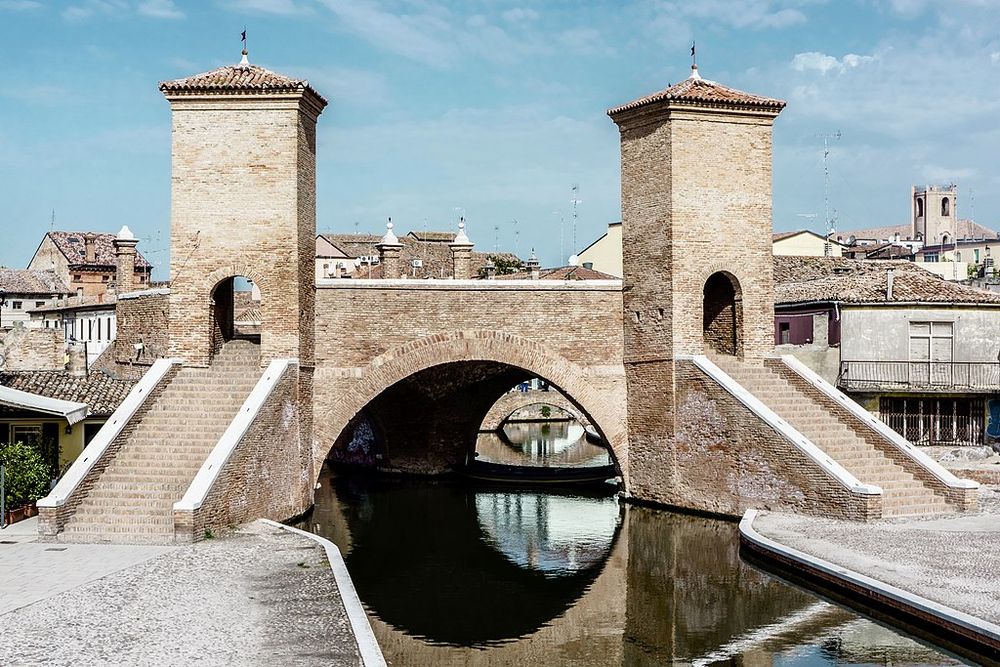
The Uniqueness of Ponte dei Trepponti: A Five-Way Bridge in Comacchio

The Uniqueness of Ponte dei Trepponti: A Five-Way Bridge in Comacchio

Photo: Edoardo Cuoghi

Bridges have long been an essential part of our architectural landscape, connecting communities and facilitating the flow of people and goods. Among the vast array of bridges worldwide, the Ponte dei Trepponti, or Trepponti Bridge, stands out as a remarkable and rare structure. Located in the charming town of Comacchio, Italy, this unique five-way bridge captivates visitors with its distinctive design, historical significance, and its role as a symbol of connection.

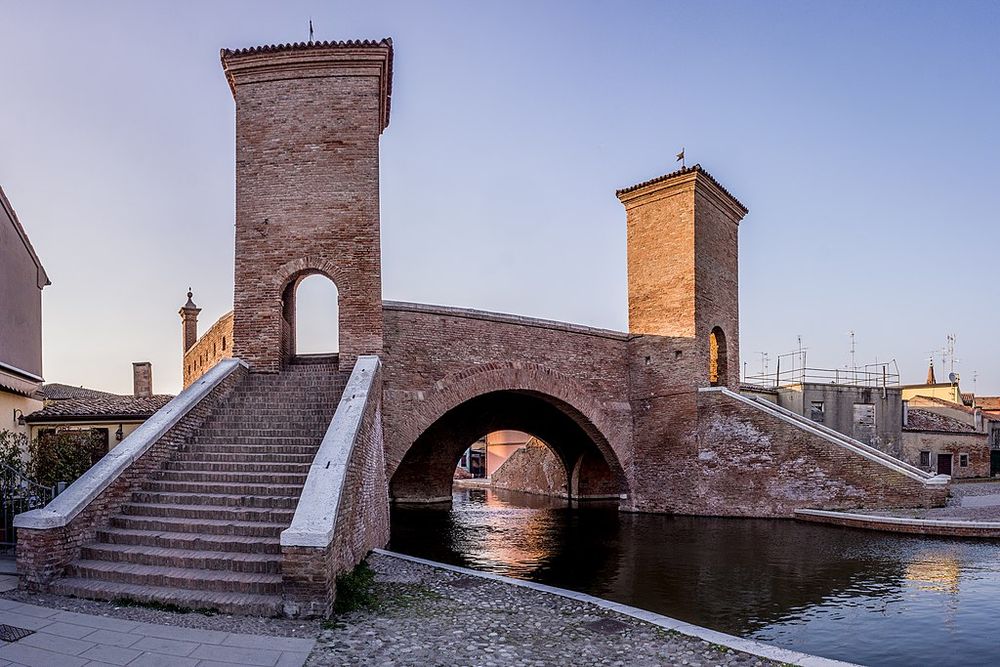
Situated in the heart of Comacchio, the Ponte dei Trepponti spans the Canale Maggiore, serving as a vital link between different sections of the town. The bridge derives its name from the Italian word "trepponti," meaning "three bridges," representing the three main sections that converge to form this extraordinary architectural marvel. The convergence of three bridges, along with two additional smaller bridges, creates a fascinating five-way intersection, an architectural rarity that sets it apart from conventional bridge structures.

Historically, the Ponte dei Trepponti played a crucial role in the development and prosperity of Comacchio. Constructed during the 17th century, the bridge was initially built to provide a connection between the historical center of Comacchio and the fishing district. It served as a vital lifeline for the local inhabitants, facilitating the transportation of goods, trade, and the cultural exchange that defined the town's identity.

The design of the Ponte dei Trepponti is a testament to the craftsmanship and engineering ingenuity of its time. The central part of the bridge features a large stone arch that gracefully spans the Canale Maggiore. On each side of this central arch, two additional arches extend outward, enhancing the bridge's structural integrity while adding to its aesthetic appeal. The harmonious combination of arches and stone materials creates an enchanting visual experience, perfectly blending with the surrounding landscape.

Walking across the Ponte dei Trepponti offers a captivating experience for visitors. From the bridge, one can appreciate the tranquil waters of the Canale Maggiore, lined with picturesque buildings that reflect in the shimmering surface. The bridge's unique vantage point provides breathtaking views of Comacchio's rich architectural heritage and the natural beauty that surrounds it. It is no wonder that the Ponte dei Trepponti has become a favorite spot for locals and tourists alike, who gather to soak in the beauty and ambience of this remarkable structure.

Preservation efforts have played a crucial role in safeguarding the Ponte dei Trepponti for future generations to admire and appreciate. Recognizing its historical and architectural significance, local authorities and preservation organizations have invested in restoration projects to maintain the bridge's integrity. Through these endeavors, the bridge stands as a testament to Comacchio's rich history and cultural heritage, serving as a symbol of the town's resilience and enduring connection.

The Uniqueness of Ponte dei Trepponti: A Five-Way Bridge in Comacchio

The Uniqueness of Ponte dei Trepponti: A Five-Way Bridge in Comacchio

Photo: Vanni Lazzari/Wikimedia

The Uniqueness of Ponte dei Trepponti: A Five-Way Bridge in Comacchio

Photo: Vanni Lazzari/Wikimedia

the Ponte dei Trepponti is a remarkable and rare five-way bridge located in Comacchio, Italy. Its distinctive design, historical importance, and role as a symbol of connection make it a fascinating architectural marvel. From its construction in the 17th century to its present-day allure, the bridge continues to captivate visitors with its unique structure and stunning surroundings. As an emblem of Comacchio's past and present, the Ponte dei Trepponti stands as a testament to the power of architecture in uniting communities and fostering cultural exchange

Lucky Knot Bridge allows Multiple Routes in China

Lucky Knot Bridge allows Multiple Routes to crossing in China
A bridge which has many routes in it allows the crossers to enjoy the differrent routs above the  Dragon King Harbour River and the bridge known as Lucky Knot Bridge located in Changsha China.

Picture Of The Day: Penda’s Bridge for 2022 Beijing Winter Olympics

Picture Of The Day: Penda’s Bridge for 2022 Beijing Winter Olympicspenda-san-shan-bridge-beijing-olympic-winter-games-2022-designboom-02Beijing and vienna-based architecture studio penda has proposed their design for the ‘san shan bridge‘ to span across the giu river and provide a gateway between the dense city of beijing to the undulating river valleys in the north. the sequence of arches form a pre-stressed double-helix and is influenced by the olympic symbol.

World's Highest Dangerous Suspension Bridge ''TITLIS Cliff Walk'' In Europe

World's Highest Dangerous Suspension Bridge ''TITLIS Cliff Walk'' In Europe
highest_bridge_europe_06TITLIS Cliff Walk is open on Dec 2012 for visitors this bridge is 300-foot-long (100 meters) bridge built at nearly 10,000 feet (3,000 meters) above sea level.This bridge is also known as the world's highest suspension bridge in Europe.

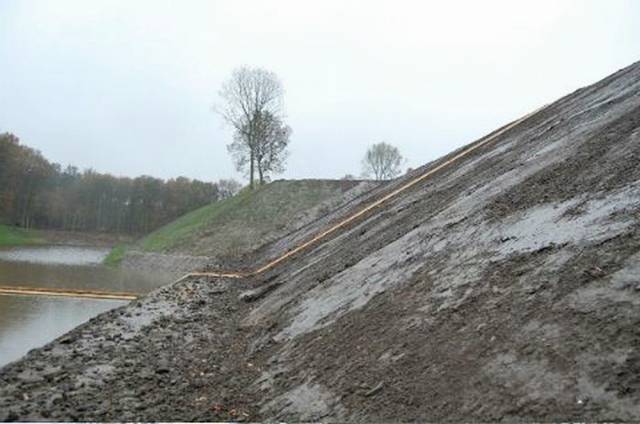
Moses Bridge - A Sunken Pedestrian Bridge In Netherlands

Moses Bridge - A Sunken Pedestrian Bridge In Netherlands 

This incredible “sunken” bridge located in the Netherlands. This is world only one bridge, where you can walk between the water.This bridge gives visitors a golden opportunity to walk between water.This bridge is made by a wooden sheet and professional persons. 

Moses Bridge - A Sunken Pedestrian Bridge In Netherlands

Moses Bridge - A Sunken Pedestrian Bridge In Netherlands

Moses Bridge - A Sunken Pedestrian Bridge In Netherlands


Moses Bridge - A Sunken Pedestrian Bridge In Netherlands


Moses Bridge - A Sunken Pedestrian Bridge In Netherlands

Moses Bridge - A Sunken Pedestrian Bridge In Netherlands

Moses Bridge - A Sunken Pedestrian Bridge In Netherlands

Moses Bridge - A Sunken Pedestrian Bridge In Netherlands

Moses Bridge - A Sunken Pedestrian Bridge In Netherlands

Moses Bridge - A Sunken Pedestrian Bridge In Netherlands


source