Showing posts with label China. Show all posts

The Mysterious Pyramids of Anlong County: China’s Stunning Natural Wonder


Introduction

Nestled in Anlong County, Guizhou Province, southwest China, a spectacular natural phenomenon has recently emerged as a viral sensation and a flourishing tourist attraction: the pyramidal mountains, affectionately dubbed the “Pyramids of Anlong County.” These unusual geological formations, resembling miniature versions of the Egyptian pyramids, have drawn in curious travelers, geologists, and social media enthusiasts alike.

What Are the Anlong “Pyramids”?

These pyramid-like hills are natural conical peaks, part of a classic karst landscape—formed by soluble rock erosion over millions of years. Despite captivating speculation, they are not man-made tombs or extraterrestrial constructs, but rather Earth’s own artistry in stone.Amusing PlanetGlobal TimesSouth China Morning Post

Geological Formation: Natural or Human-Made?

Expert Insight—According to Professor Zhou Qiuwen of Guizhou Normal University, these formations are purely geological, not constructed or burial sites.Global TimesAmusing Planetchinaurl.com

How the Pyramid Shape Occurred

Internet Buzz, Tourist Magnet

When videos and photos began circulating—especially one scenic drone clip posted on Douyin—the formation quickly gained online traction.People's Daily Online

During the May Day holiday, over 61,000 visitors flocked to the area, some traveling from distant areas like Beijing and Shanghai. In response, local authorities constructed viewing platforms, parking facilities, and service centers to accommodate the surge in tourists.People's Daily OnlineXinhua News

World travelers have also commented on the breathtaking views. One Serbian visitor, Nemanja Bauk, praised both the scenery and local hospitality, expressing a desire to return.People's Daily Online

Debunking Myths and Speculation

The extraordinary visuals spurred a wave of imaginative theories—from alien-built relics to secret burial sites of Ming dynasty royals.chinaurl.comOddity CentralSouth China Morning Post
Even speculation about ancient royal tombs linked to Ming’s Yongli Court proved unlikely. As Professor Zhou and geological findings confirm, these are natural karst formations, not human constructions.chinaurl.comGlobal TimesOddity Central


Where Exactly Are They?

These formations are located roughly 2 to 3 kilometers from Anlong’s county seat, near Poyun Village, within Anlong County’s picturesque karst terrain.People's Daily Onlinechinaurl.com

Geological Significance of Guizhou Karst

Guizhou’s landscape is renowned for its karst topography, characterized by steep peaks, deep valleys, sinkholes, and caves—formed by soluble limestone and dolomite undergoing erosion.South China Morning Postchinaurl.comPeople's Daily Online
The Anlong pyramidal hills are a perfect embodiment of this quintessential Chinese karst terrain.

SEO Boost: Related Comparisons and Context

While the pyramidal shapes echo the form of Egyptian pyramids, China’s best-known “pyramids” are actually ancient mausoleum mounds—such as the Qin Shi Huang Mausoleum and the Chinese pyramids near Xi’an, dating back to Han and Qin dynasties.Wikipedia+1
Unlike those human-made mounds, Anlong’s peaks are the result of purely natural geological processes, showcasing Earth’s creative power rather than human ambition.


Tourism & Preservation: What Lies Ahead

The growing tourism interest highlights both opportunity and responsibility. To sustainably manage growth, local authorities have been proactive, installing infrastructure, guiding visitors, and protecting the landscape from degradation.People's Daily OnlineXinhua News

Tips for Visiting Anlong’s Pyramids

  • Best time to visit: During pleasant weather, such as spring or autumn, for optimal visibility and comfort.

  • Bring a camera—the formations offer ideal backdrops at sunrise, sunset, and even during night lighting.

  • Expect central viewing platforms, nearby amenities, and signage—reflecting recent upgrades.People's Daily Online

  • While walkable, some vantage points may require short hikes—proper footwear recommended.

a) Summary of Key Highlights

  • Natural Wonders: Pyramid-like hills in Anlong County, formed by ancient karst processes.

  • Geological Roots: Over 200 million years old, shaped by water erosion of dolomite and limestone.

  • Tourism Buzz: Dramatic visuals inspired viral videos, drawing tens of thousands of visitors.

  • Scientific Consensus: Experts affirm the formations are natural—not paranormal or historical artifacts.

  • Future Prospects: With infrastructure in place, Anlong is emerging as a sustainable tourism hotspot.

Bridging Controversy: The Hong Kong-Zhuhai-Macau Connection

Bridging Controversy: The Hong Kong-Zhuhai-Macau Connection
Photo Source: commons.wikimedia

The Hong Kong–Zhuhai–Macau Bridge (HZMB) stands as one of the most ambitious infrastructure projects ever completed — a 55-kilometer sea-crossing linking Hong Kong, Zhuhai, and Macau. It’s not just a bridge; it’s a symbol of engineering brilliance, economic integration, and political complexity. Behind its gleaming structure lies a story of innovation, environmental concern, financial controversy, and strategic ambition.

The bridge was envisioned as part of China’s Greater Bay Area initiative, aimed at uniting key cities into a powerful economic region. The HZMB includes multiple bridges, artificial islands, and a subsea tunnel, making it a marvel of modern engineering. The project drastically shortened travel times — reducing journeys that once took hours to mere minutes. Yet, this technological feat has sparked heated debates about cost, environmental damage, and its deeper political implications.

Bridging Controversy: The Hong Kong-Zhuhai-Macau Connection
Photo Source: commons.wikimedia

Economic and Engineering Triumph
From a purely functional standpoint, the bridge represents an extraordinary leap in regional connectivity. It facilitates smoother logistics between the three hubs, boosting trade, tourism, and business collaboration. For China, it showcases national capability — a message to the world that its engineering prowess can conquer nature itself. The subsea tunnel and man-made islands were once thought impossible, yet they became reality through years of precision planning and execution.

The Shadow Side — Delays, Costs, and Scandals
Despite its grandeur, the HZMB project faced major setbacks. Construction was repeatedly delayed, costs ballooned far beyond initial estimates, and questions arose over safety and quality control. In 2018, authorities arrested 21 individuals for falsifying concrete test results — an incident that shook public confidence. Many critics dubbed the bridge a “white elephant,” arguing that its utilization rate remains far below expectations due to complex permit systems and strict driving requirements.

Bridging Controversy: The Hong Kong-Zhuhai-Macau Connection
Photo Source: commons.wikimedia

Environmental Concerns
Environmentalists have long criticized the project for damaging marine ecosystems, especially the habitat of the Chinese white dolphin, whose numbers have sharply declined in the region. Marine biologists claim that the massive reclamation and dredging work disrupted delicate underwater ecosystems. While the bridge serves economic interests, it also represents the environmental cost of rapid development — a cost that may take decades to repair.

Political Symbolism
Beyond its practical function, the bridge is seen as a political instrument. For Beijing, it’s not just about transportation but integration — physically and symbolically tying Hong Kong and Macau closer to mainland China. Many analysts interpret the HZMB as part of China’s long-term strategy to strengthen national unity and demonstrate the benefits of the “One Country, Two Systems” framework. However, for some in Hong Kong, the bridge represents growing central oversight rather than mutual cooperation.

Public Perception and Utilization
While the bridge was expected to handle massive traffic flow, reality has been mixed. Complicated licensing procedures and cross-border driving restrictions deter many potential users. Critics argue that without policy reform, the full potential of the bridge will remain untapped. Nonetheless, since opening, it has facilitated millions of vehicle crossings, showing a slow but steady rise in usage.

Bridging Controversy: The Hong Kong-Zhuhai-Macau Connection

Social and Economic Implications

Economically, the bridge is a crucial piece of the Greater Bay Area puzzle. It enhances logistics efficiency, boosts cross-border trade, and supports tourism between the three regions. However, socially, it raises questions about who truly benefits. Local communities continue to debate whether the HZMB primarily serves regional elites and industries or provides tangible advantages to ordinary residents.

A Bridge Between Worlds
The HZMB connects more than just landmasses — it connects different legal systems, currencies, and political realities. For some, it symbolizes progress and cooperation. For others, it embodies control and inequality. The bridge’s dual identity — part triumph, part tension — mirrors the very dynamics that define modern China’s relationship with Hong Kong and Macau.

Looking Ahead
Five years after its grand opening, the bridge’s story is still unfolding. Authorities report that over 10 million vehicles have crossed, yet debates over its cost-effectiveness and environmental legacy continue. Future success will depend on policy flexibility, sustainable environmental management, and efforts to make the bridge accessible to more users. If properly managed, it could become a model of transregional cooperation; if not, it risks being remembered as an expensive symbol of ambition outpacing necessity.

Bridging Controversy: The Hong Kong-Zhuhai-Macau Connection


Divine Heights: Discovering the Himalayan Towers of China

Unraveling the Enigma: The Himalayan Towers of ChinaHigh in the remote valleys of western China, where the snow-capped peaks of the Himalayas meet the rugged landscapes of Sichuan and Tibet, stand mysterious stone towers that have puzzled historians, archaeologists, and travelers for centuries. These towering structures, often rising between 50 to 200 feet, seem to defy both time and logic. Known as the Himalayan Towers or the Watchtowers of Sichuan, they are among China’s least-understood architectural wonders. Despite centuries of existence, their origins, purpose, and construction techniques remain subjects of intense debate. Built in regions so remote that they were cut off from the rest of the world for centuries, these towers whisper stories of forgotten cultures, ancient conflicts, and architectural mastery far ahead of their time. Above Photo: Munford/Wikimedia

The Himalayan Towers are found mainly in the Ganzi Tibetan Autonomous Prefecture, Danba County, and parts of Sichuan Province. Their presence in such isolated regions adds to their aura of mystery. Rising like ancient sentinels above deep river valleys and terraced farmlands, these structures appear both formidable and graceful. Some are octagonal or hexagonal, while others are rectangular, each displaying an intricate stonework design that has withstood earthquakes, harsh weather, and centuries of neglect. Their sheer durability is a testament to the advanced construction skills of the people who built them, even though they lacked modern tools or technology.

Unraveling the Enigma: The Himalayan Towers of China
Credit: Wikimedia Commons

Archaeologists have long debated the purpose of these towers. Were they watchtowers built for defense? Were they status symbols erected by wealthy families? Or perhaps they served a ceremonial or spiritual role? The truth may lie somewhere in between. Local legends tell of warriors who built the towers to protect their villages from invaders and raiders traveling along ancient trade routes. Others claim the towers were constructed as symbols of prestige and power, with each clan building taller and more elaborate towers to display wealth. Still others believe they were astronomical or communication structures, designed to observe celestial movements or send signals across vast mountain distances.

Dating these towers has proven challenging. Some experts estimate they are between 500 and 1,200 years old, while local oral histories suggest that some could be even older. The use of dry-stone masonry—a method that relies on careful placement of stones without mortar—suggests exceptional craftsmanship. The walls, often more than a meter thick at the base, taper gracefully toward the top, providing both stability and visual elegance. Wooden beams inserted between stone layers give the towers flexibility during earthquakes, a remarkable feat of engineering given the seismic nature of the Himalayan region.

The most famous of these towers are found in Danba, often called the “Valley of a Thousand Watchtowers.” Here, the structures rise dramatically against the backdrop of snow-covered peaks and lush green valleys, creating one of the most breathtaking landscapes in China. Some towers stand isolated on cliffs, while others cluster near ancient Tibetan-style villages. Visitors who trek to this region describe an almost mystical atmosphere—the silence of the mountains broken only by the wind, with the shadow of these stone giants stretching across the valley.

In recent years, researchers have begun using modern technology to study the Himalayan Towers in greater detail. Drones, 3D scanning, and carbon dating have revealed fascinating insights into their construction methods and materials. Some towers appear to have been rebuilt or modified over centuries, indicating that they were continuously used or maintained by local communities. However, even with these discoveries, no single theory fully explains their origin or purpose. Their alignment with surrounding geography and historical trade routes suggests they may have served multiple functions—defensive, social, and spiritual.

Beyond their architectural intrigue, the towers are a vital part of local cultural identity. In Tibetan and Qiang folklore, they are associated with ancestors and spirits, believed to protect villages from evil and misfortune. Some stories speak of heroic builders who constructed the towers using divine guidance or magical strength. These oral traditions, passed down through generations, preserve the spiritual essence of the towers even as their factual origins remain uncertain.

Unfortunately, time and modernization threaten these ancient monuments. Many towers have suffered damage from earthquakes, erosion, and neglect. Some have collapsed entirely, while others lean precariously, awaiting restoration. The remoteness of their locations makes preservation efforts difficult, and rapid urbanization in nearby regions further diverts attention from these cultural treasures. However, both local and international organizations have recently begun advocating for their protection, emphasizing their historical and cultural importance. The inclusion of the Himalayan Towers in UNESCO’s tentative list of World Heritage Sites has sparked renewed global interest and hope for their preservation.

Tourism is also helping to bring attention to the towers. Adventurous travelers, drawn by their mysterious beauty and the challenge of reaching such isolated areas, are rediscovering these forgotten marvels. Photography, documentaries, and cultural tours now feature the Himalayan Towers as must-see destinations for those fascinated by ancient architecture and untold history. The combination of natural splendor and human ingenuity makes them a compelling symbol of the enduring bond between culture and landscape.

The Himalayan Towers of China remind us that history is often layered with mysteries that cannot be easily solved. Their endurance through centuries of isolation, conflict, and natural disasters speaks volumes about the resilience of the people who built them. Whether they were fortresses, family monuments, or spiritual beacons, they remain extraordinary achievements of human creativity and endurance. Each tower tells a silent story—a story carved in stone and framed by the endless sky of the Himalayas.

In conclusion, the enigma of the Himalayan Towers lies not just in their unknown origins but in what they represent: the intersection of art, engineering, and human spirit. They stand as timeless guardians of a forgotten past, their shadows cast across a landscape of mystery and wonder. As researchers continue to study them and preservationists strive to protect them, these towers remain a symbol of both the beauty and fragility of cultural heritage. In their quiet strength, they remind us that even in the most remote corners of the world, human imagination can build wonders that endure long after their creators are gone.

References:
# Towers To The Heavens, Newsweek
# Towering Mysteries, Smithsonian
# Stone Towers of Southwest China, World Monuments Fund

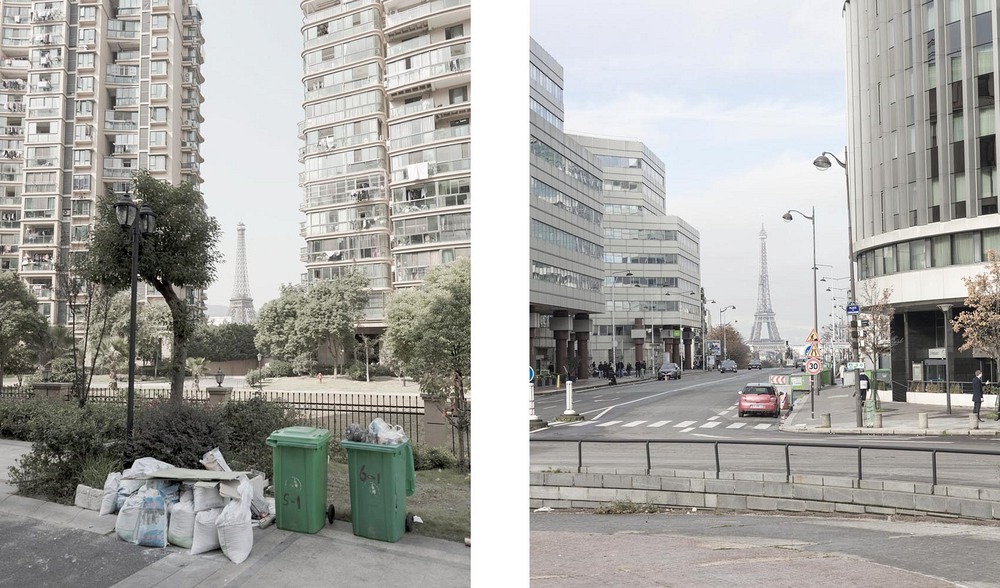
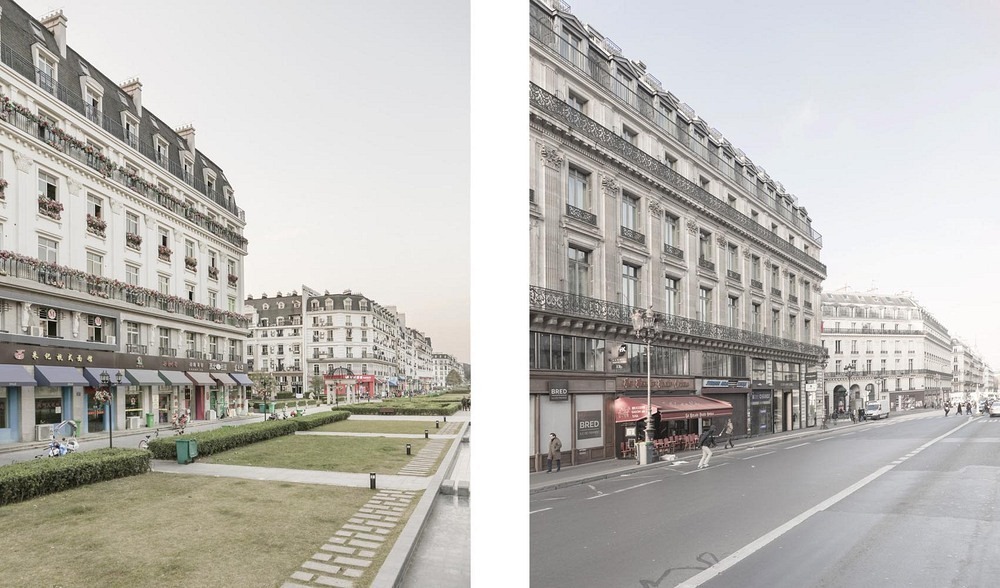
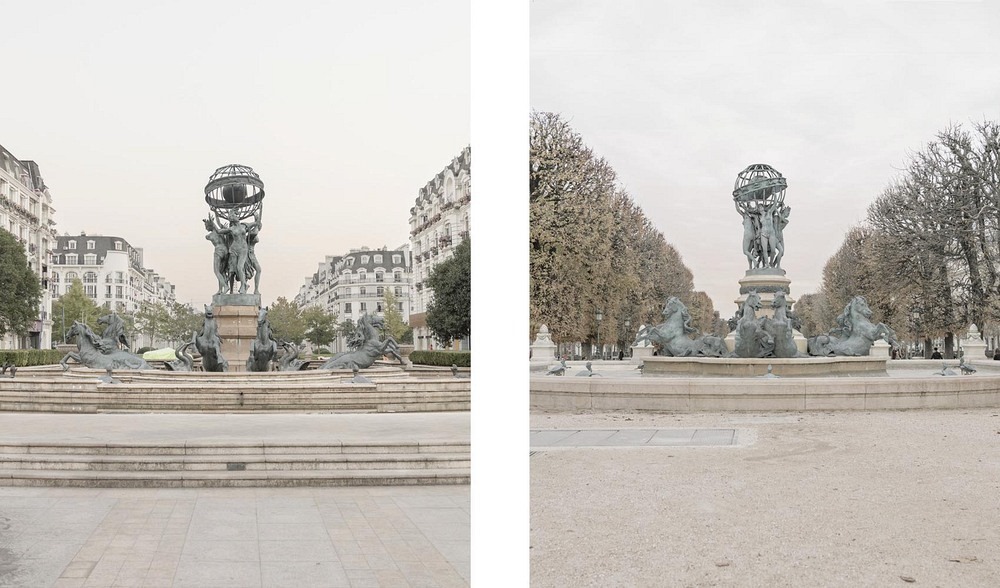
A Fake Eiffel Tower and Fake Paris in China Photos

A Fake Eiffel Tower and Fake Paris in China Photosparis-syndrome-tianducheng-3
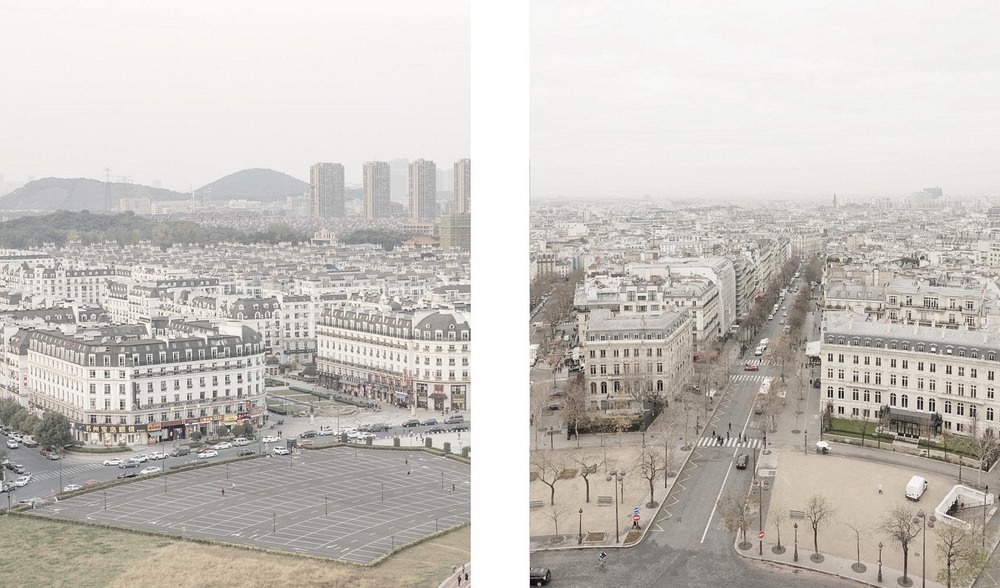
These photographs are look like capture at Paris and look also very similar to Eiffel Tower but in these photographs one photo is real which is capture in Paris and the other hand there is a fake Paris and Eiffel Tower in China. Which look very similar to original but it is fake this is a very interesting to see the Paris in China. The People of China they don't have to go to Paris because of this amazing place Tianducheng, in the suburbs of Hangzhou in China. Photo series is called “Paris Syndrome
A Fake Eiffel Tower and Fake Paris in China Photosparis-syndrome-tianducheng-2A Fake Eiffel Tower and Fake Paris in China Photosparis-syndrome-tianducheng-4
A Fake Eiffel Tower and Fake Paris in China Photosparis-syndrome-tianducheng-5
A Fake Eiffel Tower and Fake Paris in China Photosparis-syndrome-tianducheng-6
A Fake Eiffel Tower and Fake Paris in China Photosparis-syndrome-tianducheng-7
A Fake Eiffel Tower and Fake Paris in China Photosparis-syndrome-tianducheng-8
A Fake Eiffel Tower and Fake Paris in China Photosparis-syndrome-tianducheng-9
A Fake Eiffel Tower and Fake Paris in China Photo
paris-syndrome-tianducheng-10
A Fake Eiffel Tower and Fake Paris in China Photos
paris-syndrome-tianducheng-11
A Fake Eiffel Tower and Fake Paris in China Photos
paris-syndrome-tianducheng-12
A Fake Eiffel Tower and Fake Paris in China Photos
paris-syndrome-tianducheng-14

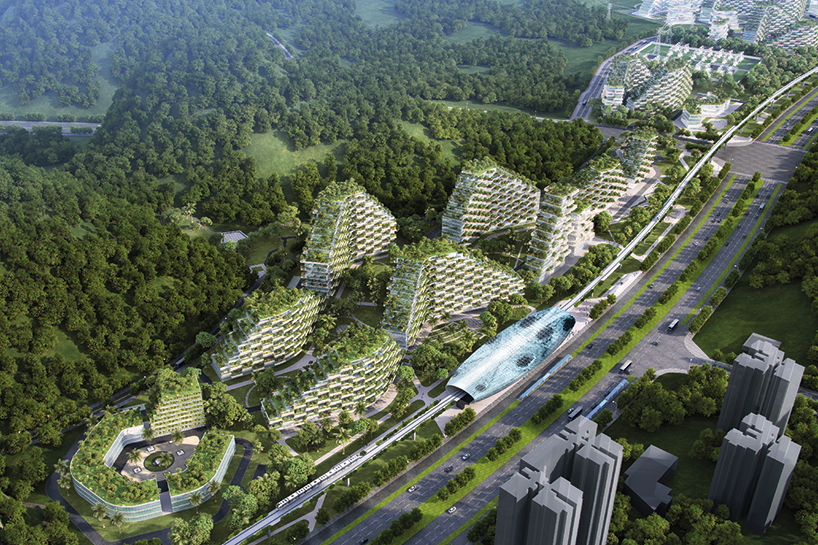
Stefano Boeri's World's First Forest City in Liuzhou, China

Stefano Boeri's World's First Forest City in Liuzhou, China stefano boeri liuzhou forest city
World first wonder forest city is going to develop in china a mountain area where so many trees and species will be able to fight with the pollution.This forest city is going to be very popular due to its beauty of greenery.This forest city will take just three years to complete, with an opening scheduled for 2020.

Lucky Knot Bridge allows Multiple Routes in China

Lucky Knot Bridge allows Multiple Routes to crossing in China
A bridge which has many routes in it allows the crossers to enjoy the differrent routs above the  Dragon King Harbour River and the bridge known as Lucky Knot Bridge located in Changsha China.

World Rarest Brown Panda found in China

World Rarest Brown Panda found in China
World's only completely Brown Panda has faced temperatures of minus 30 degrees Celsius in the remote Qinling Mountains of west China this winter, but has come through unscathed.The brown male giant panda named Qizai was born in 2009 and his mother was a normal one with black and white hairs. He now lives in a giant panda research institute in northwest China’s Shaanxi Province.Here are some of photographs.

Incredible view of Chaka Salt in the Qinghai Province, China

Incredible view of Chaka Salt in the Qinghai Province, China
chaka-salt-lake-2
Chaka Lake is situated in the Qinghai province of China.It is the one of the beautiful Lakes of  Qaidam Basin.This Lake is 15km long and 15km wide.It is not a deep Lake and in dry season it becomes smaller in size so wee can easily walk in it.It is very famous place to go.It is the rare place on the planet with sallt dense water.

Wonderful Fishing Village Covered with greenery in China

Wonderful  Fishing Village Covered with greenery in China
In the mouth of the Yangtze River off the eastern coast of China, a small island holds a secret haven lost to the forces of time and nature—an abandoned fishing village swallowed by dense layers of ivy slowly creeping over every brick and path. Houtou Wan Village is located on Gouqi Island, which belongs to a group of 394 islands known as the Shengsi Islands in the Zhoushan Archipelago.

Amazing Restaurant along with the Mountain in Yichang, China

Amazing Restaurant along with the Mountain in Yichang, Chinafangweng-restaurant-9
Walking into the restaurant and down the steps, one will come to a natural “cave lobby”. Rightward, a 30-meter-long plank road has been built along the cliffside. It leads to another natural cave, which has been transformed into a dining hall. Warm lighting from the ceiling lends a golden yellow glow throughout. 

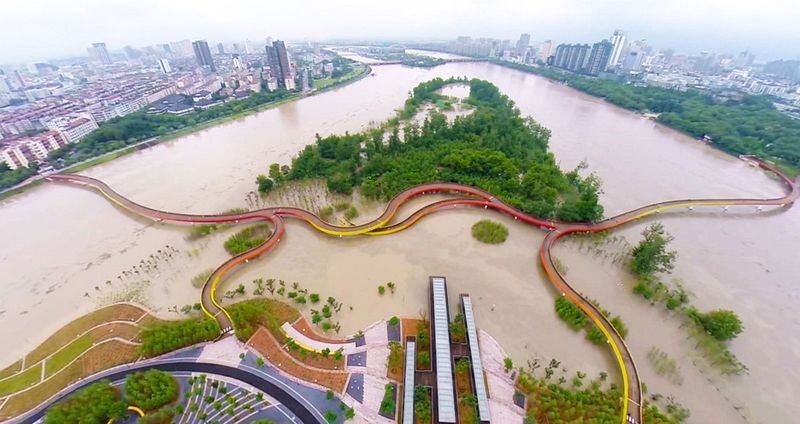
Stunning Yanweizhou Wetland Park, China

Stunning Yanweizhou Wetland Park, Chinayanweizhou-park-12
Located in the heart of Jinhua City in central Zhejiang province in eastern China, is a natural riparian wetland where the Wuyi River and Yiwu River converge to form Jinhua River.Yanweizhou is now the location of an environment-friendly park achieved through meandering vegetated terraces, curvilinear paths, a serpentine bridge, circular bio-swales and planting beds, and curved benches. The project has given the city a new identity and is now acclaimed as its most poetic landscape.

Wonderful Longmen Grottoes, China

Wonderful Longmen Grottoes, Chinalongmen-grottoes-8
Longmen Grottoes are a series of Buddhist cave temples carved into the rock on the banks of the Yi River, south of the city of Luoyang, in Henan province, in China. The site includes some 1,350 caves and 40 pagodas, which are choke-full of statues of all shapes and sizes, ranging from 1 inch to the largest Buddha statue of 17 meters tall. There are as many as 100,000 statues carved out of the hard limestone cliffs. Stretching for 1 km along both banks of the river, the caves represent one of the finest examples of Chinese Buddhist art.

Toilet Bowl Waterfall in Foshan, China

Toilet Bowl Waterfall in Foshan, Chinatoilet-bowl-waterfall-9Foshan, a city in central Guangdong province in China, has one of the strangest public art - a fountain built out of 10,000 recycled toilets, sinks and urinals covering a wall 100 meters long and almost 5 meters high. The fountain/waterfall was originally designed for the 2009 Foshan Pottery and Porcelain Festival, a porcelain product tradeshow, before being installed as a permanent piece of public art. It is just one of the many impressive ceramic sculptures residing in Shiwan Park.

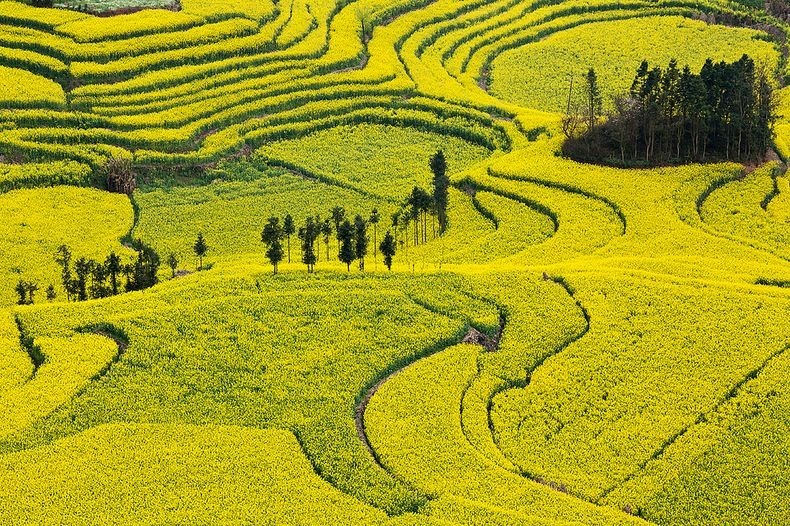
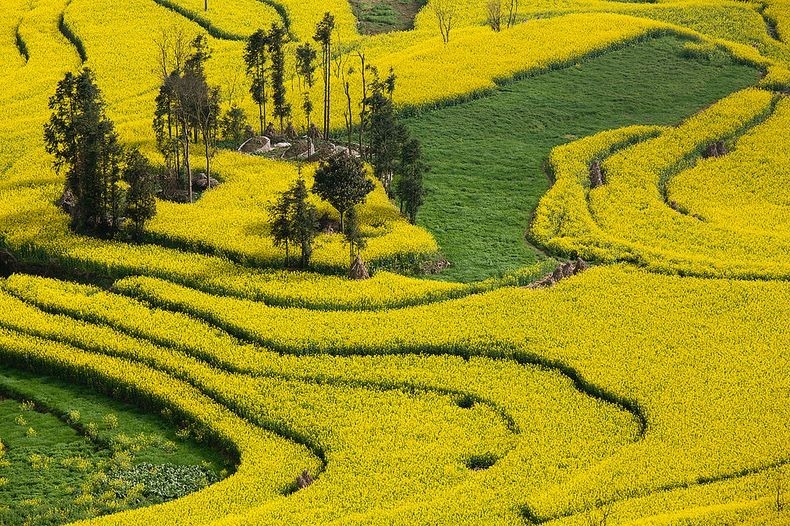
Amazing Ocean of Flowers in Luoping, China

Amazing Ocean of Flowers in Luoping, China
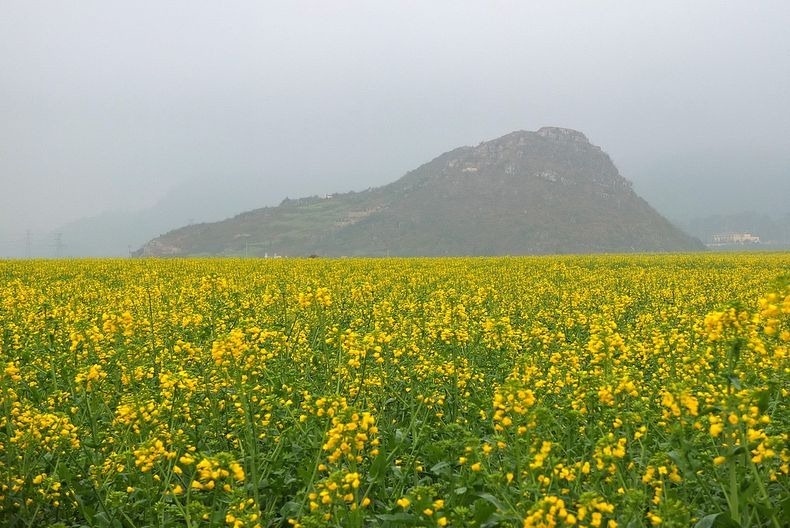
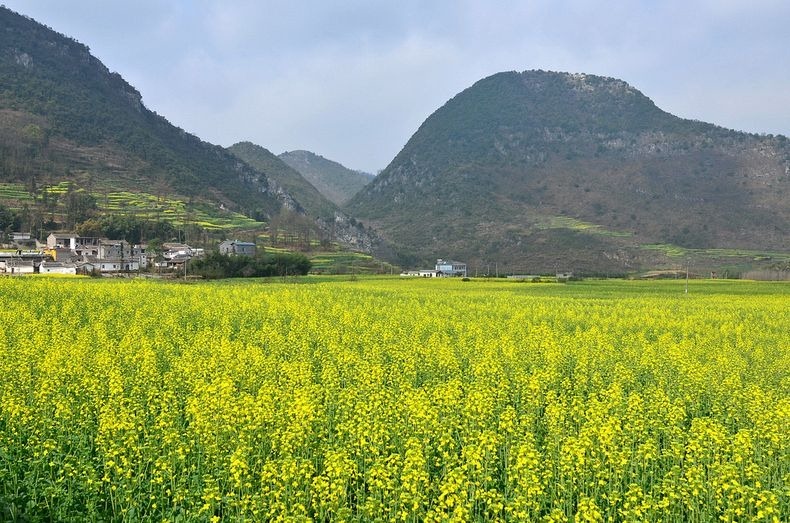
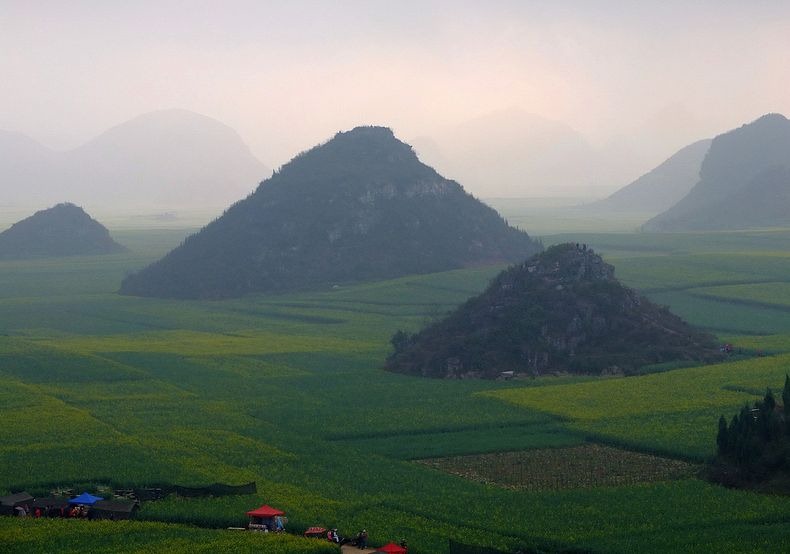
In the spring, the countryside of Luoping in eastern Yunnan, China turns into an ocean of flowers. It's that time of the year that the rapeseed flowers (or canola) are in full bloom. Photographers flock to this destination to capture the spectacular sight - rolling hills surrounded by bright yellow flowers as far as the eye can see.

The Nanpu Bridge across Huangpu river In Shanghai, China

The Nanpu Bridge across Huangpu river In Shanghai, Chinananpu-bridge-1
The Nanpu Bridge across Huangpu river is one of the main bridges in Shanghai, China, and the first cable stayed bridge with a span of over 400 meter in the country.The cable-stayed bridge was designed by the Shanghai Municipal Engineering Design Institute, Shanghai Urban Construction College, and Shanghai Urban Construction Design Institute, with assistance from Holger S. Svensson. It has a main span of 428 meters (1,388 ft), shorter than its sister bridge. It is the 57th longest cable-stayed bridge in the world, opened to the public in 1991.

Strange Bridge on Yellow Mountains in HuangHsan, China

Strange Bridge on Yellow Mountains in HuangHsan, China
Huangshan (literally “Yellow Mountain”) is a mountain range in eastern China and one of the most iconic locations in the country.The Yellow Mountain is a daredevil's dream destination for a thrilling experience.Having at least 140 sections open to visitors,Huanghan is a major tourist destination in China.

The Reed Flute Cave in Guilin, Guangxi, China

 The Reed Flute Cave in Guilin, Guangxi, China
 The Reed Flute cave is a natural limestone cave with multicolored lighting and has been one of Guilin’s most interesting attractions for over 1200 years. It is over 180 million years old.Located five kilometers northwest of the downtown of Guilin,  Guangxi, China.

Amazing Robot Restaurant in Harbin, China

Amazing Robot Restaurant in Harbin, China
robot-restaurant-5
In this restaurant 4 or 5 feet tall 20 robots instead of humans that cook, serve and entertain its guests.The robots were designed and built by a local firm, the Harbin Haohai Robot Company.This restaurant is opened in June 2012 located at the downtown Harbin, China.The ''Harbin'' is one of the famous place and its one reason is annual ice festival in Harbin.

Circular Pedestrian Bridge in Lujiazui, China

Circular Pedestrian Bridge in Lujiazui, China
lujiazui-pedestrian-bridge-1
This Circular Pedestrian Bridge is count as the world biggest circular or pedestrian bridge from around the world located at the Lujiazui in the Pudong district of Shanghai.The bridge is standing on pillars about 20 feet above from the street and the view of city or its transportation is amazing from the height that's why here the people love to walk on this bridge and enjoy this incredible place.The walkaway is 5.5 meter high and can fit 15 people walking side by side.A large number of visitors come here it has become quite a tourist attraction.

Beautiful Rapeseed Fields in Luoping, China

Beautiful Rapeseed Fields in Luoping, China
This beautiful Rapeseed fields are located at the 228 kilometers north east of Kunming close to the border of Yunnanor or this Luoping country is consider to be the smallest country of eastern Yunnan, China.In February or March this place is look like a golden sea because of yellow rapeseed flowers this flowers are also name as Canola.
 luoping-6
A large number of turrets come there to enjoy this view of fields.This place is best for the photographers or for the visitors only in February or March but after the June its all over.  
Beautiful Rapeseed Fields in Luoping, Chinaluoping-20
Beautiful Rapeseed Fields in Luoping, Chinaluoping-2
Beautiful Rapeseed Fields in Luoping, Chinaluoping-4
Beautiful Rapeseed Fields in Luoping, Chinaluoping-5
Beautiful Rapeseed Fields in Luoping, Chinaluoping-7
Beautiful Rapeseed Fields in Luoping, Chinaluoping-8
Beautiful Rapeseed Fields in Luoping, Chinaluoping-9
Beautiful Rapeseed Fields in Luoping, Chinaluoping-10
Beautiful Rapeseed Fields in Luoping, Chinaluoping-11
Beautiful Rapeseed Fields in Luoping, Chinaluoping-12
Beautiful Rapeseed Fields in Luoping, Chinaluoping-13
Beautiful Rapeseed Fields in Luoping, Chinaluoping-14
Beautiful Rapeseed Fields in Luoping, Chinaluoping-15
Beautiful Rapeseed Fields in Luoping, Chinaluoping-16
Beautiful Rapeseed Fields in Luoping, Chinaluoping-17
Beautiful Rapeseed Fields in Luoping, Chinaluoping-18
Beautiful Rapeseed Fields in Luoping, Chinaluoping-19
Beautiful Rapeseed Fields in Luoping, Chinaluoping-1
Beautiful Rapeseed Fields in Luoping, Chinaluoping-0