Amazing Alignment of thousands of shallow Band of Holes

Amazing Alignment of thousands of shallow Band of Holes

In the valley of Peru Pesco,  there is a strange arrangement of cursory and superficial pits. The pits are aligned in a narrow band and their width is around 14 to 20 meters, which meets up a hill for about 1500 meters. Their function or purpose is a mystery. The specialty is that it is famous as Cerro Viruela (Smallpox hill) or Monte Sierpe (Serpent mountain). It is also known as the name Band of Holes.

Cerro Viruela is a well-known site, it is also famous among archeologists who have been doing work in Peru for many decades.

This site first became famous among visitors in the 1930s due to an aerial Photograph of aviator Robert Shippee which he published in National Geographic. After that, a little number of archeologists went there to see the site. In 1953, another person who was American visited Victor Wolfgang von Hagen explored the area, and explained the pits as graves, he said that those are like empty graves. He described that there are almost 5,000 such graves on the site.

John Hyslop also an archeologist, wrote in his book titled The Inka Road System that such type of circular structure can be used for storage, similar to the ones found on the coast of south Peruvian in the sites Quebrada de la Vaca and at Tambo Colorado.

The width of the holes is almost three feet across and their length is 20 to 40 inches deep. There are available there with different types, some of it was artificial mounds of mud and the others were made up of small rock structures on the earth. The band consisted of many different patterns of holes.

Amazing Alignment of thousands of shallow Band of Holes

Satellite view of Band of Holes.
A team of archeologists from the University of California visited in 2015, explored it, and made a comprehensive study of the site, they created a mao of the Band of Holes by using a drone, and they explained after the analysis that it is mad up between 5,000 and 6,000 depressions.  These archeologists did not get any solid evidence, but a road named Inca was found nearby, many numbers of colas (Inca-period storage houses), and they discovered the Inca-period pottery near the band, it concludes that the Band of Holes dates to sometime around the fifteenth century after the Inca Empire defeated the people of Chincha. They also noticed the holes were just used for the one time to store something, but they were confused that why was not clear.

Another researcher from the University of California, Charles Stanish, who was an expert on Andean cultures and explored it. And described that these holes were made to measure products that farmers used to deliver to the Inca kings as tributes.The Band of Holes is located in the beautiful valley which is agriculturally produced and named Pisco Valey, this is just four miles away from Tombo Colorado, which is a massive 15th Century Inca Administrative center. The Band of Holes is made along a road that is leading from the floor of the valley to Tambo Colorado. According to Stanish, “It’s the perfect place to stop, measure your produce, and make sure you have the proper amount of tribute,”. He thought that each block of the holes belonged to a different family, or ayllu, that relates to a different tax-paying group. He said you should have each social group come up and then fill up their holes with maize, squash, or any other product in front of the accountants of the state. These goods can be shifted to Tambo Colorado, or wherever the authorities wanted to take them.

In the end, after the conclusion of many studies, no one knows where these holes come from.

Amazing Alignment of thousands of shallow Band of Holes

Photo: Paul Catacora

The Mystery of Vanishing three Lighthouse Keepers of Flannan

The Mystery of Vanishing three Lighthouse Keepers of Flannan

The lighthouse on Flannan Isles. Photo: XopherD/Flickr 

The incident of three men who disappeared off an island which is remote in the Outer Hebrides. There were cold days in December of 1900. They left no trail or trace, save the portion of unusual sights such as dinner that was untouched, an oilskin that was there in the stormy wind of the Atlantic, and a book with the recordings of all the strange things which were happening. Those people were the guardian of the lighthouse of Eleanor Mor. Almost one century has passed but no one knows how these three men disappeared.

It started in 1895, the lighthouse Flannan Isles was built atop a 150 feet high cliff- that was the first thing used to light up the heavy seas around the island. The area was less populated, the four men were there to manage the station and as guards who watch everything for the tower. There were Thomas Marshal, James Ducat, Joseph Moore, and Donald MacArthur. Of four men usually, one man used to take weekly leave on a rational base the other always stayed at the lighthouses. 

Everything is going well, and daily they achieved many things and that was the great things happening there and they found that there is no light in the sky to show their success there One ship noticed when it was passing from there. This boat is called Hesperus and came to the Island to deliver supplies and the 4th guard who was on leave named Joseph Moore. So, the team was met with a strange environment and they felt that something is not right there because of its emptiness. There was no guard for protection and no feeling that they were going to welcome from the lighthouse.  

The missing lighthouse keepers. Photo colourized by Grant Kemp.

The needles of the clock were stuck and many signs appeared that this incident must have happened before a week. It was the telegram of a Captain who belongs to Hesperus.

In this lighthouse, A clean oil lamp was found by Moore that was ready for lightening, but this was not used for days. A table was also found there, some eatables were on it and it seemed that it was never eaten. 

For investigating what happened there, take a closer look at the situation, people who went there observed that something had been prepared for days on that island. They looked on to the log book that was maintained by guards in which they found some strange entries. Marshal said that the island had been under pressure from an extreme storm that is much different from other.

He had also recorded that during the time McArthur and Ducat were showing some unusual behaviors, the situation of McArther was very pitied he had been crying. On the other hand, Ducat’s behavior was serious and he had been quiet. The storm that had ended on 15 December was found in the entry book and it was its final entry of 9 am.

To find the answer to this mystery, and how it all happened they need to be focused. This disappearance happened on 15 December which could be possible during the day. In those people, one man Moore soon starts to scan the environment. The gear and ropes on the East landing were complete. So, there was no hint of their disappearance across the island. They found no evidence that those poor men had lost their lives.

Robert Muirhead investigated the case of this island and concluded that the lifeboats of this island had disappeared. After a hundred and twenty years, there is the same question still alive and nobody could find the answer.
References:
Mental Floss
The Vanishing Lighthousemen of Eilean Mor
Vice
Web Archive
Pan Macmillan

West African Lungfish, that Lives on Land

West African Lungfish, that Lives on Land

A lung fish in its cocoon lying outside its burrow. Photo credit: Scrubhiker (USCdyer)/Flickr

The lungfish is the kind of that vertebrate that can be found in freshwater. One of the best
lungfish is Dipnoj and it is famous for retaining ancestral characteristics in the Osteichthyes, it
can live on the land, it can live without water for a long time and mostly she can live without
water even years. This name is suggested due to its ability to take oxygen directly from the air
because it has a huge respiratory system. It is just like a land animal because, in most species of
fish, it can’t stay on land, and also not possible to live without water. Most of them in such
species do not use their gills, as we know that if we do not use a part of our body, it can be
useless. In the same case, these species of lungfish always take a breath in the air and they lost
the function of their gills when these fishes become adults. These fish are very used to the land, it
is also possible for them to drown if they stayed underwater for a long time. It has well
developed internal skeleton because there are lobed fins present in its body. This fish is the
closest relative of the tetrapod. Nowadays there are six species available that are living on
different continents such as South America, Africa, and Australia. The record of fossils shows
that there was a huge quantity of lungfish species since the Triassic. On the other hand, the
suggestion of the vicariance represents an old distribution that was limited to the
Mesozoic supercontinent Gondwana, the record of fossil suggest that there was a widespread
distribution of the freshwater, and its current distribution which is modern lungfish species
shows the image of extinction of many lineages after the breakup of Pangaea, Laurasia, and
Gondwana. The history of lungfish is referred to as salamanderfish, but most of the time this
term relates to  Lepidogalaxias.

The lungfish have long bodies same as eels, and there is a thread just like pectoral and pelvic
fins, that they use to crawl and swim along the bottom. They inhabit fewer deep waters, such as
marshes and swamps, but they are mostly found in bigger lakes.
The behavior of the lungfish is just like the other fish when they are in the water, they usually eat
small fish and swim in the water and crust ocean on the bottoms of streams and pounds. But on
the other hand, when the dry season starts, the lungfish likes to stay in the mud, by using their
mouth, they dig out the path and drag it out its gills. When a fish touched a comfortable depth,
the process of digging stops, and the mucous of its skin makes it hard to form a protective
cocoon around it. They get used to taking out their mouth from the mud for breathing. For a long
time, they are stuck there, due to this process the metabolism of the lungfish will reduce and
bound up the muscle tissues in its tail. But when the water returns and the mud becomes
softened, the lungfish will bail out of its borrow. Some researchers claim that this fish can live
under the dried mud for nearly four years.
West African Lungfish, that Lives on Land
Burrowing mechanism of a modern lungfish. Image credit: KU Ichnology

Lungfish are mostly found in South America, Africa, and Australia. In Africa, this is very
common to eat this fish locals, people usually dig it out from the dry mud. The fish is considered
that it has an amazing taste and is not enjoyed by all.
West African Lungfish, that Lives on Land

A computer-generated model of a lungfish in its burrow. Credits: unknown
West African Lungfish, that Lives on Land

A speckle-bellied lungfish (Protopterus aethiopicus), in Toba Aquarium, Mie-ken, Japan. Photo credit: Joel Abroad/Flickr

Sources: Wikipedia / Nerdist / Next Door Zoo

The Wonderful World’s Smallest Incredible Car That Looks Like a Toy

The Wonderful World’s Smallest Car That Looks Like a Toy

This world is full of unique goods, In which one of the amazing things is a call that is even shorter than a Vespa. It looks like a baby toy. It was difficult to find such types of cars in this world but after the invention of this car. Everyone is surprised after seeing this. This is called the smallest car in the world. The name of this car is P.50 and it was invented in 1962 in the seaside town of Peel on the Isle of Man. He was the engineer Cyrill Cannell, owner and founder of the company Peel Engineering, was impressed by the then-new material fiberglass and started to make boats from the material which is reinforced, and lightweight. At the start of the 1960s, he started experimenting with making cars from the material fiberglass and decided to try to make an ultra-compact, and ultralight vehicle, the final bubble car. He explained the concept of the shortest car in the short documentary and said, “The idea was simply to build a car that was able to take another person, as long as the two people weren't too large,” 


The first thing that comes into mind after seeing this car named P.50, was a tiny car. The size of this car was just four and a half meters long and it consisted of three wheels and it was a one-seater model. After this car was the Trident, a beautiful two-seater car with a clear top just like a dome.

This car was the first car to be made on the Isle of Man and this was a successful experiment on the mainland, the reaction on the island after the manufacturing was mixed. It was the fact that it could merge into just about any parking area, people usually do not rely on the invention of new products and hesitate to purchase it because they want a good that is more reliable and buy it after reviewing it from many people. So in that case, the situation was the same people were not interested to buy this product so the demand for this car was not high enough to keep Peel Engineering in Business. The production of original P.50s was just 50 and the other one Tridents was limited to just 80 products and production of both cars has stopped after four years in 1966. After the less demand for these cars, the company, Peel Engineering closed in 1974. If we observe around, we will see fewer than 30 original P.50s and those sell for over 170,000 dollars. But still, there is demand for the smallest car in the world. In 2010, the company took back the original design, the style which was in the 60s, and molded it into modern reliability. The process of making this car into a new version took almost a decade and they changed most of the parts and reproduced it that looked entirely different from the older one.

This is the golden opportunity for the people, who are the car fan, they can buy this car as a kit car, where every component and piece of that goes into a factory and then comes straight to the consumer. There are different twelve colors in it- in which four colors are originally offered by peel, six different colors including Capri blue and British Racing Green.

Will I fit? That is a common question and ask by people and it’s responded to on the FAQ page of the P.50 website of Car. The answer is Yes, you probably will. The strangest thing was 6 feet and nine inches tall.

Amazing Photography of White Angels of Camargue by Albert Dros

Amazing Photography of White Angels of Camargue by Albert Dros

Photographer Albert Dros

The history of photography is too old, it started in the late 1830s in France. A portable camera was used by Joseph Nicephore Niepce. This was the first image that was taken and did not fade quickly. It was a successful attempt. This is how photography started.

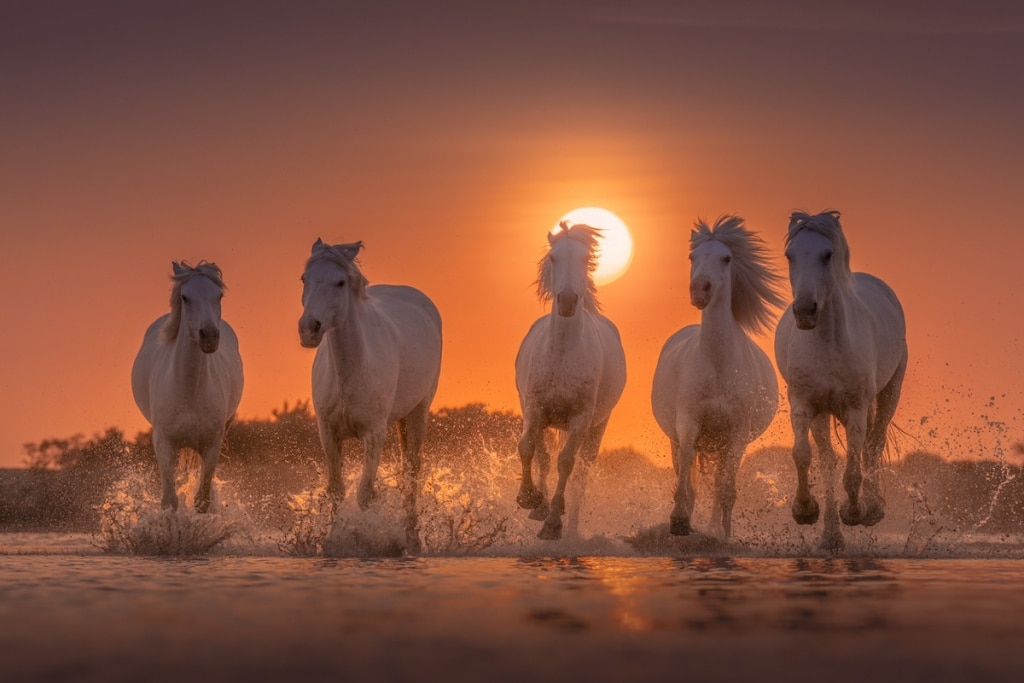
Albert Dros is a well-known photographer; he is famous as a landscape photographer from the Netherlands. His passion for nature and landscape photography is amazing.  He is a young photographer and worked with many big brands in the world. He aims to capture places and amazing moments in the best way. He has a master's degree in multimedia and Entertainment technology, and he is using his knowledge and talent very well. Albert Dros captured beautiful pictures of wild white horses for his series titled The White angels of Camargue. The name is used for the breed of the horse, the Camargue, which history is old and famous in the region of Southern France. It is also called one of the oldest breeds in the World, today they are semi-wild living in the area’s marsh.

 Dros has been conscious of these horses for many years. Horses are the best companions of humans ever and the attraction for the photographer is also an incredible subject. In this blog, we are focusing on the photography of Albert Dros. Another photographer Danial Kordon has been organizing tours for a long time. Dros and a photographer’s group spend five days taking pictures of the creatures and their guardians, they look after them.

Dros explained the relationship of horses with their guardians and said that they have a special connection with guardians. After observing the behavior of the guardians, Dros’s opinion was very good. According to him. They are very calm and kind.

The way Dros take pictures is impressive and due to his method, he is famous among photographers. The photos of Dros and its features are action shots of these horses with amazing moments with their protectors. To get a variety of photos, he guided horses in some directions. After communicating with the guardian during the photography and asking them to run through the water with the beautiful view of the sun behind them, they tried to capture different poses. There are also photographs of different locations and habitats of horses and guardians.


There is something special about the Camargue’s white horses.  Their characters, elegance, and qualities are very special. The beauty of horses can be seen in these adorable and magnificent photos that are taken by this talented photographer. Dros provided a chance to see all his views of the beauty of these horses and admire both flora and fauna. The series that came out is really impressive. He said that I tried to capture every moment of these horses like while running, standing and sitting, etc., and also discussed their close-up details. The amazing part of his photography was the running of the horses in water and the combination of sand with splashing water and dust. These are the positions where you can see the picture and its movement.

The one thing that people did not notice in these pictures nut that is present there are mosquitoes. Mostly they are present in forests and swamps, there were 10000s in quantity. According to Dros, no spray worked there and they seemed to love my blood. He shared his struggle while taking photos and said that “After the first evening of photographing, I already had more than 50 bites. Luckily, they were not extremely itchy and I took them for granted. Because the shots and experience were worth it!”


Albert Dros: Website | Facebook | Instagram | YouTube


Santa Cruz del: Most Crowded Island

Santa Cruz del: Most Crowded Island

Santa Cruz del Island is a small coral island, and one of the tiniest, in the land of San Bernardo off the coast of Colombia. The size of the island is 2.4 acres, and 1200 people are living there. The population of Santa Cruz Island density is more than four times that of Manhattan.

On this Island, there is no Manhattan, and no sewage system or running water. People can get electricity for just five hours a day through generators, and the Colombian navy dropped off fresh water once every three weeks. So there is a question why do people live on this Island?A group of fishermen, who were legends have this place about 50 km away from this Island, in the coastal town of Baru, were looking for new waters to fish when they fell upon this small island, and they were sitting where low water is. Due to late return, people decided to set up camp on this island for a late night stay, and that was the time when they discovered that island, the uniqueness of this land was there is no mosquitoes there. People stayed there in very good weather and that night they slept in peace.

Today, we see the area of this island consists of 90 houses, one restaurant, a school, two shops, a disco and a packed area that’s the size is a soccer field and a half. This area is a densely populated island on earth. There is so limited space that many structures expand onto the water, by using artificial means. There is the possibility of some houses with multi-story but most of them are single stories. The unoccupied space is a courtyard that is about half of the size of a tennis court, its structure is amazing which is with high tides underwater and it remains there frequently.

Most of the islanders are either staff members who are working at resorts and hotels or fishermen on nearby islands. There is only the occupation of the people who were living there, was fishing for a very long time. But over time, in current years, people of that area were searching for some other work. Now their dependence on tourism has increased and the position of their economy is improving. There is another island that is situated nearby Mucura, which has a high-end resort and offers snorkeling or diving, fishing to tourists, and many other facilities. The people of Santa Cruz work there. Others sell many things such as crafts, shells, and local food to the tourist.

Despite the difficult life on the island that is faced by the locals, the environment of the island is peaceful and comfortable. There is no crime or violence, so there is no concept of the locked door on this island, and according to the children who are living there is that the place can be described as better disciplined and docile by their school teacher.

The electricity is provided by a generator that is turned on from seven to eleven in the evening, and provided power on the island. There is a specific time for soap operas on television. People will use their resources to purchase gasoline during football games so that they could on the generator to watch the game on Television.

The driving instructor of 66 years old, Juvenal Julio, and the other person who is the great-grandson of one of the famous founders of the island, said Santa Cruz del Island is a paradise. According to him “I will live the rest of my days here. It’s a glorious life

Photo credit: Hotel Punta Faro

Photo credit: unknown

Photo credit: Juan Reyes/Panoramio

Sources: Toronto Star / CNTraveller / Colombia Reports / Frontrunner Magazine

Gas Bag Vehicles

Gas Bag Vehicles
Wood gas cars were not only the solution to the short supply of Gasoline in World war I and II. The expense of these vehicles was less because it is made from coal, not oil. It was a gas that is rich in hydrogen and carbon monoxide. It is the generator of wood gas that is called a gasifier that is used in a wood gas vehicle. Vehicles run with natural gas and fuel were very popular in the early 1990s in many parts of Europe and America. Natural gas was not taken from petroleum which becomes very dangerous during the two world wars. Two other unusual sources are wood and coal. Coal and wood both can get from burning coal wood. 
Gas Bag Vehicles

This gas is made by burning wood put through a pipe directly to the vehicles. This process was very popular during World War two because of the huge gasoline shortage. But the process of making coal gas is very complicated and it is carried out in big stoves in plant pyrolitic distillation. There are no small-scale gasification units that can be put along in trailers. But in the case of gas vehicles carry the gas in many bags and placed it on the top of vehicles. These bags are called shortage bags that are made of silk and some other fabrics. It is the best way to save it from leakages. Compressed gas in metal tanks could not use due to carbon monoxide, which is part of coal gas, fractures quickly when it is compressed. But on the other hand, some flammable components, such as hydrogen, are very difficult to contain under pressure and it leaks away from steel tanks when compressed. So if we think about fabric bags that were very cheaper and easier to make than metal tanks. The biggest drawback is that the bags should be comically large. The energy density of coal gas is very low than that of CNG or LPJ. For the replacement of a liter of gasoline, two cubic meters of gasoline are needed. The structure of the vehicle was very unique that was fitted with a wooden type box that was locked to the top roof and strengthened the bumpers of the vehicle. The gas bag was fastened to the wooden framework. Gas bag vehicles had horrible economy because of poor aero dynamicity of the vehicles, having a huge bag on the roof, and due to the size of the bag. These bags vehicles also suffered from engine damage and loud bands. The vehicle was fitted with a wooden framework which was fastened to the roof and the reinforced bumpers of the vehicle. The gas bag was strapped to this wooden framework. The coal gas vehicles have become unused as gasoline but it was available again after World War II. Strangely, it is still in use after the 1990s, when it was used as public transportation at the cheapest rate that was developed in peacetime. 

Gas Bag Vehicles

Gas Bag Vehicles|


SOURCE:
# Gas bag vehicles, Low tech magazine
# Coal-gas Powered Vehicles, www.douglas-self.com